Creamy Asparagus Risotto with Parmesan & Basil
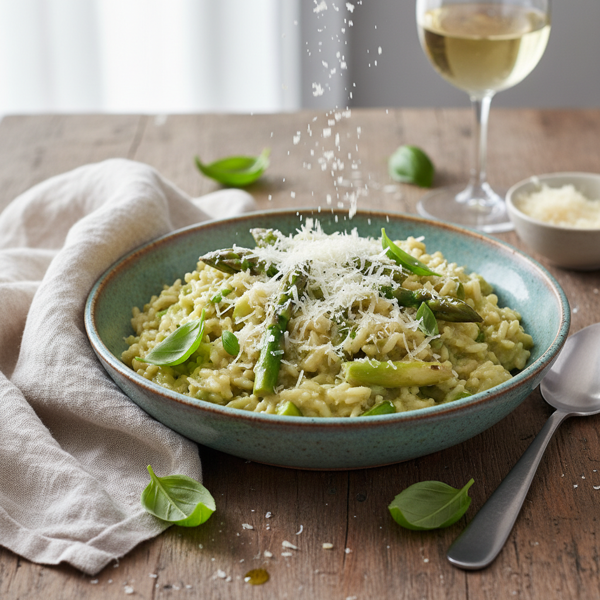
Experience the delightful flavors of spring with this Creamy Asparagus Risotto. This dish combines the nutty and creamy texture of arborio rice with tender asparagus, aromatic garlic, and rich Parmesan cheese. Finished with a splash of cream and fresh basil, this risotto is a comforting one-dish meal perfect for special occasions or a cozy dinner at home. Share this exquisite dish with family and friends to elevate your culinary repertoire.
N/A
Servings
N/A
Calories
9
Ingredients
Ingredients
butter
1 (tablespoon)
onion
1 (finely chopped)
asparagus
3/4 (lb, chopped into 1-inch lengths)
garlic cloves
3 (crushed)
arborio rice
1 1/2 (cups)
chicken broth
4 (cups)
cream
1/4 (cup)
grated parmesan cheese
1 (cup)
fresh basil
1/4 (cup, chopped)
Instructions
1
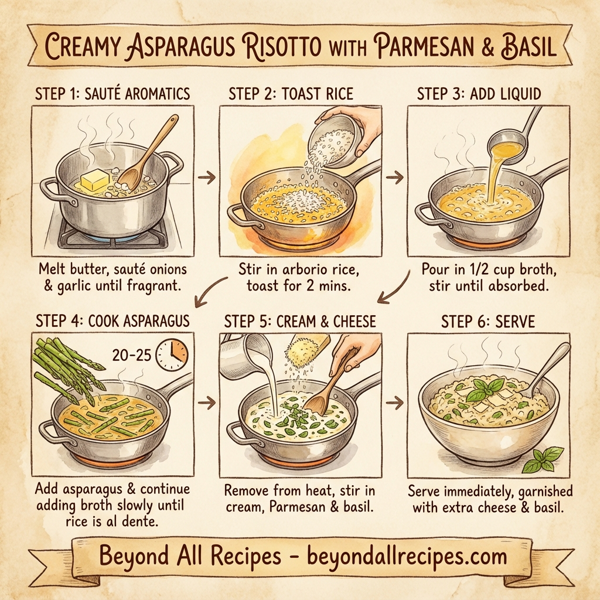
In a large saucepan, melt the butter over medium-low heat. Add the finely chopped onions and sauté until translucent, about 4 minutes.
2
Stir in the crushed garlic and cook for an additional minute until fragrant.
3
Add the arborio rice to the pan, stirring continuously to ensure each grain is coated with the butter and heated through, about 2 minutes.
4
Pour in 1/2 cup of chicken broth and stir gently until the liquid is absorbed by the rice.
5
Once absorbed, add the chopped asparagus and continue adding the broth in 1/2 cup increments, stirring constantly until each addition is fully absorbed before adding more. This process should take approximately 20-25 minutes until the rice is creamy and al dente.
6
Once the rice is cooked to your liking, remove the pan from heat and stir in the cream, grated Parmesan cheese, and chopped fresh basil. Mix gently until the cheese has melted and the ingredients are well combined.
7
Serve immediately, garnished with additional Parmesan and basil if desired.
Nutrition Information
Frequently Asked Questions
Frequently Asked Questions
What type of rice is best for this Creamy Asparagus Risotto?
Arborio rice is the preferred choice for this recipe because its high starch content creates the signature creamy texture essential for a good risotto.
Can I make this risotto recipe vegetarian?
Yes, simply swap the chicken broth for a high-quality vegetable broth to make this dish completely vegetarian-friendly.
Why do I need to add the chicken broth in increments?
Adding broth 1/2 cup at a time and stirring allows the rice grains to rub against each other, which releases starch and creates the creamy sauce without the need for excessive heavy cream.
How long does it take for the arborio rice to cook?
The rice typically takes between 20 to 25 minutes of stirring and adding broth until it reaches an al dente texture.
When is the best time to add the asparagus?
Add the chopped asparagus once the first addition of broth has been absorbed. This ensures the asparagus is tender but still has a slight crunch by the time the rice is finished.
Can I use frozen asparagus instead of fresh?
While fresh asparagus provides the best texture and color, you can use frozen. Just be aware that frozen asparagus may become softer and release more moisture during the cooking process.
What can I substitute for the heavy cream?
If you want to lighten the dish, you can omit the cream entirely as the rice starch and Parmesan will provide plenty of creaminess, or use a splash of whole milk or a dairy-free alternative.
Should the broth be warm when adding it to the rice?
Yes, it is highly recommended to keep your broth warm in a separate pot. Adding cold broth slows down the cooking process and prevents the starches from releasing properly.
What does 'al dente' mean for risotto?
Al dente means the rice is tender and creamy on the outside but still has a firm, slight bite in the center.
Can I add white wine to this recipe?
Absolutely. You can add 1/2 cup of dry white wine after toasting the rice and before adding the first ladle of broth for added depth of flavor.
How do I store leftover asparagus risotto?
Store leftovers in an airtight container in the refrigerator for up to 3 days. Note that risotto will thicken significantly as it cools.
What is the best way to reheat risotto?
Reheat it on the stovetop over low heat, adding a splash of broth or water to loosen the rice and restore its creamy consistency.
Can I freeze this risotto?
Freezing risotto is generally not recommended as the texture of the rice can become grainy and the asparagus may turn mushy upon thawing.
Is this recipe gluten-free?
Yes, this recipe is naturally gluten-free, provided that the chicken broth you use is certified gluten-free.
What can I use instead of Parmesan cheese?
Pecorino Romano or Grana Padano are excellent substitutes for Parmesan, though they may vary slightly in saltiness.
Why is my risotto sticky rather than creamy?
This usually happens if you overwork the rice or if the heat is too high. Ensure you are stirring gently and keeping the heat at a steady medium-low.
What other herbs can I use besides basil?
Fresh parsley, chives, or a small amount of tarragon would also complement the flavors of asparagus and Parmesan beautifully.
Do I need to wash the arborio rice before cooking?
No, do not wash the rice. Rinsing arborio rice removes the surface starch that is necessary to create the creamy sauce.
Can I add protein to this dish?
Yes, grilled chicken, sautéed shrimp, or scallops make excellent additions to this risotto.
What is the role of the onion in this recipe?
The onion provides a sweet, aromatic base layer of flavor. Sautéing it until translucent ensures it blends into the texture of the risotto.
How much asparagus should I use?
The recipe calls for 3/4 lb of asparagus, which is roughly one standard bunch, chopped into 1-inch pieces.
Can I use shallots instead of onions?
Yes, shallots are a great alternative and provide a more delicate, subtle flavor than regular onions.
Why is my rice still hard after 25 minutes?
If the rice is still hard, you may need more liquid or the heat might be too low. Continue adding broth in small amounts until the desired texture is reached.
Is it okay to use dried basil instead of fresh?
You can use dried basil, but use only 1 tablespoon as it is much more concentrated. Fresh basil is preferred for its bright, spring flavor.
How many people does this recipe serve?
With 1.5 cups of rice, this recipe serves approximately 4 people as a main course or 6 as a side dish.
Why toast the rice in butter before adding liquid?
Toasting the rice for about 2 minutes coats the grains in fat and creates a seal that helps the rice maintain its structure during the long cooking process.
What should the consistency of the final risotto look like?
The risotto should be 'all'onda,' meaning 'wavy.' It should be loose enough to spread slightly on a plate rather than sitting in a stiff pile.
Can I use garlic powder instead of fresh garlic?
Fresh garlic is highly recommended for the best flavor profile, but if necessary, you can substitute 1/2 teaspoon of garlic powder.
Does the type of pot matter for making risotto?
A heavy-bottomed saucepan or a Dutch oven is best because it distributes heat evenly and prevents the rice from sticking to the bottom.
Should I remove the woody ends of the asparagus?
Yes, always snap off or trim the tough, woody bottom ends of the asparagus spears before chopping them for the risotto.