Creamy Artichoke and Asiago Rotini Delight
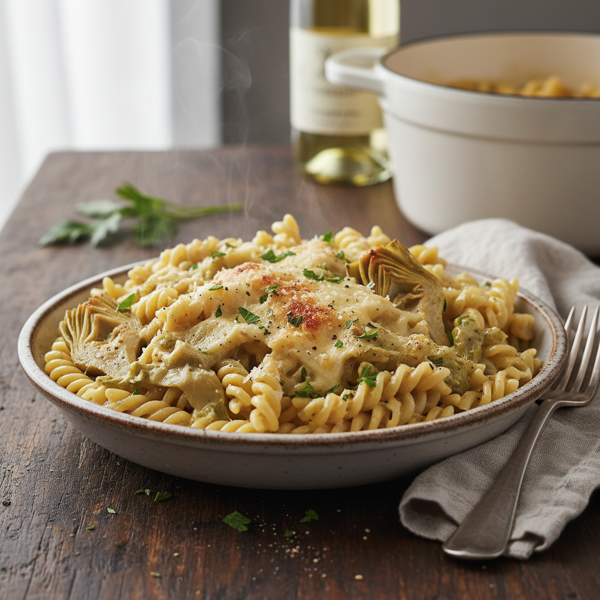
This Creamy Artichoke and Asiago Rotini Delight is the perfect dish for family gatherings or potluck events. With its rich, creamy sauce infused with savory marinated artichokes, fragrant garlic, and a touch of dry white wine, this pasta dish offers a delightful twist on classic Italian flavors. The addition of nutty Asiago cheese elevates the creaminess, while fresh parsley adds a burst of color and freshness. Enjoy it as a satisfying meatless meal or pair it with roasted chicken or grilled shrimp for a heartier option. It's sure to please both pasta lovers and artichoke aficionados alike!
8
Servings
N/A
Calories
15
Ingredients
Ingredients
rotini pasta
1 lb (dry)
marinated artichoke hearts
1 (12 ounce) jar (drained and chopped)
extra virgin olive oil
2 tablespoons
minced garlic
2 teaspoons
onion
1/2 (finely chopped)
dried basil
1/2 teaspoon
dry white wine
1/2 cup
milk
1 1/2 cups
all-purpose flour
1/4 cup
asiago cheese
1/2 cup (shredded)
fresh parsley
2 tablespoons (chopped)
salt
to taste
pepper
to taste
cayenne chili pepper flakes
1/2 teaspoon (optional)
additional parsley
for garnish
Instructions
1
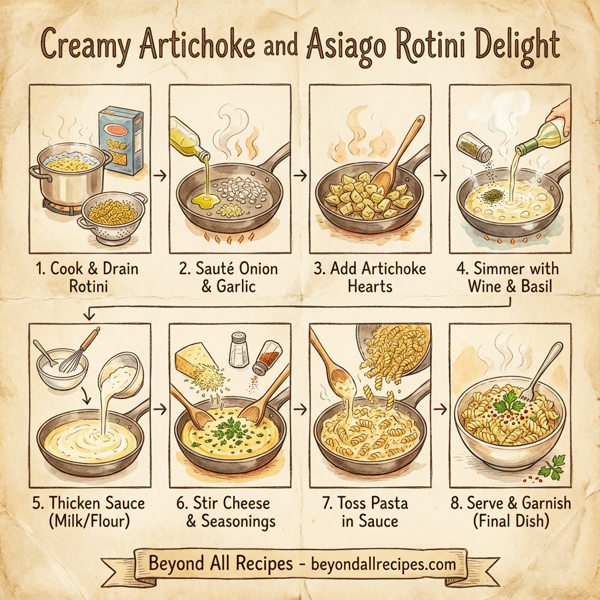
Cook the rotini pasta according to package directions until al dente. Drain and keep hot.
2
In a large skillet, heat the extra virgin olive oil over medium heat. Add the finely chopped onion and minced garlic, sautéing gently until the onion begins to soften, about 3-4 minutes.
3
Integrate the drained and chopped marinated artichoke hearts into the skillet, stirring occasionally until heated through, about 2 minutes.
4
Sprinkle in the dried basil and pour in the dry white wine. Allow the mixture to simmer for 2-3 minutes, letting the wine reduce slightly.
5
In a separate bowl, combine the milk and all-purpose flour, shaking well until fully blended. Gradually pour this mixture into the skillet, stirring constantly until the sauce comes to a gentle simmer and thickens, about 4-5 minutes.
6
Lower the heat and stir in the shredded Asiago cheese and fresh parsley. Taste and adjust seasoning with salt, pepper, and optional cayenne pepper flakes, if desired.
7
Add the hot cooked rotini to the skillet, tossing well to coat the pasta in the creamy sauce. Serve immediately, garnishing with additional parsley and a sprinkle of cayenne pepper flakes for added spice.
Nutrition Information
Frequently Asked Questions
Frequently Asked Questions
What is Creamy Artichoke and Asiago Rotini Delight?
It is a rich pasta dish featuring a creamy sauce made with marinated artichokes, garlic, white wine, and Asiago cheese.
How many servings does this recipe yield?
This recipe is designed to serve approximately 8 people.
Is this artichoke pasta dish vegetarian?
Yes, this recipe is meatless and suitable for vegetarians.
What kind of pasta is used in this recipe?
The recipe calls for 1 lb of rotini pasta, which is ideal for holding onto the creamy sauce.
Can I add protein to this dish?
Absolutely. You can pair it with roasted chicken or grilled shrimp for a heartier, non-vegetarian option.
What type of cheese is used for the creaminess?
Shredded Asiago cheese is used to provide a nutty flavor and creamy texture.
Do I need to use marinated artichokes?
Yes, the recipe specifies one 12-ounce jar of marinated artichoke hearts, drained and chopped.
What kind of wine should I use?
A dry white wine is recommended to add depth and acidity to the sauce.
Can I make this recipe without alcohol?
While the dry white wine adds flavor, you can omit it or substitute it with a splash of vegetable broth if preferred.
How do I prevent the sauce from having flour clumps?
Combine the milk and all-purpose flour in a separate bowl and shake or whisk well until fully blended before adding to the skillet.
How long does it take to sauté the onion and garlic?
Sauté the finely chopped onion and minced garlic in olive oil for about 3-4 minutes until softened.
What herbs are used in this recipe?
The dish is seasoned with dried basil and fresh chopped parsley.
Is this dish spicy?
The recipe includes optional cayenne pepper flakes, so you can adjust the spice level to your liking.
How do I prepare the artichoke hearts?
Drain the liquid from the jar and chop the hearts before adding them to the skillet.
When should I add the cheese?
Lower the heat and stir in the shredded Asiago cheese after the sauce has thickened.
How do I achieve an 'al dente' pasta texture?
Follow the package directions for the rotini but check for a firm bite a minute or two before the full cooking time is up.
What kind of oil is best for this recipe?
The recipe calls for 2 tablespoons of extra virgin olive oil for sautéing.
Can I use a different type of cheese instead of Asiago?
If Asiago is unavailable, Parmesan or Romano are good substitutes that offer a similar salty and nutty profile.
How long should the wine reduce?
Allow the wine and basil mixture to simmer for about 2-3 minutes to reduce slightly.
How much garlic is needed?
The recipe requires 2 teaspoons of minced garlic.
Can I use fresh basil instead of dried?
Yes, though you may want to increase the amount slightly since fresh herbs are generally less potent than dried ones.
Is this dish suitable for potlucks?
Yes, its creamy texture and ability to serve a crowd make it an excellent choice for potluck events or gatherings.
How do I thicken the sauce?
Gradually pour the milk and flour mixture into the skillet while stirring constantly for 4-5 minutes until it simmers and thickens.
What should I use for a garnish?
Garnish the finished pasta with additional fresh parsley and a sprinkle of cayenne pepper flakes.
Do I need to add salt and pepper?
Yes, taste the sauce before adding the pasta and adjust the seasoning with salt and pepper to your preference.
Can I use whole milk or low-fat milk?
Either will work, but using whole milk will result in a richer and creamier sauce.
Should the pasta be hot when added to the sauce?
Yes, keep the drained rotini hot and toss it immediately into the skillet with the sauce.
How many artichokes are in the recipe?
The recipe uses one standard 12-ounce jar of marinated artichoke hearts.
Can I use a different pasta shape like penne?
Yes, penne or fusilli would work well as they also have surfaces that catch creamy sauces effectively.
What should I do if the sauce is too thick?
If the sauce is thicker than desired, you can stir in a small amount of extra milk or a splash of the pasta cooking water.