Cranberry-Infused Sourdough Starter
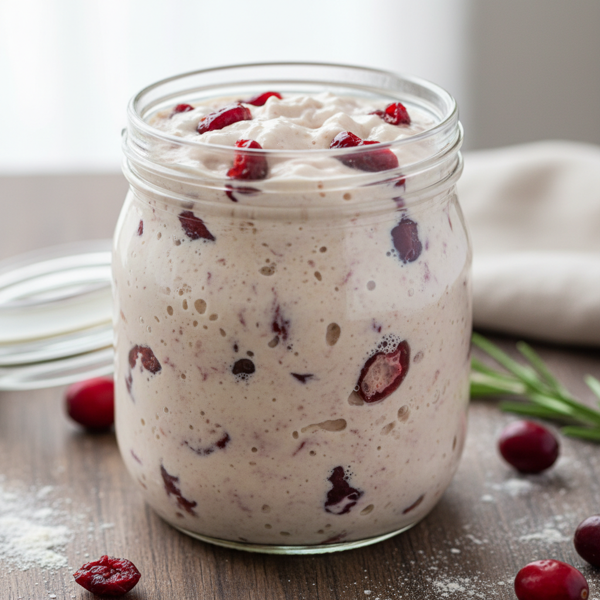
This Cranberry-Infused Sourdough Starter recipe is an excellent introduction to the world of sourdough baking. By combining simple ingredients like wheat flour, water, and dried cranberries, you are creating a thriving environment for wild yeast and beneficial bacteria. The natural sugars from cranberries kickstart the fermentation process, leading to a robust and tangy starter. Perfect for bakers at any skill level, this starter will enhance your bread-making experience, yielding flavorful loaves with a delightful sour taste. Follow these steps carefully, and soon you'll have a vibrant starter ready to transform your baking!
N/A
Servings
N/A
Calories
3
Ingredients
Ingredients
Wheat Flour
100 g (Unbleached all-purpose portion)
Water
100 g (Room temperature, filtered)
Dried Cranberries
5 (Whole, for initial fermentation boost)
Instructions
1
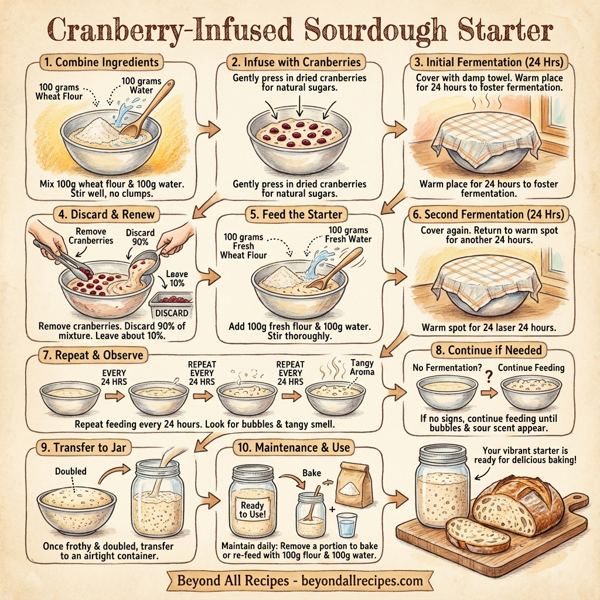
In a mixing bowl, combine 100 grams of wheat flour and 100 grams of water. Stir well to ensure there are no clumps in the mixture.
2
Gently press the dried cranberries into the mixture to infuse it with natural sugars that will help foster the growth of wild yeast and bacteria.
3
Cover the bowl with a lightly damp tea towel and place it in a warm location for 24 hours. This environment encourages fermentation.
4
After 24 hours, remove the cranberries and discard them along with 90% of the mixture, leaving about 10% in the bowl.
5
Add 100 grams of fresh wheat flour and 100 grams of water to the remaining mixture, stirring thoroughly to combine.
6
Cover the bowl again with the damp tea towel and return it to its warm spot for another 24 hours.
7
Repeat the feeding process every 24 hours for several days. You should start noticing bubbles forming and a pleasant, tangy aroma developing. This indicates that the wild yeast is thriving.
8
If no signs of fermentation are visible, continue the feeding process until you see bubbles and begin to smell the characteristic sour scent.
9
Once the starter is frothy and has doubled in size, transfer it to an airtight container for storage in the pantry.
10
To maintain your starter, remove a portion daily for baking or to re-feed it with 100 grams of flour and 100 grams of water.
Nutrition Information
Frequently Asked Questions
Frequently Asked Questions
What is a Cranberry-Infused Sourdough Starter?
It is a mixture of wheat flour, water, and dried cranberries that creates a thriving environment for wild yeast and beneficial bacteria, used to bake tangy sourdough bread.
What ingredients are needed for this starter?
You will need 100 grams of unbleached all-purpose wheat flour, 100 grams of room temperature filtered water, and 5 whole dried cranberries.
How much wheat flour should I use for the initial mix?
You should use 100 grams of wheat flour for the initial mixture.
Why are dried cranberries added to the sourdough starter?
The natural sugars from the dried cranberries kickstart the fermentation process and help foster the growth of wild yeast and bacteria.
How many cranberries are required?
The recipe requires 5 whole dried cranberries for the initial fermentation boost.
What kind of water should be used?
It is best to use 100 grams of room temperature, filtered water.
What is the first step in making the starter?
Combine 100 grams of wheat flour and 100 grams of water in a mixing bowl and stir well to remove clumps.
How do I incorporate the cranberries?
Gently press the dried cranberries into the flour and water mixture.
How should the bowl be covered during fermentation?
Cover the bowl with a lightly damp tea towel to encourage a proper fermentation environment.
Where should the starter be kept?
Place the bowl in a warm location for 24 hours.
When do I remove the cranberries?
Remove and discard the cranberries after the initial 24-hour fermentation period.
How much of the initial mixture should be discarded?
You should discard 90% of the mixture after the first 24 hours, leaving only about 10% in the bowl.
How do I feed the sourdough starter?
Add 100 grams of fresh wheat flour and 100 grams of water to the remaining 10% of the mixture and stir thoroughly.
How often should the feeding process be repeated?
Repeat the feeding process every 24 hours for several days.
What are the signs that the wild yeast is thriving?
You should notice bubbles forming and a pleasant, tangy aroma developing.
What should I do if no fermentation is visible after a few days?
Continue the daily feeding process until you see bubbles and begin to smell a characteristic sour scent.
How do I know when the starter is ready for storage?
The starter is ready once it is frothy and has doubled in size.
Where should the finished starter be stored?
Transfer the frothy starter to an airtight container and store it in your pantry.
How do I maintain the starter once it is established?
Remove a portion daily for baking or re-feed it with 100 grams of flour and 100 grams of water.
Is this recipe suitable for beginner bakers?
Yes, it is an excellent introduction to sourdough baking for bakers at any skill level.
What kind of bread can I make with this starter?
It yields flavorful loaves with a delightful sour taste, perfect for any sourdough bread recipe.
What is the preparation for the wheat flour?
The flour should be unbleached all-purpose wheat flour.
Can I use tap water?
Filtered water is recommended at room temperature to avoid chemicals that might hinder yeast growth.
What does the damp tea towel do?
The damp tea towel helps maintain a moist environment while allowing the starter to breathe.
How much water and flour is used for each feeding?
Use 100 grams of flour and 100 grams of water for every daily feeding.
What is the characteristic scent of a healthy starter?
A healthy starter should have a pleasant, tangy, and sour aroma.
Why is 90% of the starter discarded during the process?
Discarding most of the starter ensures the yeast has enough fresh food (flour and water) to stay active without the volume becoming unmanageable.
Does this recipe use commercial yeast?
No, this recipe relies entirely on wild yeast captured from the environment and boosted by the cranberries.
What are the tags associated with this recipe?
The tags include sourdough, starter, bread baking, fermentation, cranberries, homemade, yeast culture, and organic baking.
What happens to the cranberries after the first day?
The cranberries are discarded and are not part of the final sourdough culture.