Craft Your Own Organic Apple Cider Vinegar
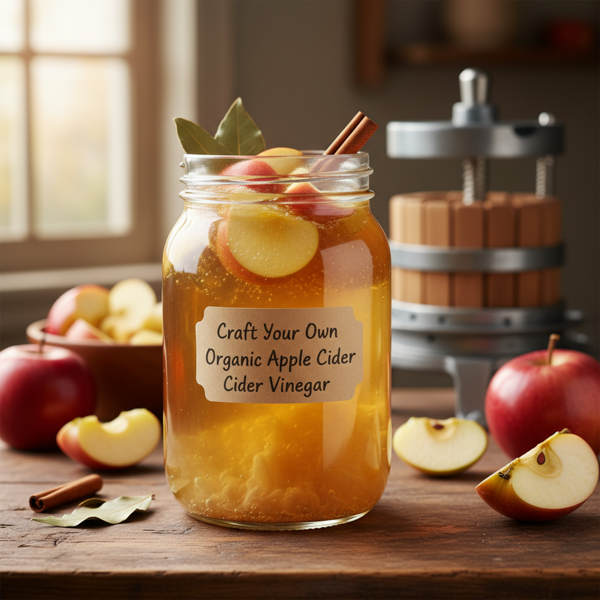
Making your own apple cider vinegar at home is not only easy but also a great way to utilize apple scraps effectively. This versatile condiment can elevate your salads, act as a natural preservative, or be used in a variety of health remedies, from digestive aids to skin care solutions. With just a handful of natural ingredients, you can create a flavorful, tangy vinegar that boasts all the goodness from fresh apples. The process requires minimal effort and just some patience, as you'll need to let your mixture ferment for 6-7 weeks. Plus, the satisfaction of knowing exactly what goes into your food is unparalleled. This recipe is inspired by Real Food, Real Deals and is a fantastic way to go zero waste in your kitchen.
1
Servings
N/A
Calories
4
Ingredients
Ingredients
Organic apples
6-8 (Cores and peels only, ideally organic)
Honey
2 tablespoons (Raw or processed, to taste)
Water
Enough to cover (Filtered or distilled preferred)
Apple cider vinegar
1 tablespoon (Optional, prefer unfiltered varieties)
Instructions
1
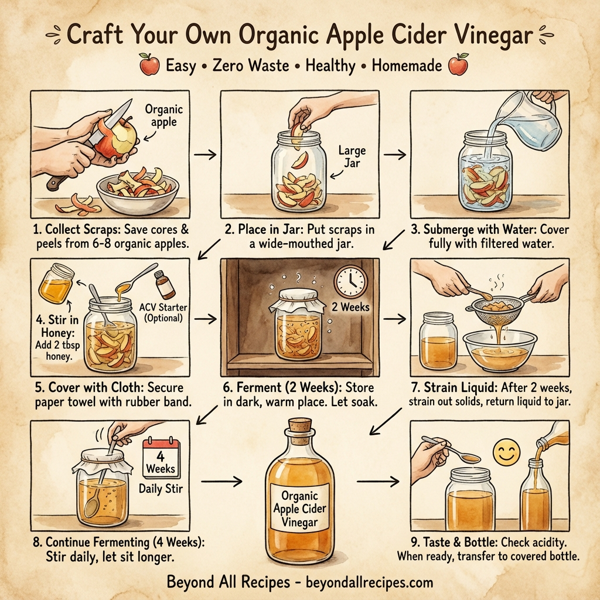
Collect the cores and peels from 6-8 organic apples. You can use the apples for other recipes while saving the scraps.
2
Place the apple scraps in a large, wide-mouthed jar. A 4-cup jar is ideal, but adjust the size based on the amount of scraps.
3
Cover the scraps completely with filtered or distilled water, ensuring that they are fully submerged.
4
Stir in 2 tablespoons of honey until dissolved. If desired, add 1 tablespoon of unfiltered apple cider vinegar to boost fermentation.
5
Cover the top of the jar with a paper towel and secure it with a rubber band to allow air circulation while keeping out unwanted particles.
6
Store the jar in a dark, warm place for 2 weeks, letting the mixture soak and ferment.
7
After 2 weeks, strain out the liquid from the solids, returning the liquid to the jar.
8
Replace the paper towel on the jar and continue to let it sit for an additional 4 weeks, stirring the mixture daily.
9
Taste the vinegar after 4 weeks; if it has reached the acidity you prefer, transfer it to a covered bottle for storage. If not, leave it for another few days, checking every few days until it's just right.
Nutrition Information
Frequently Asked Questions
Frequently Asked Questions
What is the main benefit of making your own apple cider vinegar?
It allows you to utilize apple scraps effectively, ensuring you know exactly what ingredients are used while creating a versatile condiment.
How many organic apples are needed for this recipe?
You need the cores and peels from 6-8 organic apples.
Can I use apple scraps from other recipes?
Yes, you can use the apples for other recipes and save the scraps specifically for this vinegar.
What type of container is best for fermentation?
A large, wide-mouthed jar, preferably a 4-cup size, is ideal for the fermentation process.
Why should the apple scraps be fully submerged?
Scraps must be submerged in water to prevent mold and ensure the fermentation proceeds correctly.
What kind of water should be used for homemade ACV?
Filtered or distilled water is preferred to avoid impurities during fermentation.
How much honey should be added?
Add 2 tablespoons of honey and stir until it is completely dissolved in the water.
Is honey mandatory for this recipe?
Yes, honey provides the necessary sugars that the yeast and bacteria consume during fermentation.
Can I use unfiltered apple cider vinegar as a booster?
Yes, adding 1 tablespoon of unfiltered apple cider vinegar can help jumpstart the fermentation process.
How should the jar be covered while fermenting?
Cover the top with a paper towel and secure it tightly with a rubber band.
Why shouldn't I use a solid lid during fermentation?
A paper towel allows for essential air circulation while keeping out dust and unwanted particles.
Where should the vinegar be stored initially?
Store the jar in a dark, warm place for the first 2 weeks of the process.
What happens after the first 2 weeks of soaking?
You should strain out the solid apple scraps and return the liquid to the jar.
How long is the second fermentation period?
The liquid should sit for an additional 4 weeks after the solids have been strained out.
Is stirring necessary during the second phase?
Yes, you should stir the mixture daily during the final 4-week period.
How do I check if the vinegar is ready?
Taste it after 4 weeks to see if it has reached your preferred level of tangy acidity.
What if it isn't acidic enough after the full 6 weeks?
Leave it for a few more days and check it periodically until it reaches the desired taste.
How should the final apple cider vinegar be stored?
Transfer the finished vinegar to a covered bottle for long-term storage.
How long does the entire ACV process take?
The total fermentation time typically ranges between 6 to 7 weeks.
Can this vinegar be used for skin care?
Yes, homemade apple cider vinegar is versatile and can be used in natural skin care solutions.
Is this vinegar useful for health remedies?
It can be used in various health remedies, including digestive aids and general health tonics.
Does this recipe support a zero-waste lifestyle?
Yes, it is an excellent way to go zero waste by using apple scraps that would otherwise be discarded.
Why are organic apples recommended?
Organic apples are recommended because the recipe uses the peels, which are often where pesticides accumulate in non-organic fruit.
What preparation is needed for the honey?
You can use either raw or processed honey depending on your personal preference.
Can this vinegar be used as a food preservative?
Yes, it can act as a natural preservative for various types of food.
What category does this recipe fall under?
This recipe is categorized as an Apple-based condiment.
What is the serving size for this recipe?
The recipe makes a batch, but individual serving sizes are not specifically defined.
Does the recipe provide nutritional facts?
Nutritional information like calories, fat, and protein are not specified for this homemade recipe.
Who inspired this specific recipe?
This recipe is inspired by Real Food, Real Deals.
Can I adjust the jar size?
Yes, you can adjust the size of the jar based on the volume of apple scraps you have collected.