Crackling Dutch Rolls
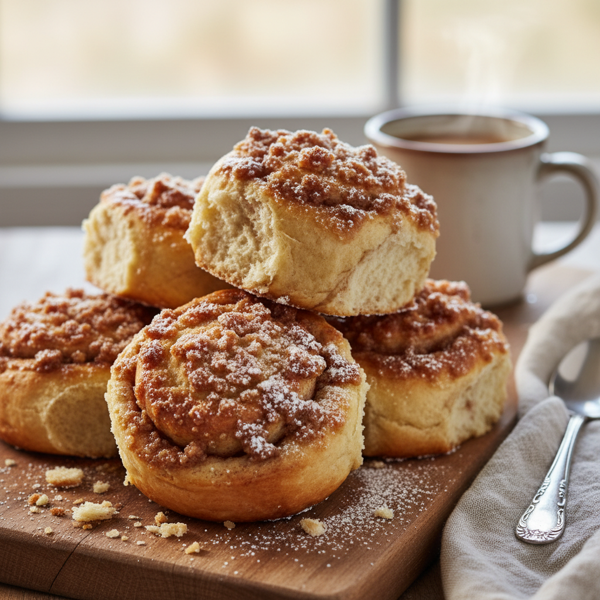
Experience the delightful contrast of textures with Crackling Dutch Rolls! This unique bread features a beautifully crinkled and crackling crust that encases a moist and tender interior. Perfect for any occasion, these rolls are not only visually stunning but also incredibly satisfying to eat. Whether served at a festive gathering, paired with a warm bowl of soup, or enjoyed fresh from the oven with a pat of butter, each bite will transport you to the rustic charm of Dutch bakeries. Don’t miss out on this culinary adventure – your taste buds will thank you! Remember, using warm (not hot or too cold) water and milk is crucial for yeast activation, so pay attention to temperature for perfect results.
6
Servings
200
Calories
12
Ingredients
Ingredients
dry yeast
2 1/2 teaspoons (Combine with warm water.)
warm water
1/4 cup (Ensure it's warm for yeast activation.)
milk
1 cup (Warm up before adding.)
flour
2 1/2-3 1/2 cups (All-purpose flour, add gradually.)
sugar
1 tablespoon (Add to yeast mixture.)
vegetable oil
2 teaspoons (Add to dough mixture.)
salt
1 1/2 teaspoons (Salt for the dough.)
dry yeast
1 tablespoon (Combine with warm water for topping.)
warm water
1/2 cup (Ensure it's warm for yeast activation.)
sugar
1 tablespoon (For the topping.)
vegetable oil
1 tablespoon (For the topping.)
rice flour
3/4 cup (For the topping.)
Instructions
1
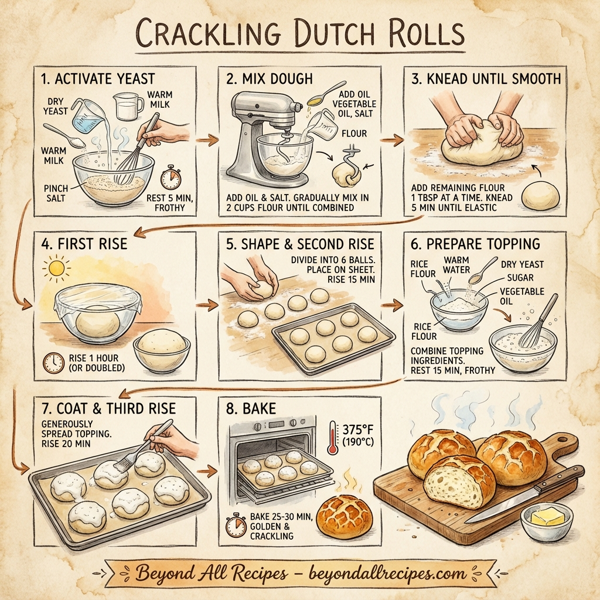
In the bowl of an electric mixer, combine 2 1/2 teaspoons of dry yeast, 1/4 cup of warm water, 1 cup of warm milk, 1 tablespoon of sugar, and a pinch of salt. Stir until dissolved and allow to rest for 5 minutes, or until frothy.
2
Add 2 teaspoons of vegetable oil and 1 1/2 teaspoons of salt to the yeast mixture. Gradually mix in 2 cups of all-purpose flour with the dough hook attachment at medium speed until the dough begins to come together.
3
Add remaining flour gradually, 1 tablespoon at a time, until the dough pulls away from the sides of the bowl. Turn the dough out onto a lightly floured surface and knead for about 5 minutes, until smooth and elastic.
4
Transfer the dough to a lightly greased bowl, turning it to coat. Cover with plastic wrap and place in a warm area to rise for approximately 1 hour, or until doubled in size.
5
Once the dough has risen, turn it out onto a floured surface again and divide it into 6 equal portions. Shape each portion into a ball and place on a parchment-lined baking sheet. Let them rise for another 15 minutes.
6
For the topping, in a separate bowl, combine 1 tablespoon of dry yeast, 1/2 cup of warm water, 1 tablespoon of sugar, 1 tablespoon of vegetable oil, 1/4 teaspoon of salt, and 3/4 cup of rice flour. Mix well and allow to rest for 15 minutes until slightly frothy.
7
After the rolls have risen, generously spread the topping mixture over each roll, ensuring a thick coating on the top and sides. Let them rise for another 20 minutes.
8
Preheat the oven to 375°F (190°C). Bake the rolls for 25-30 minutes, or until they are golden brown and have a crackling crust. Allow to cool completely before serving.
Nutrition Information
5
Fat
40
Carbs
3.33
Protein
Frequently Asked Questions
Frequently Asked Questions
What are Crackling Dutch Rolls?
Crackling Dutch Rolls are a unique type of bread known for their crinkled, crackling crust and moist, tender interior.
How many servings does this recipe make?
This recipe makes 6 servings, resulting in 6 individual rolls.
What causes the crackling effect on the crust?
The crackling effect is created by a special topping mixture made of rice flour, yeast, sugar, vegetable oil, and salt.
What type of flour is used for the dough?
The recipe calls for 2 1/2 to 3 1/2 cups of all-purpose flour for the dough.
What type of flour is used for the topping?
The topping specifically requires 3/4 cup of rice flour to achieve the signature crackled texture.
Why is the temperature of the water and milk important?
Warm liquid is crucial for yeast activation; if it is too hot it will kill the yeast, and if it is too cold it will not activate.
How long should the dough rise initially?
The dough should rise in a warm area for approximately 1 hour, or until it has doubled in size.
How long should I knead the dough?
The dough should be kneaded for about 5 minutes until it becomes smooth and elastic.
At what temperature should the oven be preheated?
The oven should be preheated to 375°F (190°C).
How long do the rolls bake?
Bake the rolls for 25-30 minutes, or until they are golden brown.
How many calories are in one Crackling Dutch Roll?
Each roll contains approximately 200 calories.
What is the fat content per roll?
There are 5 grams of fat in each roll.
How much protein is in each roll?
Each roll provides about 3.33 grams of protein.
How many carbohydrates are in a single serving?
There are 40 grams of carbohydrates per roll.
How long do the rolls rise after being shaped?
Once shaped into balls, the rolls should rise for an additional 15 minutes.
How long should the rolls rise after the topping is applied?
After applying the topping, the rolls should rise for a final 20 minutes before baking.
How do I prepare the topping?
Combine 1 tablespoon yeast, 1/2 cup warm water, 1 tablespoon sugar, 1 tablespoon vegetable oil, 1/4 teaspoon salt, and 3/4 cup rice flour; let rest for 15 minutes.
What equipment is recommended for mixing the dough?
An electric mixer with a dough hook attachment is recommended for combining the ingredients and mixing the dough.
How much yeast is needed for the dough versus the topping?
The dough requires 2 1/2 teaspoons of yeast, while the topping requires 1 tablespoon of yeast.
What should the texture of the yeast mixture look like before adding flour?
The yeast mixture should be allowed to rest for 5 minutes until it is frothy.
Can I use cold milk for the dough?
No, you should warm up the milk before adding it to ensure the yeast remains active.
How do I ensure the topping covers the roll properly?
Generously spread the topping over each roll, ensuring a thick coating on both the top and the sides.
Should I grease the bowl for the dough rise?
Yes, transfer the dough to a lightly greased bowl and turn it to coat the surface to prevent sticking.
How do I know when the dough has enough flour?
Add flour gradually until the dough begins to pull away from the sides of the mixing bowl.
What are some good ways to serve these rolls?
They are excellent served at festive gatherings, with a warm bowl of soup, or fresh with a pat of butter.
What is the category of this recipe?
This recipe falls under the Breads category.
Is salt used in both the dough and the topping?
Yes, the dough uses 1 1/2 teaspoons of salt (plus a pinch for the yeast), and the topping uses 1/4 teaspoon of salt.
Should the rolls be cooled before eating?
Yes, it is recommended to allow the rolls to cool completely before serving.
What tags are associated with this recipe?
Tags include bread, rolls, dutch bread, crackling crust, yeast rolls, homemade bread, and rustic baking.
Does the recipe require any preparation for the baking sheet?
The rolls should be placed on a parchment-lined baking sheet for baking.