Cozy New England Clam Chowder
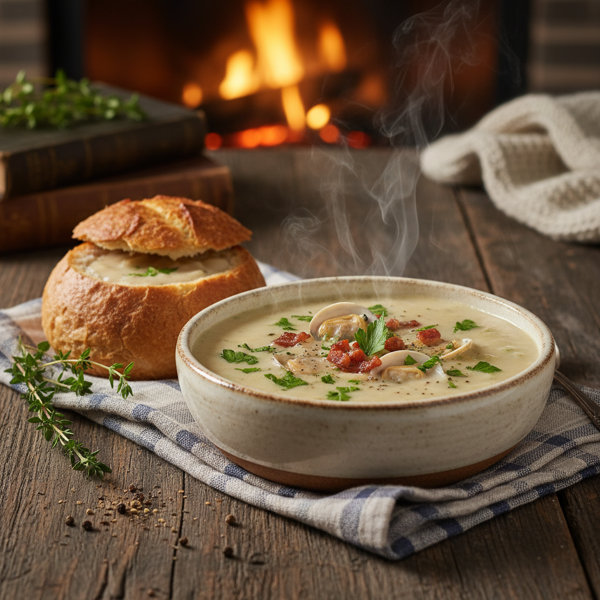
Warm up your chilly afternoons with this rich and creamy New England Clam Chowder. Perfect for cozy nights, this dish features generously cubed potatoes and tender baby clams enveloped in a buttery, savory broth. The optional cream-style corn adds a delightful sweetness, while the classic addition of oyster crackers and pickles on the side creates the perfect serving experience. This chowder not only tastes incredible fresh but benefits from resting in the refrigerator, allowing all the flavors to meld together beautifully overnight, making it even better the next day. Whether you choose to indulge in it as it is, or serve it in a bread bowl, this chowder will bring warmth and comfort to your table.
N/A
Servings
N/A
Calories
10
Ingredients
Ingredients
Potatoes
8 large (peeled and cubed into 1-inch squares)
Onions
2 large (cut in half and then thinly sliced)
Baby Clams
2 (10 ounce) cans (with juice)
Whole Milk
2 quarts (preferably full-fat)
Evaporated Milk
1 (12 ounce) can
Margarine
1/2 cup
Salt
to taste
Pepper
to taste
Clam Juice
1 (16 ounce) bottle (optional)
Cream-Style Corn
2 (14 3/4 ounce) cans (optional)
Instructions
1
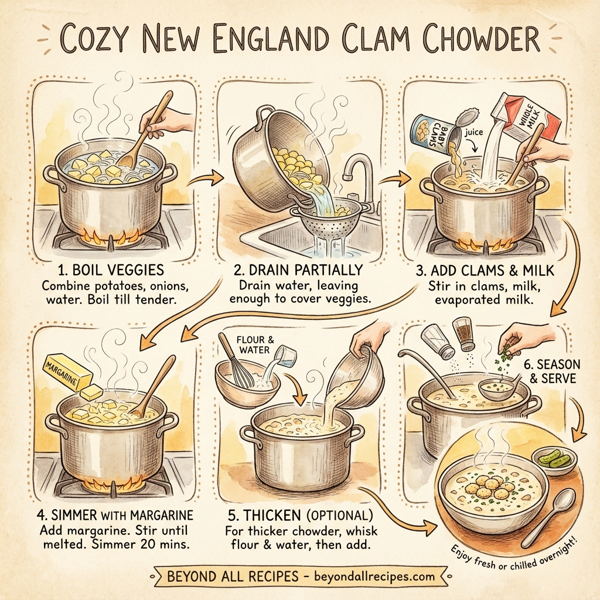
In a large pot, combine the peeled and cubed potatoes with the thinly sliced onions. Add enough water to cover the vegetables.
2
Season with salt and pepper, then bring to a boil over medium-high heat. Boil for approximately 15 minutes or until potatoes are just tender.
3
Carefully drain the water until it barely covers the vegetables, retaining some moisture to keep the chowder from being too dry.
4
Stir in the canned baby clams along with their juice, and if using, the bottled clam juice. Pour in the whole milk and evaporated milk, mixing well.
5
Add the margarine to the pot and stir until melted and well incorporated. Reduce heat to medium and let the chowder heat for about 20 minutes, stirring occasionally.
6
If you desire a thicker chowder, whisk together 1/2 cup of flour with 2 cups of cold water until smooth. Gradually add this mixture to the chowder, stirring until you reach your desired consistency.
7
Season to taste with additional salt and pepper before serving. Enjoy your hearty chowder!
Nutrition Information
Frequently Asked Questions
Frequently Asked Questions
What is the primary flavor profile of the Cozy New England Clam Chowder?
This chowder is rich and creamy, featuring a buttery, savory broth with a hint of sweetness if you choose to add the optional cream-style corn.
What kind of clams are used in this recipe?
The recipe calls for two 10-ounce cans of baby clams, including their juice.
How should I prepare the potatoes for the chowder?
You should use 8 large potatoes, peeled and cubed into 1-inch squares.
How are the onions prepared in this chowder?
The recipe requires 2 large onions that are cut in half and then thinly sliced.
What type of milk is used in the base?
The base uses 2 quarts of whole milk (preferably full-fat) and one 12-ounce can of evaporated milk.
How long do the potatoes and onions need to boil?
Boil the vegetables for approximately 15 minutes or until the potatoes are just tender.
Should I drain all the water after boiling the vegetables?
No, you should drain the water until it barely covers the vegetables, retaining some moisture to prevent the chowder from being too dry.
Is there an optional ingredient to enhance the clam flavor?
Yes, you can optionally add one 16-ounce bottle of clam juice for a deeper seafood flavor.
What fat is used to add richness to the broth?
The recipe specifies adding 1/2 cup of margarine to the pot until melted.
How long should the chowder heat after all the main ingredients are added?
Reduce the heat to medium and let the chowder heat for about 20 minutes, stirring occasionally.
How can I make the clam chowder thicker?
Whisk together 1/2 cup of flour with 2 cups of cold water until smooth, then gradually stir this mixture into the chowder.
Is it better to eat the chowder fresh or wait?
While it tastes incredible fresh, it benefits from resting in the refrigerator overnight to allow the flavors to meld together.
What are some suggested side dishes for this recipe?
Classic side additions include oyster crackers and pickles.
Can I serve this chowder in a bread bowl?
Yes, serving this chowder in a bread bowl is a recommended way to enjoy it.
What does the cream-style corn add to the recipe?
The optional cream-style corn adds a delightful sweetness and texture to the dish.
How many cans of cream-style corn should I use if I want it?
The recipe suggests two 14 3/4 ounce cans of cream-style corn.
How do I season the chowder?
Season with salt and pepper when boiling the vegetables, and then add more to taste before serving.
Is this a good recipe for winter?
Absolutely, it is categorized as a comfort food and winter recipe perfect for chilly afternoons.
What is the total number of ingredients used?
There are 10 total ingredients, including the optional ones.
Can I use butter instead of margarine?
While the recipe specifies margarine, butter can typically be used as a substitute for a similar rich flavor.
Do I need to peel the potatoes?
Yes, the recipe specifies that the potatoes should be peeled before being cubed.
Should the milk be cold when added?
The recipe does not specify temperature for the milk, but you should stir it in well before heating for 20 minutes.
What is the recommended size for the potato cubes?
The potatoes should be cubed into 1-inch squares.
Is this clam chowder considered a 'New England' style?
Yes, it is a traditional creamy New England Clam Chowder.
Do you add the clam juice from the cans?
Yes, the recipe includes the juice from the canned baby clams.
Can I make this for a large group?
With 8 large potatoes and 2 quarts of milk, this recipe yields a hearty amount suitable for several servings.
What should the heat setting be when thickening the chowder?
The chowder should be on medium heat while you gradually add the flour and water mixture.
Is whole milk required?
Whole milk is recommended (preferably full-fat) to achieve the rich consistency typical of New England chowder.
How do you avoid a dry chowder?
By ensuring some of the boiling water is retained in the pot after cooking the vegetables.
Is there a specific way to stir in the flour slurry?
Yes, add the mixture gradually and stir continuously until you reach your desired consistency.