Costa Rican Pico de Gallo
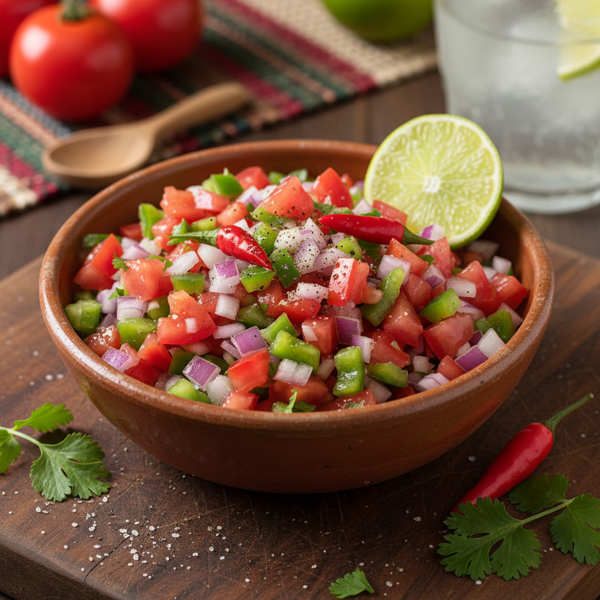
Experience a burst of fresh flavors with this vibrant Costa Rican Pico de Gallo, a staple salsa that complements black beans, rice, and traditional dishes beautifully. This refreshing blend of green and ripe tomatoes, sweet Vidalia onions, and aromatic cilantro creates a perfect harmony of taste while enhancing meals with its zesty notes. Ideal for gatherings or as a zesty topping for your favorite dishes, this salsa is easy to prepare and perfect to elevate your culinary experience. Enjoy the authentic taste of Costa Rica!
N/A
Servings
N/A
Calories
6
Ingredients
Ingredients
green tomatoes
2 (large, coarsely chopped)
ripe tomatoes
2 (large, coarsely chopped)
Vidalia onions
2 (large, finely chopped)
fresh cilantro
1 (bunch, finely chopped including stems)
lemon juice
1 (tablespoon)
balsamic vinegar
2 (tablespoons)
Instructions
1
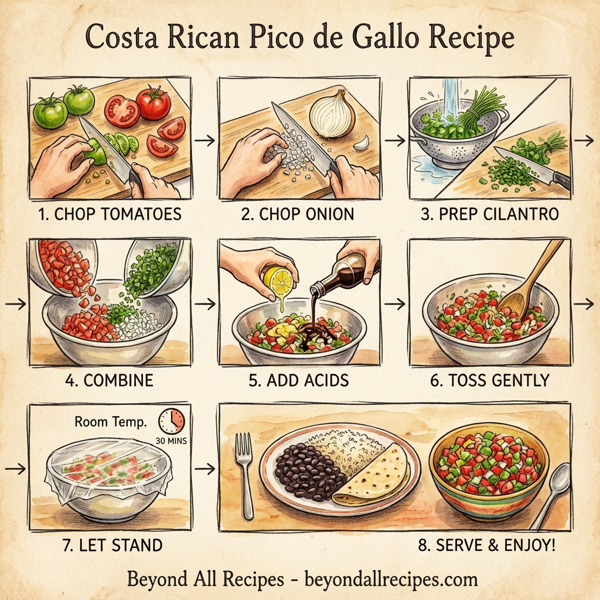
Begin by coarsely chopping the green tomatoes and ripe tomatoes, creating a refreshing base for your salsa.
2
Finely chop the Vidalia onions, ensuring their sweetness infuses beautifully into the mixture.
3
Thoroughly wash the cilantro and finely chop it, including the tender stems, to maximize flavor.
4
In a large mixing bowl, combine the chopped tomatoes, onions, and cilantro.
5
Drizzle the lemon juice and balsamic vinegar over the vegetable mixture to add tanginess.
6
Toss everything together gently to ensure an even distribution of flavors.
7
Cover the bowl with plastic wrap and let the salsa stand for 30 minutes at room temperature; this allows the flavors to meld.
8
Serve with black beans, rice, or your favorite dishes and enjoy the vibrant taste!
Nutrition Information
Frequently Asked Questions
Frequently Asked Questions
What is Costa Rican Pico de Gallo?
It is a vibrant salsa made with green and ripe tomatoes, sweet onions, and cilantro, commonly served with traditional Costa Rican dishes like black beans and rice.
What types of tomatoes are used in this recipe?
This recipe uses a combination of green tomatoes and ripe tomatoes for a balance of texture and flavor.
What kind of onions are recommended for this salsa?
Large Vidalia onions are recommended for their sweetness, which infuses the mixture beautifully.
Do I need to include the cilantro stems?
Yes, you should finely chop the fresh cilantro including the tender stems to maximize the aromatic flavor.
What kind of vinegar is used in this recipe?
The recipe calls for two tablespoons of balsamic vinegar to add a unique tanginess.
How long should the Pico de Gallo sit before serving?
The salsa should stand for 30 minutes at room temperature to allow the flavors to meld properly.
What should I serve with Costa Rican Pico de Gallo?
It is ideal for serving with black beans, rice, or as a zesty topping for various traditional meals.
Is this Pico de Gallo recipe vegetarian?
Yes, this recipe is vegetarian and uses only plant-based fresh ingredients.
How should the tomatoes be prepared?
Both the green and ripe tomatoes should be coarsely chopped to create a refreshing base.
How much lemon juice is needed?
The recipe requires one tablespoon of lemon juice.
Is this recipe considered healthy?
Yes, it is a healthy side dish option made from fresh vegetables and contains no added fats or cholesterol.
How many ingredients are in this Pico de Gallo?
There are 6 main ingredients: green tomatoes, ripe tomatoes, Vidalia onions, fresh cilantro, lemon juice, and balsamic vinegar.
Can I use lime juice instead of lemon juice?
While the recipe specifies lemon juice, you can substitute lime juice if you prefer a different citrus profile.
What is the preparation method for the onions?
The Vidalia onions should be finely chopped to ensure their sweetness is evenly distributed.
How do I mix the ingredients?
Toss all chopped vegetables and liquids together gently in a large mixing bowl to ensure an even distribution of flavors.
Does this salsa contain fat?
Based on the ingredients, this salsa contains zero fat.
Is there any sugar in this recipe?
There is no added sugar in this recipe, though the onions and tomatoes contain natural sugars.
How many green tomatoes are required?
The recipe calls for 2 large green tomatoes.
How many ripe tomatoes are required?
The recipe calls for 2 large ripe tomatoes.
What is the role of balsamic vinegar in this salsa?
Balsamic vinegar provides a specific tanginess and depth that complements the sweetness of the Vidalia onions.
Can I make this salsa ahead of time?
Yes, making it at least 30 minutes ahead allows flavors to develop, and it can be stored in the refrigerator.
Is this recipe spicy?
This specific recipe is not spicy as it does not include chili peppers, focusing instead on fresh and zesty flavors.
Is this salsa gluten-free?
Yes, all the fresh ingredients and vinegars used are naturally gluten-free.
Why let the salsa stand at room temperature?
Allowing it to stand at room temperature for 30 minutes helps the juices release and the flavors harmonize better than immediate refrigeration.
Can I add garlic to this Pico de Gallo?
While not in the original recipe, you can add finely minced garlic if you enjoy the extra flavor.
What is the serving size for this recipe?
The specific serving size is not provided, but the recipe uses 4 large tomatoes and 2 large onions, making several portions.
Is Vidalia onion mandatory?
Vidalia is recommended for its sweetness, but other sweet onion varieties can be used as a substitute.
Can I use dried cilantro?
Fresh cilantro is highly recommended for the best flavor and texture in this fresh salsa.
Should the bowl be covered while resting?
Yes, you should cover the bowl with plastic wrap while the salsa stands for 30 minutes.
What makes this salsa authentic to Costa Rica?
The specific combination of green and ripe tomatoes along with Vidalia onions is characteristic of the Costa Rican variation of this salsa.