Cool-Kitchen Yeast Dough Rising Technique
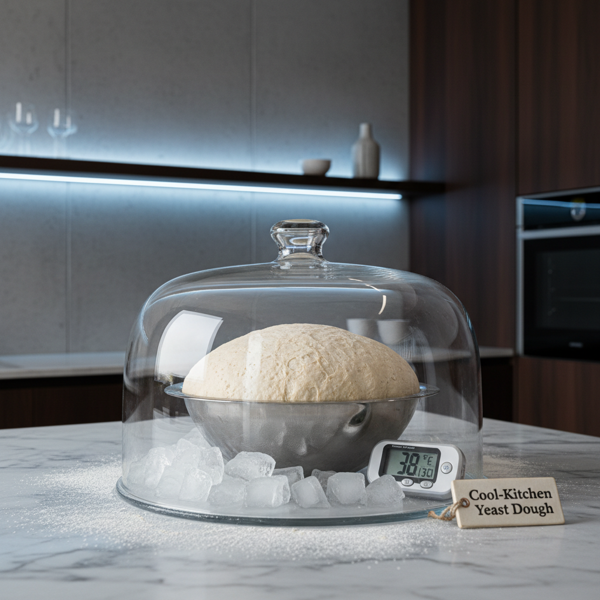
If you find yourself baking in a cool or drafty kitchen, this recipe provides an effective technique for rising yeast dough. With a few simple steps, you can create a warm, steamed environment that encourages the dough to rise beautifully, resulting in soft and fluffy bread. Perfect for those chilly days or when you lack a warm spot in your kitchen for dough to rise. Don’t let a drafty ambiance hinder your baking passion; instead, embrace this method and enjoy freshly baked yeast bread that is sure to impress!
1
Servings
N/A
Calories
2
Ingredients
Ingredients
Warm Water
1 cup (heated to about 110°F (43°C))
Yeast Bread Dough
1 batch (prepared as per your favorite yeast bread recipe)
Instructions
1
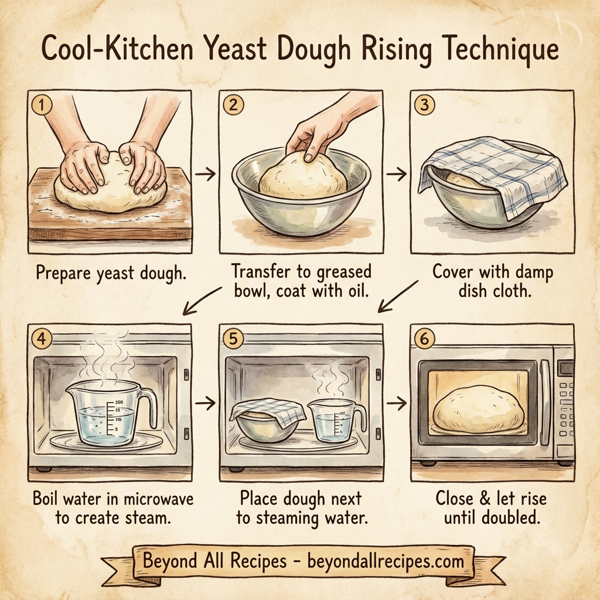
Begin by preparing your favorite yeast bread dough according to your recipe's instructions.
2
Once the dough is ready, transfer it to a greased bowl and turn it over to coat all sides with oil. This helps prevent the dough from drying out.
3
Cover the bowl with a clean, damp dish cloth to retain moisture while the dough rises.
4
In a large glass measuring cup, pour in warm water, filling it halfway, and heat it in the microwave until it reaches a boil, creating steam inside the microwave.
5
Quickly open the microwave door and place the bowl with the dough inside alongside the steaming cup of water. This will create a warm, humid environment for the dough to rise effectively.
6
Close the microwave door promptly to trap the steam. Allow the dough to rise according to your recipe's recommended time, typically until doubled in size.
7
Note: While some prefer placing the dough directly on top of the water, I recommend simply positioning it next to the water for optimal results.
Nutrition Information
Frequently Asked Questions
Frequently Asked Questions
What is the Cool-Kitchen Yeast Dough Rising Technique?
It is a method that uses a microwave and boiling water to create a warm, humid, and draft-free environment to help yeast dough rise in cold kitchens.
Why is this technique useful?
It is perfect for chilly days or drafty kitchens where there isn't a naturally warm spot for bread dough to proof effectively.
Does the microwave stay on while the dough is inside?
No, the microwave is only used to boil the water; it is turned off and the door is kept closed to trap the steam while the dough rises.
What ingredients are needed for this technique?
You need one batch of your favorite yeast bread dough and 1 cup of warm water.
Why do I need to grease the bowl?
Greasing the bowl and turning the dough over ensures it is coated in oil, which prevents the surface from drying out during the rising process.
What type of cover should I use for the dough bowl?
A clean, damp dish cloth is recommended to help retain moisture while the dough rises.
How much water should be used in the measuring cup?
The recipe suggests filling a large glass measuring cup halfway with water (approximately 1 cup).
To what temperature should the water be heated?
The initial warm water should be about 110°F (43°C), then heated in the microwave until it reaches a boil.
Can I place the dough bowl on top of the water cup?
While some do, this technique recommends simply positioning the bowl next to the steaming cup of water for optimal results.
How long should the dough rise in the microwave?
Follow your specific bread recipe's instructions, but typically it should rise until it has doubled in size.
Why is steam necessary for rising dough?
Steam provides both the warmth and the humidity required to activate the yeast and keep the dough soft and pliable.
Does this technique work for any yeast bread?
Yes, this technique can be applied to any standard yeast bread dough recipe.
What should I do after placing the dough in the microwave?
Quickly close the microwave door to trap the steam inside and wait for the dough to rise.
What result can I expect from using this method?
Using this method typically results in soft and fluffy bread because of the controlled rising environment.
Is a glass measuring cup required?
A large glass measuring cup is ideal as it is microwave-safe and retains heat well, but any microwave-safe container will work.
Can this method be used for sourdough?
While the recipe specifies yeast bread dough, the warm environment is generally helpful for any leavened dough that requires proofing.
What if my kitchen is very drafty?
The microwave acts as an insulated box, completely shielding the dough from any external drafts or cold air.
Do I need special ingredients for the dough?
No, just use the ingredients listed in your favorite yeast bread recipe.
Is it safe to put a bowl in the microwave?
Yes, as long as the bowl you use for your dough is microwave-safe. Remember that the microwave is not turned on while the dough is inside.
Why is a damp cloth better than plastic wrap?
A damp cloth helps maintain a high-humidity environment more effectively in conjunction with the steam from the water.
What if the water stops steaming before the dough is done?
If the dough still needs more time and the microwave has cooled, you can briefly remove the dough and reheat the water to a boil again.
Can I use this for pizza dough?
Yes, pizza dough is a type of yeast dough and will benefit from this rising technique.
Does this technique affect the flavor of the bread?
It does not change the flavor, but it ensures a better texture by providing a consistent rise.
How do I know the water is hot enough?
The water must reach a rolling boil to ensure there is enough steam generated inside the microwave chamber.
Should the microwave door be opened during the rise?
No, keep the door closed as much as possible to maintain the warm, humid environment.
Can this method be used in the summer?
Yes, if you have air conditioning that makes your kitchen too cool for dough to rise, this method is still very effective.
What is the very first step?
The first step is to prepare your favorite yeast bread dough according to its specific recipe instructions.
Why is the microwave chosen instead of an oven?
The microwave is a smaller, more contained space than an oven, making it easier to fill with steam quickly.
Does the water amount matter?
Using about 1 cup of water is sufficient to create the necessary steam without taking too long to boil.
Is this a professional baking tip?
Yes, this is a common 'hack' used by home bakers to replicate a professional proofing drawer.