Comforting Daikon and Pork Rib Soup
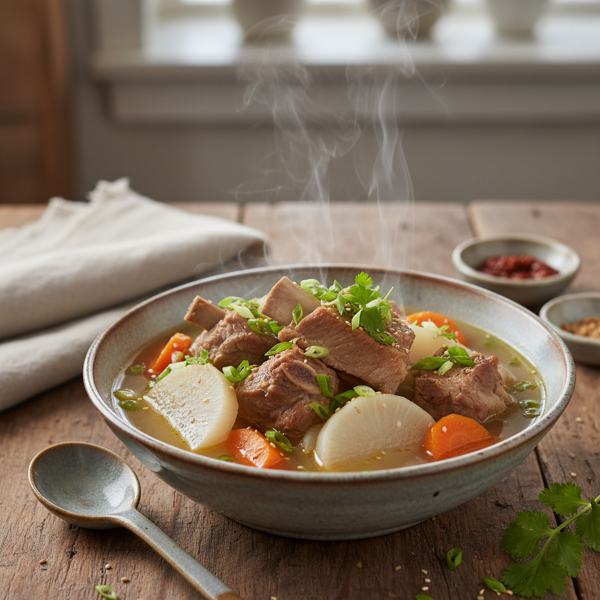
This delightful Daikon and Pork Rib Soup is a hallmark of winter comfort food, perfect for cozy nights in. Inspired by my son’s spontaneous trip to the market, this dish harmoniously blends tender, savory pork ribs with the refreshing, crisp essence of daikon radish. Slow-cooked to perfection, each spoonful is filled with rich flavors that envelop you in warmth. Ideal as a starter or part of a wholesome family meal, this soup brings a touch of traditional Chinese cuisine to your table, ensuring a nourishing experience that delights the palate.
8
Servings
85
Calories
6
Ingredients
Ingredients
Water
2 quarts (none)
Ginger
1 piece, 2-inch (smashed)
Fine Sea Salt
2 teaspoons (none)
Pork Spareribs or Baby Back Ribs
1/2 lb (cut across the bone into 2-inch sections or 1-inch sections)
Daikon Radish
1 lb (peeled and cut into 1-inch thick rounds, then quartered)
Fresh Cilantro or Green Onion
to taste (chopped (optional for garnish))
Instructions
1
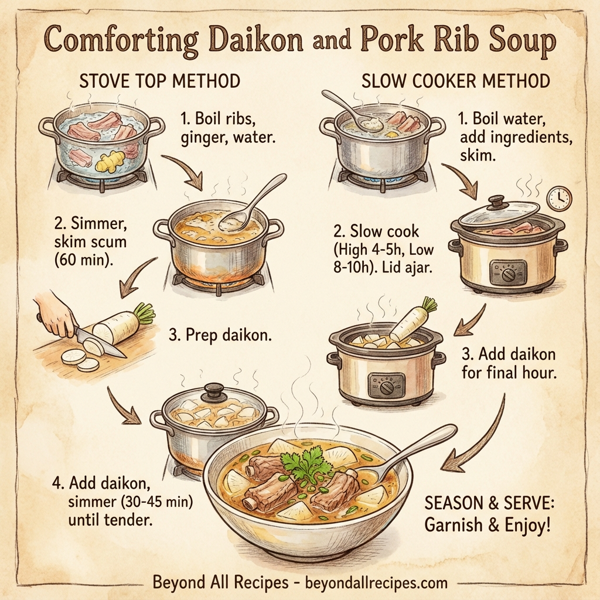
Stove Top Method:
2
1. In a large pot, combine the pork ribs, smashed ginger, and water. Cover and bring the mixture to a vigorous boil.
3
2. Once boiling, reduce the heat to a simmer. Skim off any scum that forms on the surface.
4
3. Cover and let the soup simmer for 60 minutes, allowing the pork to become tender.
5
4. While the pork is cooking, peel the daikon radish and slice it into 1-inch thick rounds, then quarter each round into bite-sized pieces.
6
5. After the initial simmering, add the daikon to the pot. Continue simmering the soup, covered, for an additional 30-45 minutes until both the pork and daikon are fully tender.
7
6. Taste and adjust the seasoning with salt as needed. Serve hot, garnished with fresh cilantro or chopped green onions if desired.
8
7. Enjoy your soup as a comforting first course or a delightful main dish.
9
Slow Cooker Method:
10
1. Use a stovetop to bring the water to a boil in a separate pot.
11
2. Once boiling, carefully add the pork ribs, ginger, and salt to the water. Skim off any foam that rises.
12
3. Transfer the mixture to your slow cooker. Cover and cook on high for 4-5 hours or on low for 8-10 hours.
13
4. Set the lid slightly askew to allow steam to escape, ensuring the soup maintains a flavorful concentration.
14
5. Near the end of the cooking process, prepare the daikon as described above and add it to the slow cooker, letting it cook for the final hour until tender.
15
6. Adjust the seasoning before serving, garnished with fresh cilantro or green onion as desired.
16
7. Serve warm and enjoy the heartiness of this comforting soup.
Nutrition Information
5g
Fat
2.5g
Carbs
7.5g
Protein
Frequently Asked Questions
Frequently Asked Questions
What is Comforting Daikon and Pork Rib Soup?
It is a traditional Chinese clear soup that harmoniously blends tender pork ribs with the refreshing, crisp essence of daikon radish, perfect for winter comfort.
What type of pork ribs should I use for this recipe?
You can use either Pork Spareribs or Baby Back Ribs, cut across the bone into 1-inch or 2-inch sections.
How long does it take to cook the soup on the stove top?
The total stovetop simmering time is approximately 90 to 105 minutes: 60 minutes for the pork alone, followed by 30-45 minutes once the daikon is added.
Can I make this recipe in a slow cooker?
Yes, you can cook it on high for 4-5 hours or on low for 8-10 hours, adding the daikon during the final hour of cooking.
How many servings does this recipe provide?
This recipe makes 8 servings.
How many calories are in one serving of Daikon and Pork Rib Soup?
Each serving contains approximately 85 calories.
What are the nutritional facts for fat and protein?
Each serving contains 5g of fat and 7.5g of protein.
How much water is needed for the soup base?
The recipe requires 2 quarts of water.
How do I prepare the ginger for this soup?
Take a 2-inch piece of ginger and smash it before adding it to the pot.
How should the daikon radish be sliced?
The daikon should be peeled and cut into 1-inch thick rounds, then each round should be quartered into bite-sized pieces.
What is the carbohydrate content per serving?
There are approximately 2.5g of carbohydrates per serving.
What garnish is recommended for this dish?
Freshly chopped cilantro or green onions are recommended for garnishing the soup before serving.
Why is it important to skim the surface of the boiling soup?
Skimming off the scum or foam that forms on the surface ensures the soup remains clear and has a clean flavor.
Do I need to boil the water before putting it in the slow cooker?
Yes, for the slow cooker method, the instructions suggest using the stovetop to bring the water to a boil before transferring the mixture.
How much salt is used in this recipe?
The recipe calls for 2 teaspoons of fine sea salt, with adjustments to taste at the end.
What weight of daikon radish is required?
You will need 1 lb of daikon radish.
What weight of pork ribs is required?
The recipe requires 1/2 lb of pork spareribs or baby back ribs.
Why should the slow cooker lid be set slightly askew?
Setting the lid slightly askew allows steam to escape, which helps maintain a flavorful concentration in the soup.
Is this soup considered a main dish or a starter?
It can be enjoyed as either a comforting first course or a wholesome main dish as part of a family meal.
What culture is this soup inspired by?
This soup is a touch of traditional Chinese cuisine.
When is the best time to serve this soup?
It is ideal for winter and cozy nights in, providing a nourishing and warming experience.
Should the daikon be cooked for the entire duration?
No, the daikon should be added during the final 30-45 minutes of stovetop simmering or the final hour of slow cooking to ensure it doesn't overcook.
Is there any fiber in this soup?
The provided nutritional data indicates that the fiber content is null or negligible.
Is there sugar in this recipe?
No, the nutritional data indicates there is no sugar in this recipe.
What is the primary flavor profile of the soup?
It features rich, savory flavors from the pork ribs balanced by the refreshing and clean taste of the radish.
Can I use different types of salt?
The recipe specifies fine sea salt, but you can adjust seasonings with your preferred salt to taste.
Is the ginger peeled or unpeeled?
The recipe doesn't specify peeling, only that it should be a 2-inch piece and smashed.
How do I know when the pork is done?
The pork is done when it is fully tender, which usually takes about 60 minutes of simmering plus the additional time with the daikon.
Does this soup contain cholesterol?
The nutritional data provided does not list a specific cholesterol value.
How many ingredients are needed in total?
There are 6 total ingredients used in this recipe.