Coconut-Creamed Filipino Chicken & Pork Adobo
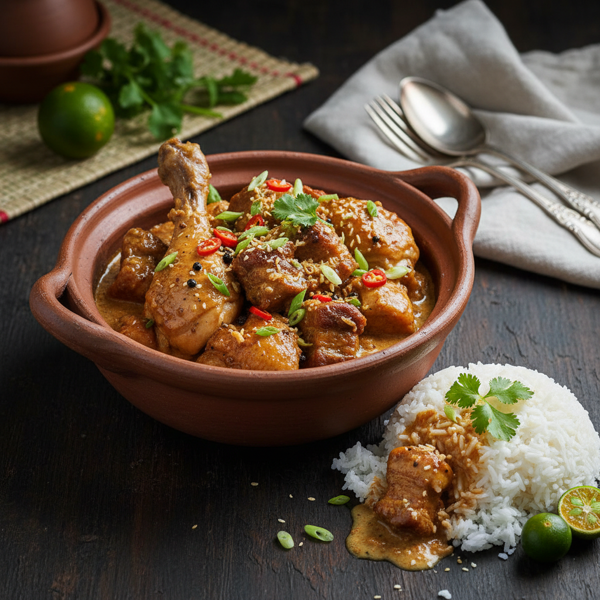
Experience the rich flavors of the Philippines with this Coconut-Creamed Chicken and Pork Adobo. This succulent dish features tender chicken thighs and juicy pork steaks marinated in a fragrant blend of soy sauce, garlic, and vinegar, then slow-cooked in creamy coconut milk. Unlike its Mexican counterpart, this version is savory with a hint of spiciness, making it an incredible one-dish meal that's perfect over fluffy rice. Served with optional brown cane sugar and lemon wedges for a delightful finish, this hearty meal will transport your taste buds straight to the islands.
N/A
Servings
N/A
Calories
11
Ingredients
Ingredients
chicken thighs
8 (skin-on, bone-in, trimmed)
pork steaks
8 (boneless, trimmed)
olive oil or Crisco
4 tablespoons (melted)
onion
1-2 (diced)
garlic cloves
6 (crushed)
bay leaves
2 (whole)
dried red pepper
1 (whole)
water
1 cup (room temperature)
nakano rice vinegar
1/4 cup (unseasoned)
Kikkoman soy sauce
1/2 cup (regular or low sodium)
coconut milk
14 ounces (canned)
Instructions
1
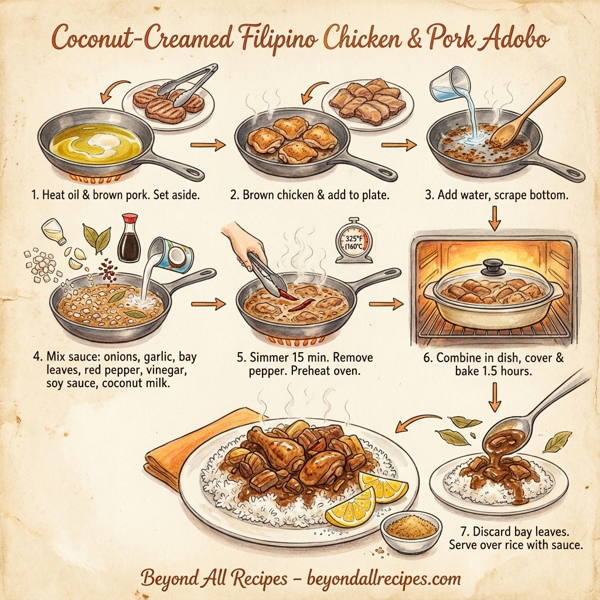
In a large heavy frying pan, heat the olive oil or Crisco over medium heat until melted.
2
Add the pork steaks and fry until they are slightly browned on both sides. Transfer them to a plate and set aside.
3
In the same pan, add the chicken thighs and fry until lightly browned on each side. Transfer to the plate with the pork.
4
Add 1 cup of water to the frying pan, scraping up any browned bits from the bottom.
5
Stir in the diced onions, crushed garlic, bay leaves, dried red pepper, rice vinegar, soy sauce, and coconut milk, mixing well.
6
Reduce heat to low and let the mixture simmer for 15 minutes, stirring occasionally. After 15 minutes, remove and discard the dried red pepper.
7
Preheat your oven to 325°F (160°C).
8
In a large baking dish with a cover, combine the browned chicken and pork with the sauce from the frying pan.
9
Cover the baking dish and bake in the oven for 1.5 hours, allowing the flavors to meld and the meats to become tender.
10
Before serving, discard the bay leaves and plate the adobo over rice, spooning the sauce generously on top. Serve with lemon slices sprinkled with salt and optional brown cane sugar for a unique touch.
Nutrition Information
Frequently Asked Questions
Frequently Asked Questions
What is Coconut-Creamed Filipino Chicken & Pork Adobo?
It is a rich and savory Filipino dish featuring tender chicken thighs and pork steaks marinated in soy sauce, garlic, and vinegar, then slow-cooked in creamy coconut milk.
How does this version differ from traditional adobo?
Unlike some versions, this adobo includes coconut milk for creaminess and a hint of spiciness from a dried red pepper, offering a unique island-style flavor profile.
What specific cuts of chicken are used in this recipe?
The recipe calls for 8 skin-on, bone-in chicken thighs that have been trimmed.
What type of pork is required?
You will need 8 boneless, trimmed pork steaks for this recipe.
What kind of oil should I use for frying the meat?
You can use 4 tablespoons of either olive oil or melted Crisco.
How many onions are needed for the base?
The recipe suggests using 1 to 2 diced onions.
How much garlic is included in the adobo?
The recipe uses 6 crushed garlic cloves to provide a fragrant and savory base.
What type of vinegar is recommended?
The recipe specifies 1/4 cup of unseasoned Nakano rice vinegar.
What kind of soy sauce should I use?
You can use 1/2 cup of Kikkoman soy sauce, either the regular or low-sodium variety.
How much coconut milk is needed for the sauce?
The recipe requires one 14-ounce can of coconut milk.
Does this recipe include any spicy ingredients?
Yes, it includes one whole dried red pepper to add a hint of spiciness to the dish.
How long should the sauce simmer before baking?
The sauce mixture should simmer on low heat for 15 minutes, stirring occasionally.
When should I remove the dried red pepper?
The dried red pepper should be removed and discarded after the initial 15-minute simmer.
What is the recommended oven temperature for baking?
Preheat your oven to 325 degrees Fahrenheit or 160 degrees Celsius.
How long does the adobo need to bake in the oven?
The dish should bake in a covered dish for 1.5 hours.
Should the baking dish be covered or uncovered?
The baking dish should be covered to allow the flavors to meld and the meat to become tender.
What should I do with the browned bits in the frying pan?
Add 1 cup of water to the pan and scrape up those bits to incorporate them into the sauce.
How many bay leaves are used in this recipe?
The recipe calls for 2 whole bay leaves.
When should the bay leaves be removed?
The bay leaves should be discarded just before serving the dish.
What is the best way to serve this adobo?
It is best served over fluffy rice with the creamy sauce spooned generously over the top.
Are there any recommended garnishes?
Yes, it is served with lemon slices sprinkled with salt and an optional sprinkle of brown cane sugar.
Why is brown cane sugar mentioned as an option?
Brown cane sugar provides a unique touch of sweetness that complements the savory and sour notes of the adobo.
Is this dish considered a one-dish meal?
Yes, it is described as an incredible one-dish meal that is hearty and filling.
How many total ingredients are required for this recipe?
There are 11 primary ingredients listed for this Filipino adobo recipe.
Can I use low sodium soy sauce?
Yes, the recipe allows for the use of either regular or low sodium Kikkoman soy sauce.
What is the preparation for the pork steaks?
The pork steaks should be boneless and trimmed before you begin cooking.
What is the temperature of the water used for deglazing?
The recipe specifies using 1 cup of room temperature water.
Does the chicken need to be boneless?
No, the recipe specifically uses bone-in chicken thighs for better flavor.
What are the common tags associated with this dish?
Common tags include Filipino adobo, coconut milk, comfort food, slow-cooked, and rice dish.
How is the meat initially prepared in the pan?
The pork and chicken are fried separately until they are slightly browned on both sides before being baked.