Coconut Caramel Spread (Matamis Na Bao)
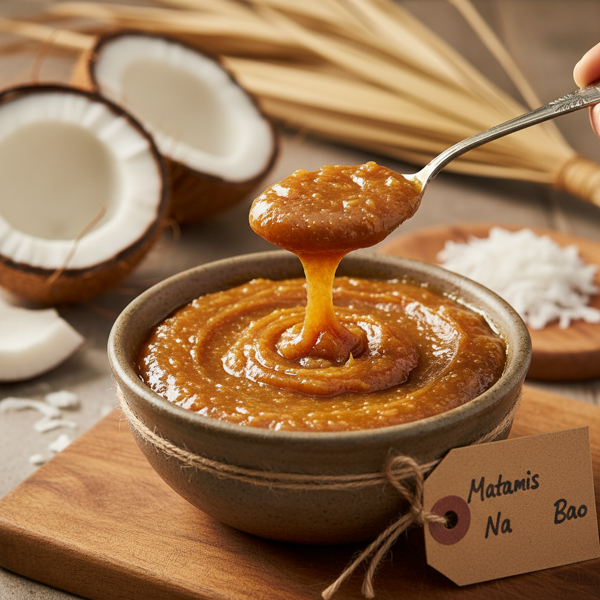
Coconut Caramel Spread, or Matamis Na Bao, is a beloved traditional Filipino breakfast treat that perfectly complements warm, fluffy pandesal. Made from pure coconut milk, rich brown sugar, and sweet corn syrup, this luscious spread is rich in flavor and has a delightful creamy texture. Ideal for slathering on toast or dipping fresh fruits, this cherished delicacy is not just for breakfast; it makes a delightful addition to desserts or even as a sweet topping for pancakes and waffles. Enjoy the taste of the Philippines with every spoonful of this indulgent spread!
N/A
Servings
N/A
Calories
3
Ingredients
Ingredients
Pure coconut milk
5 cups (Fresh or canned)
Brown sugar
2 cups (Packed)
Corn syrup
1 cup (Light or dark)
Instructions
1
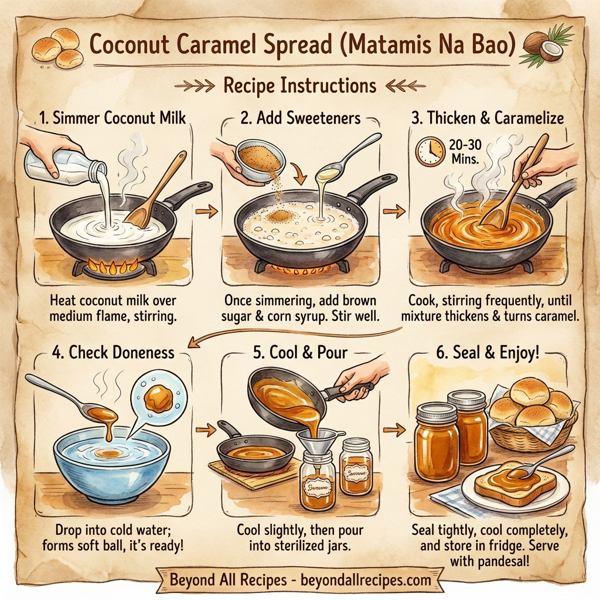
In a non-stick pan, pour in the coconut milk and heat it over medium flame, stirring occasionally.
2
Once the coconut milk begins to simmer and small bubbles appear, carefully add the brown sugar and corn syrup to the mixture.
3
Continue to stir the mixture consistently to prevent it from burning, allowing the sugar to dissolve fully.
4
Keep cooking, frequently stirring, until the mixture thickens and turns a rich caramel color. This may take about 20 to 30 minutes.
5
To check for doneness, drop a small spoonful of the mixture into a bowl of cold water; if it forms a soft ball that retains its shape, it’s ready.
6
Remove the pan from heat and allow it to cool slightly before pouring the warm coconut caramel into sterilized glass containers.
7
Seal the containers tightly to maintain freshness, and allow to cool completely before storing in the refrigerator.
Nutrition Information
Frequently Asked Questions
Frequently Asked Questions
What is Matamis Na Bao?
Matamis Na Bao is a traditional Filipino coconut caramel spread often served with breakfast bread like pandesal.
What does the name Matamis Na Bao mean?
The name literally translates to 'sweet coconut' or 'sweetened coconut shell' in Tagalog.
What are the primary ingredients for this spread?
The spread is made from 5 cups of pure coconut milk, 2 cups of brown sugar, and 1 cup of corn syrup.
Can I use canned coconut milk?
Yes, you can use either fresh or canned pure coconut milk for this recipe.
What kind of sugar is best for this recipe?
Packed brown sugar is used to provide a rich color and deep molasses flavor characteristic of traditional Matamis Na Bao.
Why is corn syrup included in the recipe?
Corn syrup helps create a smooth, creamy texture and prevents the sugar from crystallizing during the cooking process.
How long does it take to cook Matamis Na Bao?
It typically takes about 20 to 30 minutes of consistent cooking and stirring to reach the right thickness and color.
What heat setting should I use?
A medium flame is recommended to ensure the mixture simmers steadily without burning the sugar.
Do I need to stir the mixture constantly?
Yes, consistent stirring is necessary to prevent the sugar from burning at the bottom of the pan and to ensure an even texture.
How do I know when the coconut caramel is finished cooking?
The spread is ready when it thickens significantly, turns a rich caramel color, and passes the cold water test.
What is the cold water test for doneness?
Drop a small spoonful of the mixture into a bowl of cold water; if it forms a soft ball that holds its shape, it is ready.
Can I use white sugar instead of brown sugar?
You can use white sugar, but the spread will be much lighter in color and will lack the signature molasses depth of flavor.
Is this coconut caramel spread vegan?
Yes, this recipe is naturally vegan as it uses coconut milk and plant-based sweeteners instead of animal-derived dairy.
Is Matamis Na Bao gluten-free?
Yes, pure coconut milk, brown sugar, and corn syrup are naturally gluten-free ingredients.
How should I store the finished spread?
Store the cooled spread in sterilized glass containers, seal them tightly, and keep them in the refrigerator.
How long will the spread last in the refrigerator?
When sealed tightly in sterilized jars, the spread can maintain its freshness for several weeks in the refrigerator.
Can I freeze Matamis Na Bao?
Freezing is not recommended because the cold temperature can alter the creamy texture and lead to separation upon thawing.
What foods pair well with this spread?
It is traditionally served with warm pandesal, but it also pairs well with toast, crackers, pancakes, waffles, or fresh fruit.
Can this be used as a cake filling?
Yes, its thick and stable consistency makes it an excellent choice for filling cakes, cupcakes, or pastries.
Why did my spread turn out too hard?
The spread may become too hard if it is overcooked past the soft ball stage or if the ratio of sugar to liquid is too high.
Why is my spread too runny?
It likely needs to be cooked for a longer duration to allow more moisture to evaporate so it can reach the proper thickness.
Why must I use sterilized containers?
Sterilizing the jars removes bacteria and mold spores, which helps prevent spoilage and extends the shelf life of the spread.
Can I double this recipe?
Yes, you can double the recipe, but be aware that the cooking time will increase due to the larger volume of liquid.
Can I add salt to the recipe?
A small pinch of salt can be added to balance the high sweetness and enhance the natural flavor of the coconut.
What can I substitute for corn syrup?
You can substitute with glucose syrup or a mild-flavored honey, though honey will change the final taste slightly.
Does this spread contain any dairy products?
No, this is a completely dairy-free spread made from coconut milk, making it suitable for those with lactose intolerance.
Is Matamis Na Bao the same as Dulce de Leche?
They are similar in texture and use, but Matamis Na Bao is coconut-based while Dulce de Leche is made from cow's milk.
What type of pan is best for cooking this spread?
A heavy-bottomed, non-stick pan is ideal to ensure even heat distribution and prevent the sugar from sticking.
Can I add other flavorings like vanilla?
Yes, you can add a splash of vanilla extract or a pandan leaf during the simmering stage for additional aromatic depth.
Is it necessary to cool the spread before refrigerating?
Yes, allowing the spread to cool completely at room temperature prevents condensation inside the jar, which can cause spoilage.