Clove-Studded Citron Pomander
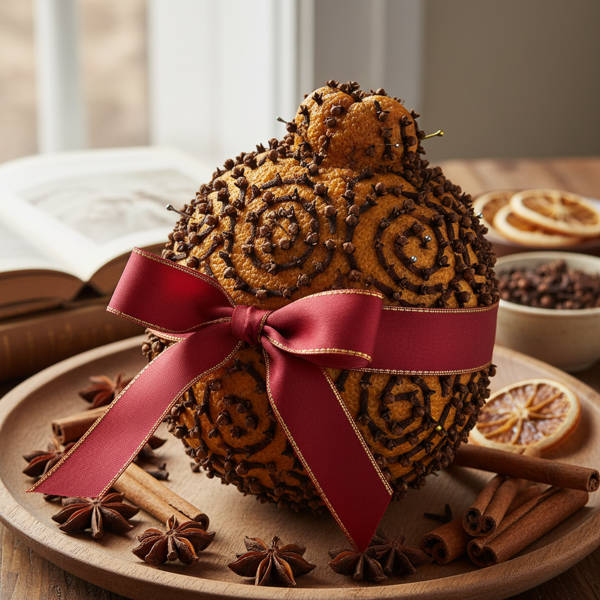
The Clove-Studded Citron Pomander is a delightful and aromatic centerpiece for your holiday celebrations. Specifically cherished during Sukkot, the etrog (citron) represents freshness and beauty, exuding a sophisticated fragrance that can uplift any atmosphere. Traditionally, the etrog is used in rituals and celebrations, lending its sweet scent to rituals like Havdalah, which marks the end of the Sabbath. Studding the fruit with cloves not only enhances its aroma but also prolongs its shelf life; properly dried, these pomanders can last for years! If you find yourself with multiple etrogs, they can make thoughtful gifts for friends and loved ones. Besides etrog, feel free to experiment with other citrus fruits like lemons or oranges for delightful variations. Once the pomander has served its purpose, you can repurpose the fruit into a tasty jam, minimizing waste and maximizing flavor.
N/A
Servings
N/A
Calories
2
Ingredients
Ingredients
Etrog (citron) or any citrus fruit
1 (Whole, washed and dried)
Cloves
60g (Whole)
Instructions
1
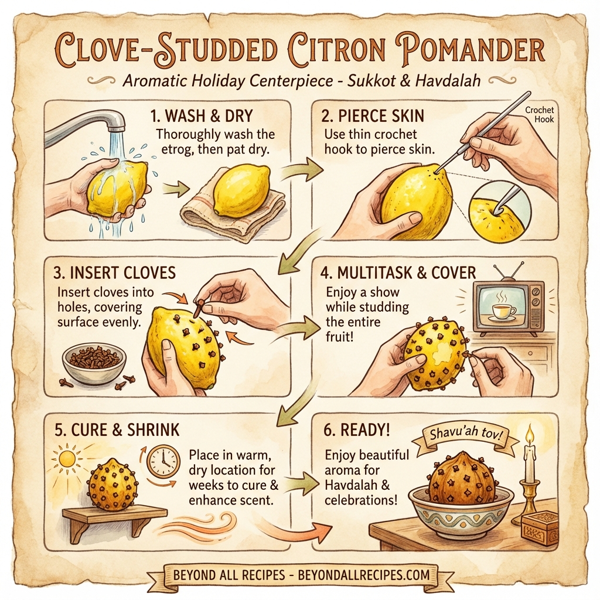
Begin by washing the etrog thoroughly under running water; pat it dry with a clean towel.
2
Select a thin crochet hook (size 0.75 mm or 1.00 mm) and carefully pierce the skin of the etrog at the top.
3
Insert a clove into the pierced hole. Continue this process methodically around the entire surface of the etrog, ensuring an even and aesthetically pleasing distribution of cloves.
4
This task is perfect for multitasking, so consider doing it while enjoying your favorite show for a relaxing experience.
5
Once every nook and cranny of the etrog is studded with cloves, place it in a warm, dry location to cure and shrink. This drying process will enhance its scent and make it suitable for use as a besamim during Havdalah.
6
After a few weeks of drying, your clove-studded etrog is now ready to be used and appreciated for its beautiful aroma. Shavu'ah tov!
Nutrition Information
Frequently Asked Questions
Frequently Asked Questions
What is a Clove-Studded Citron Pomander?
A Clove-Studded Citron Pomander is an aromatic centerpiece made by piercing a citron fruit with whole cloves, traditionally used in holiday celebrations.
What does the etrog represent during Sukkot?
During the holiday of Sukkot, the etrog or citron represents freshness and beauty.
How is the pomander used in Havdalah?
The dried clove-studded etrog is used as besamim, providing a sweet scent for the ritual that marks the end of the Sabbath.
How long can a dried pomander last?
If properly dried and cured, these pomanders can last for several years.
Can I use fruits other than an etrog?
Yes, you can experiment with other citrus fruits such as lemons or oranges to create delightful variations.
What can be done with the fruit once it has served its purpose?
To minimize waste, you can repurpose the fruit into a tasty jam after it has been used.
How should I prepare the etrog before adding cloves?
You should wash the etrog thoroughly under running water and pat it dry with a clean towel.
What tool is recommended for piercing the etrog skin?
A thin crochet hook is recommended for carefully piercing the skin of the fruit.
What size crochet hook should I use?
A crochet hook size of 0.75 mm or 1.00 mm is ideal for this task.
How many cloves are required for one pomander?
The recipe suggests using approximately 60g of whole cloves for one citron.
Where should the pomander be placed to cure?
The pomander should be placed in a warm, dry location to cure and shrink properly.
How long does the drying process take?
The curing and drying process typically takes a few weeks to complete.
What are the benefits of studding the fruit with cloves?
Studding with cloves enhances the fruit's aroma and helps prolong its shelf life.
Can these pomanders be given as gifts?
Yes, they make thoughtful and aromatic gifts for friends and loved ones, especially if you have multiple fruits.
Is this a relaxing activity?
Yes, it is considered a perfect task for multitasking while watching a show or relaxing.
What kind of fragrance does an etrog have?
An etrog exudes a sophisticated, sweet, and uplifting fragrance.
How should the cloves be distributed on the fruit?
Cloves should be inserted methodically around the entire surface for an even and aesthetically pleasing distribution.
Does the fruit shrink during the process?
Yes, during the curing process, the fruit will dry out and shrink.
What is 'besamim'?
Besamim refers to the aromatic spices or fragrances used during the Havdalah ceremony.
Why is it important to wash the fruit first?
Washing removes any surface dirt or residues, ensuring a clean base for the craft and potential later use in jam.
What preparation is needed for the cloves?
The cloves should be whole and are used exactly as they are.
Can I use a lemon as a substitute for an etrog?
Yes, lemons are a common and effective substitute for the citron fruit.
What happens to the scent during drying?
The drying process enhances the scent of the pomander, making it more potent.
Is this project considered a craft?
Yes, it is categorized as a household craft and a natural aromatic project.
What does 'Shavu'ah tov' mean?
'Shavu'ah tov' is a Hebrew greeting used at the end of the Sabbath, meaning 'a good week'.
Is the etrog used in any specific rituals?
Yes, it is traditionally used in rituals during the holiday of Sukkot.
How do you ensure the cloves don't break the fruit?
By pre-piercing the skin with a thin crochet hook, you make it easier to insert the cloves without damaging the fruit.
Can oranges be used for pomanders?
Yes, oranges are frequently used to create aromatic pomanders similar to the citron version.
Is the pomander biodegradable?
Yes, as it is made from fruit and spices, it is a completely natural product.
What is the first step of the instructions?
The first step is to wash the etrog thoroughly under running water and pat it dry.