Classic Victoria Sponge Cake
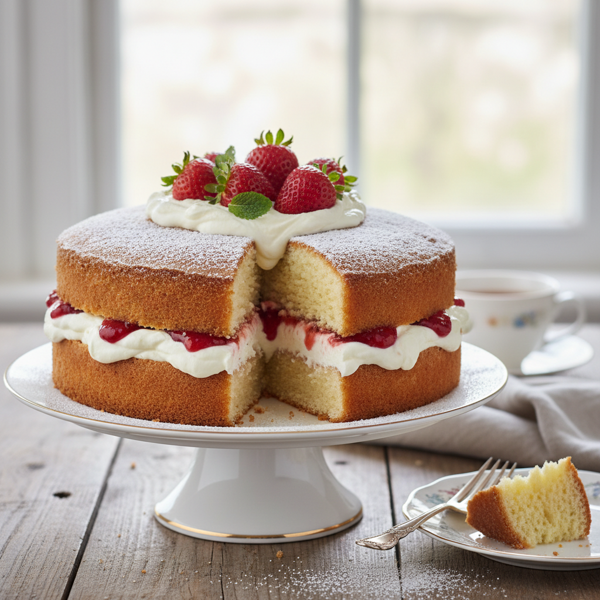
A timeless British classic, this Victoria Sponge Cake boasts a perfect combination of lightness and moisture. Born from a beloved 2004 Sainsbury's magazine recipe, this cake has stood the test of time and remains a favorite for all occasions. Its delicate crumb, paired with a layer of sweet fruit jam and a dusting of icing sugar, make it an irresistible treat. Perfect for everything from afternoon tea to celebratory gathering, it even lends itself beautifully to the creation of charming little fairy cakes.
8
Servings
N/A
Calories
7
Ingredients
Ingredients
self-raising flour
175 g (sifted three times)
butter
175 g (at room temperature)
caster sugar
175 g (none)
eggs
3 (beaten)
vanilla extract
1 teaspoon (none)
fruit jam or curds
3 tablespoons (none)
icing sugar
to dust (none)
Instructions
1
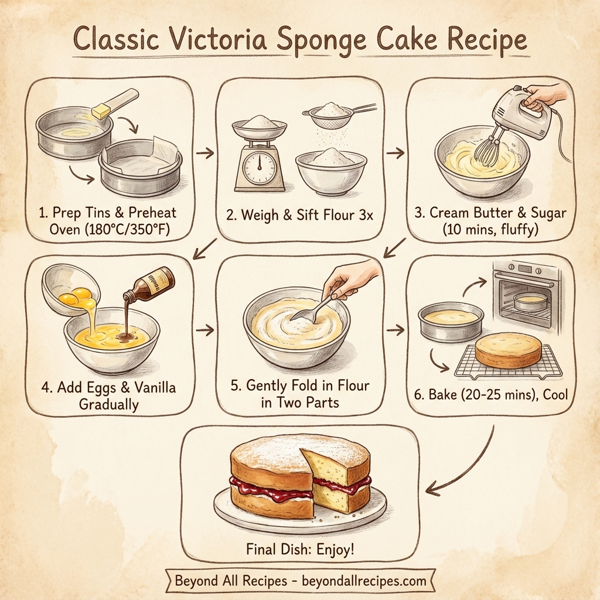
Gather all necessary equipment, including two 19 cm (7 1/2 in) diameter, 4 cm (1 1/2 in) deep sandwich cake tins. Grease these tins and line the bases with baking parchment.
2
Preheat your oven to 180°C (160°C fan), 350°F, or gas mark 4.
3
Weigh out your ingredients carefully. Sift the self-raising flour three times into a large bowl to ensure it's light and airy.
4
Ensure your butter and eggs are at room temperature, as this will help achieve the desired texture.
5
In a mixing bowl, cream together 175 g of butter and 175 g of caster sugar using a hand-held electric whisk. Continue whisking until the mixture becomes pale and fluffy, which should take approximately 10 minutes.
6
In a separate bowl, lightly beat the eggs and add the teaspoon of vanilla extract. Mix well with a fork.
7
Gradually incorporate the egg mixture into the creamed butter and sugar, adding it in about 5 separate parts. Thoroughly beat each addition into the mixture before proceeding to the next.
8
If the mixture appears to be separating, add a small amount of the self-raising flour with the last addition of eggs to help stabilize it.
9
Once all eggs are fully incorporated, gently fold in half of the sifted flour using a metal tablespoon. Be careful not to over-mix.
10
Once well-combined, fold in the remaining flour, ensuring a consistent and smooth batter.
11
Divide your batter evenly between the prepared cake tins, spreading it out with a spatula to ensure an even surface.
12
Place the tins in the oven's center. Bake for 20 to 25 minutes, or until the cakes are golden and spring back when gently touched in the center. No imprint should remain when they are done.
13
Remove the cakes from the oven and allow them to cool for 2 minutes in their tins before turning them out onto a cooling rack.
14
Once cool, carefully sandwich the two layers together using your choice of fruit jam or curds. For the finishing touch, dust the top with icing sugar.
Nutrition Information
Frequently Asked Questions
Frequently Asked Questions
What is the origin of this Classic Victoria Sponge Cake recipe?
This recipe is a timeless British classic that originated from a beloved 2004 Sainsbury's magazine recipe.
How many servings does this Victoria Sponge Cake make?
This recipe makes 8 servings.
What size cake tins are required for this recipe?
You will need two 19 cm (7 1/2 in) diameter, 4 cm (1 1/2 in) deep sandwich cake tins.
How should the cake tins be prepared?
Grease the tins and line the bases with baking parchment before adding the batter.
What is the correct oven temperature for a standard oven?
Preheat your oven to 180°C (350°F) or gas mark 4.
What temperature should be used for a fan-assisted oven?
For fan ovens, set the temperature to 160°C.
How many times should the self-raising flour be sifted?
The flour should be sifted three times into a large bowl to ensure the cake is light and airy.
Why is it important for the butter and eggs to be at room temperature?
Using room temperature ingredients helps to achieve the desired light and moist texture of the sponge.
How long should I whisk the butter and caster sugar together?
Continue whisking for approximately 10 minutes until the mixture becomes pale and fluffy.
What equipment is best for creaming the butter and sugar?
A hand-held electric whisk is recommended for creaming the 175g of butter and 175g of caster sugar.
How should the eggs be prepared before adding them to the batter?
In a separate bowl, lightly beat the three eggs and mix well with one teaspoon of vanilla extract.
How should the egg mixture be incorporated into the creamed butter?
Gradually add the egg mixture in about 5 separate parts, beating thoroughly after each addition.
What should I do if the cake batter begins to separate?
If the mixture separates, add a small amount of the self-raising flour with the final addition of eggs to stabilize it.
What is the best way to fold in the flour?
Gently fold in half of the sifted flour using a metal tablespoon, then fold in the remaining half once well-combined.
How should the batter be divided into the tins?
Divide the batter evenly between the two prepared tins and spread it out with a spatula for an even surface.
Where should the tins be placed in the oven?
The tins should be placed in the center of the oven for even baking.
How long does the Victoria Sponge Cake take to bake?
The cakes should bake for 20 to 25 minutes.
How can I tell if the sponges are cooked?
The cakes are ready when they are golden and spring back when touched in the center without leaving an imprint.
How long should the cakes cool in the tins?
Allow the cakes to cool for 2 minutes in their tins before transferring them to a cooling rack.
What should be used to sandwich the cake layers together?
Once cool, use your choice of fruit jam or curds to sandwich the two layers together.
How much jam is recommended for the filling?
The recipe suggests using 3 tablespoons of fruit jam or curds.
How should the top of the Victoria Sponge be finished?
Finish the cake by dusting the top layer with icing sugar.
Can this batter be used for anything other than a sandwich cake?
Yes, this batter lends itself beautifully to making charming little fairy cakes.
What type of flour is required for this recipe?
The recipe requires 175 g of self-raising flour.
How much butter and sugar are used?
The recipe uses 175 g of butter and 175 g of caster sugar.
What are some characteristic tags for this recipe?
Key tags include British dessert, tea time, sponge cake, and classic recipe.
Is vanilla extract used in a Victoria Sponge?
Yes, this recipe uses 1 teaspoon of vanilla extract mixed with the eggs.
What texture should the final cake have?
The cake should have a delicate crumb and a perfect combination of lightness and moisture.
How many total ingredients are in this recipe?
There are 7 primary ingredients: flour, butter, caster sugar, eggs, vanilla extract, jam, and icing sugar.
Is this cake suitable for afternoon tea?
Yes, it is considered perfect for everything from afternoon tea to celebratory gatherings.