Classic Vanilla Bean Crème Brûlée
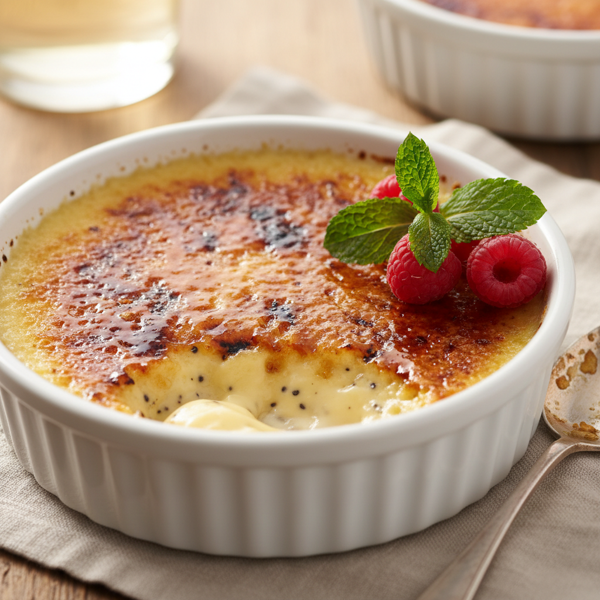
Indulge in the exquisite decadence of this Classic Vanilla Bean Crème Brûlée, a timeless dessert that combines rich creaminess with a satisfyingly crunchy caramelized sugar topping. After extensive experimentation with various recipes and countless tastings at the finest restaurants, I've perfected this version to deliver a harmonious balance of flavors. The aroma of fresh vanilla bean mingling with the luxurious custard creates a truly divine treat. Perfect for impressing guests or simply satisfying your sweet tooth, this crème brûlée will transport you straight to dessert heaven with every silken bite and crack of the brûléed sugar crust.
8
Servings
N/A
Calories
7
Ingredients
Ingredients
heavy cream
1 3/4 cups (none)
milk
1 3/4 cups (none)
vanilla bean
1/2 (split and scraped)
egg yolks
7 (none)
whole eggs
2 (none)
sugar
1/2 cup (none)
brown sugar
to taste (for topping)
Instructions
1
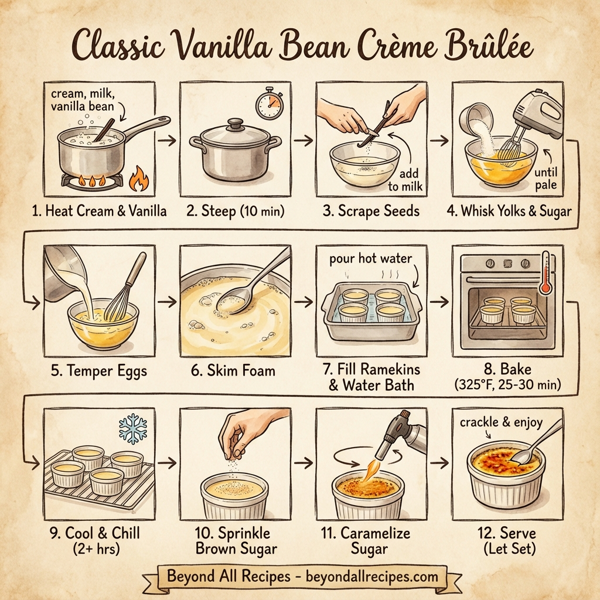
In a medium saucepan, combine the heavy cream, milk, and split vanilla bean. Heat the mixture over medium heat until it reaches a gentle boil.
2
Once boiling, remove the saucepan from heat and let the vanilla bean steep in the cream mixture for about 10 minutes to infuse the flavor.
3
After steeping, scrape the seeds from the vanilla bean into the milk mixture to add a rich vanilla essence, then discard the pod.
4
In a large mixing bowl, use an electric mixer to beat together the egg yolks, whole eggs, and sugar until the mixture is pale and slightly thickened.
5
Gradually pour the warm milk mixture into the egg mixture in a steady stream, whisking continuously to prevent the eggs from cooking.
6
Skim any foam or bubbles off the surface of the custard using a spoon.
7
Divide the custard mixture among 8 small ramekins (about 5 oz. each) and place the ramekins in a baking dish. Carefully pour hot water into the baking dish until it comes halfway up the sides of the ramekins.
8
Bake in a preheated 325°F (163°C) oven for approximately 25-30 minutes, or until the custards are set but still slightly jiggly in the center.
9
Once baked, remove ramekins from the water bath and allow them to cool to room temperature, then refrigerate for at least 2 hours or until chilled.
10
When ready to serve, sprinkle a thin, even layer of brown sugar over the top of each custard.
11
Use a kitchen torch or broiler to caramelize the sugar, moving in a circular motion until it melts and forms a crispy shell.
12
Let the crème brûlée sit for a minute before serving to allow the sugar to harden.
Nutrition Information
Frequently Asked Questions
Frequently Asked Questions
What is the primary flavor of this Classic Vanilla Bean Crème Brûlée?
The primary flavor is derived from a fresh vanilla bean which is steeped in a mixture of heavy cream and milk for a rich, aromatic essence.
How many servings does this recipe provide?
This recipe makes 8 servings, ideally divided into 5 oz. ramekins.
Can I use vanilla extract instead of a vanilla bean?
While a vanilla bean provides the best flavor and signature black seeds, you can substitute with vanilla bean paste or high-quality vanilla extract if necessary.
Why do I need to heat the milk and cream together?
Heating the milk and cream allows the vanilla bean to steep and infuse its flavor, and it prepares the liquid for tempering into the egg mixture.
How long should the vanilla bean steep in the cream mixture?
The vanilla bean should steep for approximately 10 minutes after the mixture reaches a gentle boil.
What should I do with the vanilla pod after steeping?
Scrape the seeds into the milk mixture to ensure maximum flavor, then discard the outer pod.
What eggs are required for this recipe?
The recipe calls for 7 egg yolks and 2 whole eggs to achieve the perfect custard consistency.
How should the egg and sugar mixture look before adding the milk?
The mixture should be beaten with an electric mixer until it is pale in color and slightly thickened.
What is 'tempering' in this recipe?
Tempering is the process of gradually pouring the warm milk into the eggs while whisking continuously to prevent the eggs from scrambling.
Why do I need to skim the foam off the custard?
Skimming the foam ensures a smooth, glass-like surface on the finished custard without air bubbles.
What oven temperature is needed for baking the custards?
The oven should be preheated to 325°F (163°C).
How long do the custards take to bake?
They typically bake for 25-30 minutes, depending on your oven.
What is a water bath and why is it used?
A water bath, or bain-marie, involves placing ramekins in a dish filled with hot water. It provides gentle, even heat to prevent the custard from curdling or cracking.
How deep should the water be in the water bath?
The hot water should come roughly halfway up the sides of the ramekins.
How do I know when the crème brûlée is done baking?
The custards are done when they are set around the edges but still have a slight jiggle in the center.
How long must the crème brûlée chill before serving?
It should refrigerate for at least 2 hours, or until completely chilled.
Can I make this dessert a day in advance?
Yes, you can bake and chill the custards a day ahead, but do not add the sugar topping until you are ready to serve.
What type of sugar is used for the caramelized topping?
This recipe suggests using a thin, even layer of brown sugar for the topping.
How do I create the crispy sugar crust?
Use a kitchen torch in a circular motion to melt and caramelize the sugar, or use a broiler if a torch is unavailable.
What if I don't have a kitchen torch?
You can use your oven's broiler setting. Place the sugar-topped ramekins close to the heat element for a few minutes, watching closely to prevent burning.
How long should I wait after caramelizing the sugar to eat?
Let it sit for about one minute to allow the sugar to harden into a crispy shell.
Is this recipe gluten-free?
Yes, based on the ingredients listed (cream, milk, vanilla, eggs, and sugar), this recipe is naturally gluten-free.
What is the ratio of heavy cream to milk?
The recipe uses an equal ratio of 1 3/4 cups of heavy cream and 1 3/4 cups of milk.
Can I use low-fat milk for this recipe?
While you can, it will result in a less rich and creamy custard. Whole milk is recommended for the best texture.
How much sugar is inside the custard mixture?
The custard base uses 1/2 cup of granulated sugar.
What tools do I need for this recipe?
You will need a saucepan, mixing bowls, an electric mixer, 8 ramekins, a large baking dish, and a kitchen torch.
Should the milk be boiling when I add it to the eggs?
No, it should be warm but not at a rolling boil. If it is too hot, it increases the risk of cooking the eggs instantly.
Can I use white sugar for the topping instead of brown sugar?
Yes, granulated white sugar is also very common for crème brûlée toppings and provides a very clean, glass-like crack.
What happens if I overbake the custards?
Overbaking can cause the custard to become rubbery or develop a 'scrambled egg' texture and flavor.
How do I store leftovers?
Store leftover custards in the refrigerator covered with plastic wrap. Note that the sugar crust will soften and become syrupy over time in the fridge.