Classic Southern Pinto Beans with Fatback
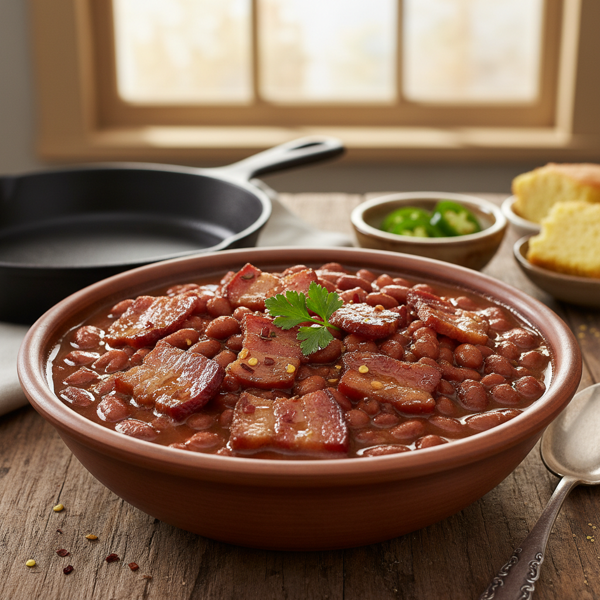
This cherished recipe for Southern Style Pinto Beans hails from my great grandmother's kitchen, a dish that has been lovingly passed down through generations. The pinto beans are slowly simmered with rich, salt-cured pork fatback, infusing each bite with a depth of flavor that can only come from time and care. Serve this hearty dish with warm cornbread and crisp sliced onions for a true Southern experience, perfect for family gatherings or cozy dinners.
8
Servings
N/A
Calories
3
Ingredients
Ingredients
pinto beans
2 cups (dried, sorted, and rinsed)
water
3 pints (filtered or tap)
salt-cured pork fatback
3 ounces (cut into pieces)
Instructions
1
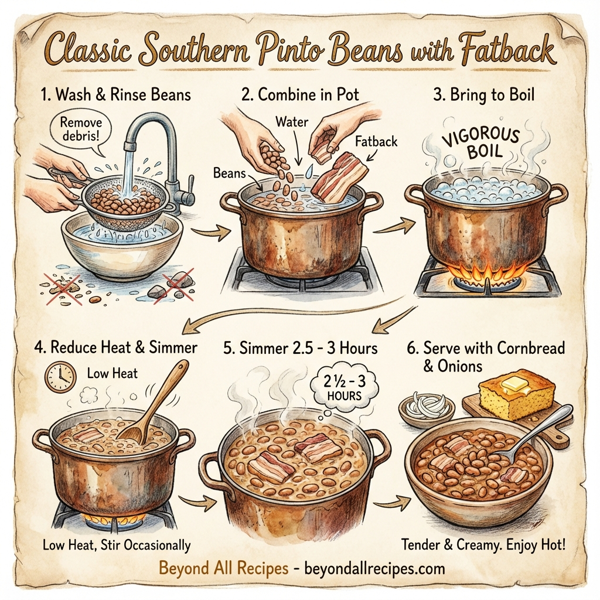
Begin by thoroughly washing the pinto beans, removing any foreign matter like small stones or debris.
2
Rinse the beans twice under cold water to ensure they are clean.
3
In a heavy, large pot, combine the rinsed beans, water, and pieces of salt-cured fatback.
4
Bring the mixture to a vigorous boil over high heat.
5
Once boiling, reduce the heat to low to achieve a gentle simmer.
6
Allow the beans to simmer uncovered for about 2 1/2 to 3 hours, stirring occasionally, until the beans are tender and creamy.
7
Once cooked, taste and adjust the seasoning if necessary. Serve hot with cornbread and sliced onions for a delightful experience.
Nutrition Information
Frequently Asked Questions
Frequently Asked Questions
What is Classic Southern Pinto Beans with Fatback?
It is a traditional Southern dish where dried pinto beans are slow-simmered with salt-cured pork fatback to create a rich, savory, and hearty meal.
Who originally created this recipe?
This cherished recipe was passed down through generations, originally hailing from the creator's great grandmother's kitchen.
How long does it take to cook these pinto beans?
The beans need to simmer for approximately 2 1/2 to 3 hours to achieve the desired tender and creamy texture.
Do I need to soak the beans overnight?
This recipe does not require an overnight soak; instead, it involves thoroughly washing, sorting, and rinsing the beans twice before cooking.
What is fatback and how is it used here?
Fatback is salt-cured pork fat. In this recipe, it is cut into pieces and simmered with the beans to infuse them with a deep, salty flavor.
How many ingredients are needed for this recipe?
This simple recipe requires only three main ingredients: 2 cups of pinto beans, 3 pints of water, and 3 ounces of salt-cured pork fatback.
What should I serve with Southern pinto beans?
For a true Southern experience, serve these beans hot with warm cornbread and crisp sliced onions.
Is the pot covered or uncovered while simmering?
The beans should be allowed to simmer uncovered for the duration of the cooking process.
Why must I sort the pinto beans before cooking?
Sorting is essential to remove any foreign matter like small stones or debris that may be mixed in with the dried beans.
How much water is required?
The recipe calls for 3 pints of water for every 2 cups of dried pinto beans.
What heat setting is used for cooking?
The mixture is first brought to a vigorous boil over high heat and then reduced to low for a gentle simmer.
How many people does this recipe serve?
This recipe is designed to provide approximately 8 servings.
Can I adjust the seasoning of the beans?
Yes, once the beans are fully cooked, you should taste them and adjust the seasoning to your preference before serving.
What is the final texture of the beans?
When properly cooked, the pinto beans should be both tender and creamy.
What type of pot is best for this recipe?
A heavy, large pot is recommended to ensure even heat distribution during the long simmering time.
How often should I stir the beans while they cook?
You should stir the beans occasionally while they are simmering to ensure they cook evenly and don't stick to the bottom.
What tags are associated with this dish?
This dish is tagged as a southern recipe, soul food, comfort food, and a traditional family recipe.
Can I use tap water for this recipe?
Yes, you can use either filtered or tap water as the cooking base.
How do I prepare the pinto beans before they hit the pot?
The beans should be sorted for debris and سپس rinsed twice under cold water to ensure they are clean.
Is there any preparation needed for the fatback?
The salt-cured pork fatback should be cut into pieces before being added to the pot.
Is this recipe considered a main dish or a side?
While it is a hearty dish that can stand alone, it is often served as a central part of a Southern family gathering or dinner.
Does this recipe contain any sugar?
No, this is a savory recipe and does not list sugar as an ingredient.
What makes this 'Southern Style'?
The use of salt-cured fatback, the slow-simmering method, and the traditional pairing with cornbread and raw onions define its Southern style.
Can I add more water if it boils off?
While the recipe specifies 3 pints, you should monitor the pot during the 3-hour simmer and add water if the level gets too low before the beans are tender.
Is this a good recipe for beginners?
Yes, with only three ingredients and simple instructions, it is an excellent way to learn traditional slow-cooking techniques.
Why is the boil described as 'vigorous'?
A vigorous boil at the start ensures the water and ingredients reach the necessary temperature before the long, slow simmer begins.
What category does this recipe fall under?
This recipe is officially categorized under 'Beans'.
Does the fatback provide all the salt needed?
The salt-cured fatback provides a significant amount of salt, but you should still taste the final product to see if more seasoning is required.
Is this a gluten-free dish?
The core ingredients (beans, water, fatback) are naturally gluten-free, though you should check the label on your salt-cured pork to be certain.
Can I substitute the fatback?
While fatback provides the traditional flavor, some people use ham hocks or bacon, though it will change the authentic profile of this specific family recipe.