Classic Sourdough Starter
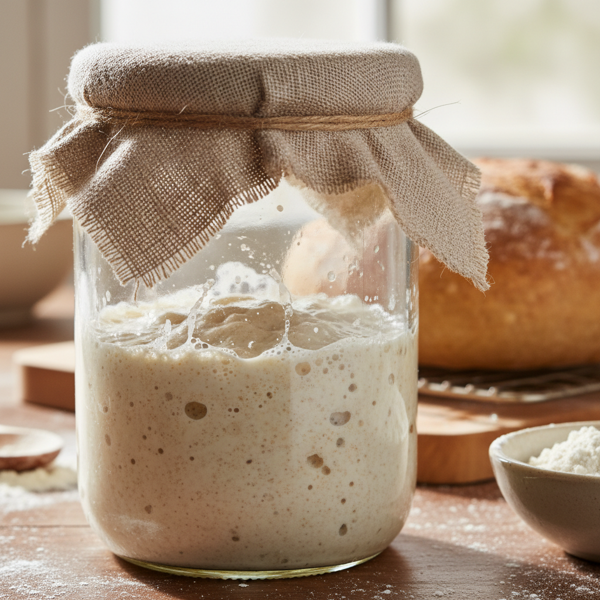
This Classic Sourdough Starter is the foundation for your own homemade sourdough bread. With a simple blend of water, flour, and a touch of sugar, combined with dry yeast, this starter will develop robust flavors in just a few days. Unlike traditional methods where you feed the starter daily, this approach allows you to let the yeast work its magic over 3-4 days, resulting in a vibrant, bubbly starter ready for baking. Once established, you can use this starter repeatedly for delicious sourdough bread while reserving a portion each time for your next batch. Remember to clean the jar thoroughly before adding saved starter back into it to maintain its health and effectiveness.
N/A
Servings
N/A
Calories
4
Ingredients
Ingredients
Dry Yeast
1 tablespoon (Active dry yeast)
Warm Water
2 1/2 cups (Divided into 1/2 cup for dissolving yeast and 2 cups for mixing)
All-Purpose Flour
2 cups (Sifted)
Sugar
1 tablespoon (Granulated)
Instructions
1
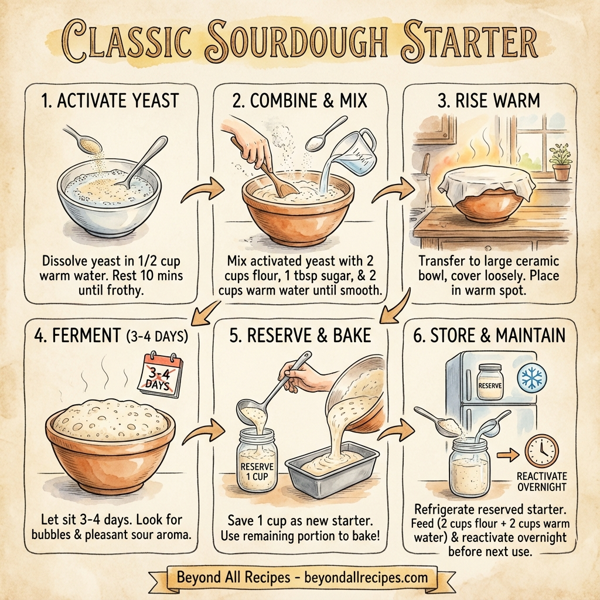
In a small bowl, dissolve the dry yeast in 1/2 cup of warm water. Allow it to rest and activate for about 10 minutes until frothy.
2
In a large bowl, combine the activated yeast mixture with 2 cups of flour, 1 tablespoon of sugar, and the remaining 2 cups of warm water. Mix until a smooth batter forms.
3
Transfer the mixture to a large, loosely covered ceramic bowl to allow for rising. Place the bowl in a warm area of your kitchen.
4
Let the starter sit for 3 to 4 days, checking for bubbles and a pleasant sour aroma, indicating that it is ready to use.
5
When you're ready to bake, reserve 1 cup of the starter as your new starter for the next batch, then use the remaining portion to bake your favorite sourdough recipe.
6
Store the reserved starter in a covered jar in the refrigerator until you're ready to use it again.
7
Before using the starter again, feed it by adding 2 cups of flour and 2 cups of warm water, and allow it to sit at room temperature overnight to reactivate.
Nutrition Information
Frequently Asked Questions
Frequently Asked Questions
What is a Classic Sourdough Starter?
It is a foundational mixture for homemade bread made with flour, water, sugar, and yeast that develops robust flavors over several days.
How many ingredients does this recipe require?
This recipe requires 4 main ingredients: dry yeast, warm water, all-purpose flour, and sugar.
What type of yeast is used for the starter?
The recipe uses active dry yeast for the fermentation process.
How much dry yeast is needed?
You will need 1 tablespoon of active dry yeast.
What type of flour should I use?
The recipe calls for all-purpose flour.
Is the flour supposed to be sifted?
Yes, the recipe specifies that the flour should be sifted.
How much warm water is needed in total?
A total of 2 1/2 cups of warm water is required for the initial batch.
How do I divide the warm water for the recipe?
Use 1/2 cup to dissolve the yeast and the remaining 2 cups for mixing the batter.
What is the role of sugar in this starter?
Sugar is used to feed the yeast and help develop the starter's flavor profile.
How much sugar is required?
The recipe requires 1 tablespoon of granulated sugar.
How long should I let the yeast rest initially?
Allow the yeast mixture to rest and activate for about 10 minutes.
How do I know if the yeast is activated?
The yeast mixture should look frothy after resting for 10 minutes.
What kind of bowl should I use for the mixture?
A large ceramic bowl is recommended for the fermentation process to allow for rising.
How should the ceramic bowl be covered?
The bowl should be loosely covered to allow for proper rising and gas release.
Where is the best place to keep the starter while it sits?
Place the bowl in a warm area of your kitchen to encourage activity.
How many days does the starter need to sit?
Let the starter sit for 3 to 4 days to develop.
What are the visual signs that the starter is ready?
The starter is ready when it is vibrant and shows visible bubbles.
What should the sourdough starter smell like?
It should have a pleasant sour aroma once it is ready to use.
How much starter should I reserve for future batches?
You should reserve exactly 1 cup of the starter to use as the base for your next batch.
What do I do with the portion of starter I don't reserve?
Use the remaining portion of the starter to bake your favorite sourdough bread recipe.
Where should the reserved starter be stored?
Store the reserved 1 cup of starter in a covered jar inside the refrigerator.
How should the storage jar for the reserved starter be prepared?
The jar should be cleaned thoroughly before adding the saved starter back into it.
Why is it important to clean the storage jar?
Cleaning the jar helps maintain the overall health and effectiveness of the sourdough culture.
How do I reactivate the starter after refrigeration?
Reactivate it by feeding it with flour and water and letting it sit at room temperature.
What are the ingredients for feeding the starter?
Feed the starter by adding 2 cups of flour and 2 cups of warm water.
How long should the fed starter sit out?
Allow the fed starter to sit at room temperature overnight to fully reactivate.
Does this method require daily feeding initially?
No, this specific approach allows the yeast to work over 3-4 days without the need for daily maintenance.
What is the benefit of letting the starter sit for 3 to 4 days?
This duration allows the starter to develop more robust and vibrant flavors.
Can this starter be used repeatedly?
Yes, once established, you can use and reserve a portion of this starter repeatedly for many batches.
What is the consistency of the initial mixture?
The mixture should be stirred until a smooth batter forms before being left to ferment.