Classic Roman Spaghetti Cacio e Pepe
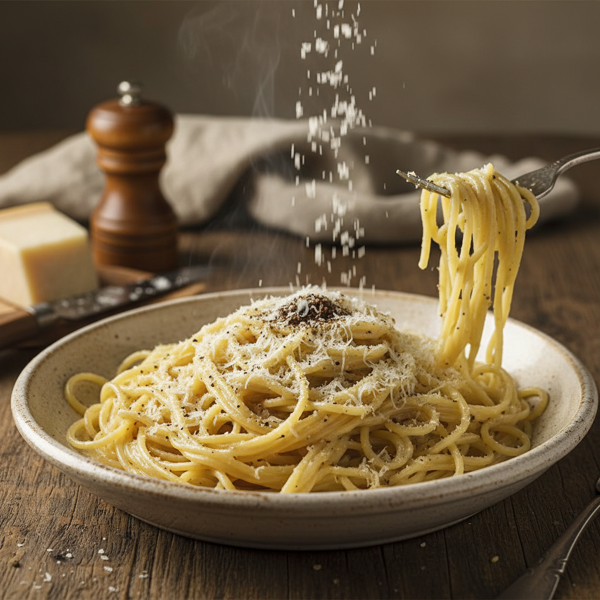
Indulge in the simplicity and deliciousness of this classic Roman dish, Spaghetti Cacio e Pepe. Originating in the heart of Rome, this recipe features minimal ingredients that come together to create a creamy, savory pasta dish. With just spaghetti, rich butter, freshly cracked black pepper, and bold Parmesan cheese, you can enjoy a delightful meal that showcases the beauty of Italian cuisine. Perfect for a quick weeknight dinner or a cozy gathering, this Spaghetti Cacio e Pepe is sure to impress your family and friends while keeping prep time to a minimum.
4
Servings
N/A
Calories
4
Ingredients
Ingredients
spaghetti
8 (ounces)
butter
2 (tablespoons)
cracked black pepper
2 (teaspoons)
Parmesan cheese
1 (cup, freshly grated)
Instructions
1
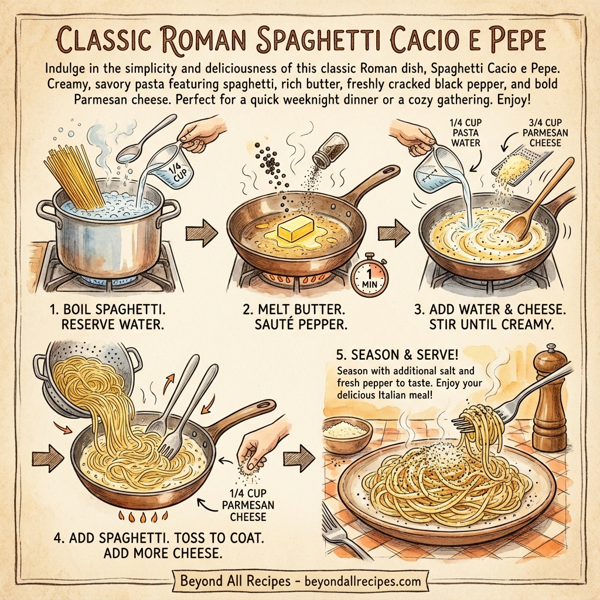
Bring a large pot of salted water to a boil. Add the spaghetti and cook according to package directions until al dente. Reserve 1/4 cup of the pasta cooking liquid before draining.
2
In a large skillet over medium heat, melt the butter. Add the cracked black pepper and sauté for one minute until fragrant, allowing the oils to infuse the butter.
3
Pour in the reserved pasta cooking liquid, then add 3/4 cup of the freshly grated Parmesan cheese. Stir constantly until the cheese has fully melted and the mixture forms a creamy sauce.
4
Add the drained spaghetti to the skillet and toss it gently to coat the pasta evenly with the sauce. Gradually sprinkle in the remaining 1/4 cup of Parmesan cheese and toss again until well mixed.
5
Season with additional salt and freshly cracked pepper to taste, ensuring a perfect balance of flavors before serving.
Nutrition Information
Frequently Asked Questions
Frequently Asked Questions
What is Cacio e Pepe?
Cacio e Pepe is a classic Roman pasta dish known for its simplicity, featuring a creamy sauce made from cheese and black pepper.
What does the name Cacio e Pepe mean?
The name translates to 'cheese and pepper' in Italian dialects.
Where did Cacio e Pepe originate?
This dish originates from the heart of Rome, Italy.
How many ingredients are in this recipe?
This recipe uses 4 main ingredients: spaghetti, butter, black pepper, and Parmesan cheese.
Which pasta shape is used in this recipe?
This recipe specifically calls for spaghetti.
Is this recipe vegetarian?
Yes, based on the ingredients provided, this is a vegetarian-friendly pasta dish.
How many servings does this recipe provide?
This recipe is designed to yield 4 servings.
What is the first step in preparing the pasta?
The first step is to bring a large pot of salted water to a boil and cook the spaghetti until al dente.
What does 'al dente' mean?
Al dente refers to pasta that is cooked to be firm to the bite.
Should I save the pasta water?
Yes, you should reserve 1/4 cup of the pasta cooking liquid before draining the spaghetti.
What is the purpose of the reserved pasta water?
The starchy cooking liquid helps the cheese melt into a smooth, creamy sauce that coats the pasta.
How is the butter used in this recipe?
The butter is melted in a large skillet to serve as the base for sautéing the black pepper.
How long should I sauté the black pepper?
The cracked black pepper should be sautéed in butter for about one minute until it becomes fragrant.
What kind of cheese is used in this version of the recipe?
This recipe uses 1 cup of freshly grated Parmesan cheese.
Can I use pre-grated cheese?
For the best results and a smoother sauce, it is recommended to use freshly grated Parmesan cheese.
How do I make the sauce creamy?
The sauce becomes creamy by stirring the cheese constantly into the mixture of melted butter and reserved pasta water.
When do I add the spaghetti to the sauce?
Add the drained spaghetti to the skillet after the cheese has fully melted and formed a creamy sauce.
How much cheese is added at the end?
After the initial sauce is formed, an additional 1/4 cup of Parmesan cheese is sprinkled in and tossed.
Should I add salt to the final dish?
Yes, you should season with additional salt and freshly cracked pepper to taste before serving.
What makes this a 'quick meal'?
With minimal prep and a simple cooking process, it can be prepared in the time it takes to boil pasta.
What is the texture of Classic Roman Spaghetti Cacio e Pepe?
The texture is creamy and savory, with a slight bite from the freshly cracked pepper.
Can I use a different type of pepper?
Freshly cracked black pepper is essential for the traditional bold flavor profile of this dish.
Is there a specific amount of butter to use?
The recipe calls for 2 tablespoons of butter.
How much black pepper is required?
The recipe uses 2 teaspoons of cracked black pepper.
Is this a traditional Italian recipe?
While it uses butter (which is a common variation), it follows the classic Roman style of minimal, high-quality ingredients.
What equipment do I need?
You will need a large pot for the pasta and a large skillet for the sauce.
Is this dish spicy?
It has a noticeable warmth and kick due to the significant amount of black pepper, but it is not 'spicy' in the way chili peppers are.
Can this be served at a dinner party?
Yes, its simplicity and elegant flavor make it a great choice for both casual dinners and cozy gatherings.
What is the most important part of the sauce?
The most important part is the emulsion created by the cheese, butter, and starchy pasta water.
Does this recipe include garlic or onions?
No, this classic version focuses strictly on the flavors of cheese, pepper, and butter.