Classic Peppercorn Steak
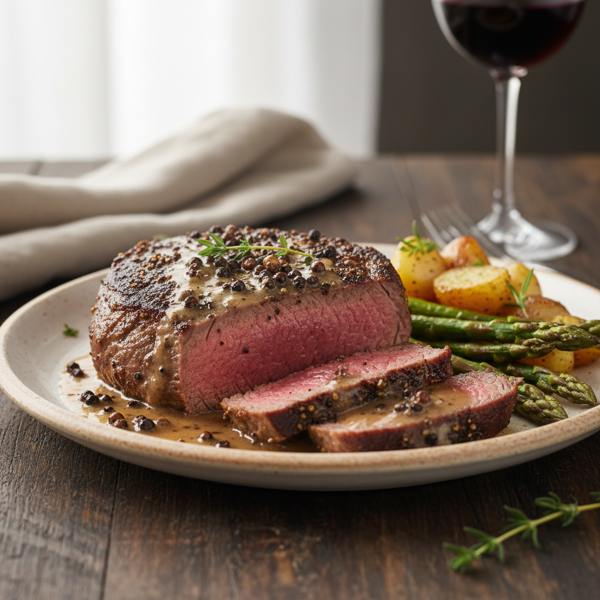
Indulge in the rich flavors of Classic Peppercorn Steak, a gourmet dish that transforms a simple cut of beef into a memorable culinary experience. This recipe focuses on a perfect sear, locking in the juices and flavor of the steak while meeting the bold, aromatic characteristics brought forth by whole black peppercorns. The absence of a heavy sauce allows the natural taste of the beef to shine, complemented by a reduction of red wine that adds depth and a touch of sophistication. Ideal for a romantic dinner or an impressive gathering, this dish is quick to prepare, making it suitable for both novice and experienced cooks. Master this technique to create an exquisite meal that will tantalize the taste buds and leave your guests raving.
2
Servings
N/A
Calories
6
Ingredients
Ingredients
strip steaks
2 (6-8 ounces each, patted dry)
whole black peppercorns
2 teaspoons (coarsely crushed)
olive oil
2 tablespoons (divided)
garlic clove
1 (crushed)
red wine
5 ounces (preferably dry)
salt
1 teaspoon (to taste)
Instructions
1
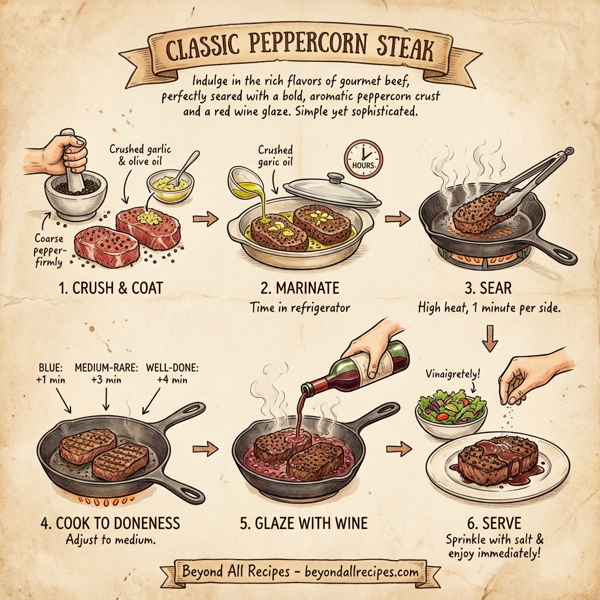
Begin by preparing the steaks at least a few hours in advance, if possible. Crush the black peppercorns coarsely and place them in a shallow dish large enough to accommodate both steaks without touching.
2
In a small bowl, mix 1 tablespoon of olive oil with half of the crushed garlic. Rub this mixture over the steaks on both sides, then generously coat each steak with the crushed peppercorns, pressing the pepper firmly into the meat. This helps create a robust crust when searing.
3
Place the coated steaks back in the dish, drizzling the remaining tablespoon of olive oil and the rest of the crushed garlic over them. Cover the dish and refrigerate, allowing the flavors to meld for several hours, turning once if you can.
4
When you're ready to cook, heat a cast iron skillet or a heavy-based frying pan over high heat until it is very hot. The key to the perfect sear is a properly preheated pan.
5
Carefully lay each steak in the hot pan. Sear for approximately 1 minute on each side without moving them, using tongs to flip to prevent piercing the meat and losing juices.
6
After searing, adjust the heat to medium and continue to cook according to your desired doneness. For 'blue' (very rare), cook for an additional minute; for medium-rare, cook for 3 minutes more; for well-done, about 4 minutes.
7
One minute before the cooking time is up, pour the red wine into the pan, allowing it to bubble and reduce to a syrupy consistency (about one-third of its original volume). This will create a flavorful glaze.
8
Once cooked to your liking, remove the steaks from the skillet, sprinkle with salt, and serve immediately. This peppercorn steak pairs beautifully with a mixed green salad dressed with a simple vinaigrette.
Nutrition Information
Frequently Asked Questions
Frequently Asked Questions
What is Classic Peppercorn Steak?
Classic Peppercorn Steak is a gourmet beef dish featuring a robust peppercorn crust and a sophisticated red wine reduction glaze.
What cut of meat is used in this recipe?
The recipe calls for two strip steaks, each weighing between 6 and 8 ounces.
How many servings does this recipe provide?
This recipe is designed to serve 2 people.
How should the peppercorns be prepared?
The whole black peppercorns should be crushed coarsely to create a textured crust.
Can I use pre-ground black pepper?
For the best results and a true gourmet crust, it is recommended to use coarsely crushed whole peppercorns instead of fine pre-ground pepper.
How long should the steaks marinate?
The steaks should be refrigerated for several hours to allow the garlic, oil, and peppercorn flavors to meld.
What is the role of garlic in this recipe?
Crushed garlic is mixed with olive oil and rubbed onto the steaks to provide an aromatic depth of flavor.
How much olive oil is needed?
A total of 2 tablespoons of olive oil is used, divided between the initial rub and the marinating process.
What kind of pan is best for cooking the steak?
A cast iron skillet or a heavy-based frying pan is ideal for achieving the perfect sear.
How hot should the pan be before cooking?
The pan should be preheated over high heat until it is very hot to ensure a proper sear.
How long should I sear each side of the steak?
Sear each side for approximately 1 minute without moving the steak to lock in the juices.
How do I cook a steak to 'blue' doneness?
After the initial sear, cook the steak for an additional 1 minute for a blue or very rare finish.
What is the cooking time for a medium-rare steak?
For medium-rare, cook the steak for an additional 3 minutes after the initial searing process.
How long does it take to cook a steak to well-done?
To achieve a well-done steak, cook it for approximately 4 minutes after the initial sear.
Why is red wine added to the pan?
The red wine is used to deglaze the pan and reduce into a syrupy, flavorful glaze for the meat.
What type of red wine is recommended?
A dry red wine is preferred for this recipe to add depth without excessive sweetness.
When should I add salt to the steak?
Salt should be sprinkled over the steaks immediately after they are removed from the skillet.
Should I dry the steaks before preparing them?
Yes, patting the steaks dry before applying the oil and peppercorns helps achieve a better crust.
Why use tongs instead of a fork to flip the steak?
Using tongs prevents piercing the meat, which helps keep the flavorful juices inside the steak.
What is a good side dish for peppercorn steak?
A mixed green salad with a simple vinaigrette is a recommended pairing for this rich dish.
Is this recipe suitable for beginner cooks?
Yes, the recipe is designed to be accessible for both novice and experienced cooks.
How do I ensure the peppercorns stay on the steak?
Press the crushed peppercorns firmly into the oil-rubbed meat to help them adhere and form a crust.
What consistency should the wine reduction have?
The wine should be reduced until it reaches a syrupy consistency, about one-third of its original volume.
Can I substitute the red wine?
While wine is preferred, you can use beef stock as a non-alcoholic alternative, though the flavor profile will change.
Do I need to turn the steak while it marinates?
The recipe suggests turning the steaks once during the refrigeration period if possible.
Should I move the steak around while searing?
No, leave the steak still for the first minute of searing on each side to develop a proper crust.
Is this considered a quick meal?
While it requires advance marinating, the actual cooking time is very fast, making it a great quick-cook option.
How much salt is used?
The recipe suggests 1 teaspoon of salt, or to taste, added at the end of cooking.
What makes this a gourmet dish?
The combination of a professional searing technique, high-quality beef, and a red wine reduction elevates it to gourmet status.
Can I cook more than two steaks at once?
Yes, provided your skillet is large enough to accommodate them without crowding, which would steam the meat rather than sear it.