Classic New England Salmon with Creamy Egg Sauce
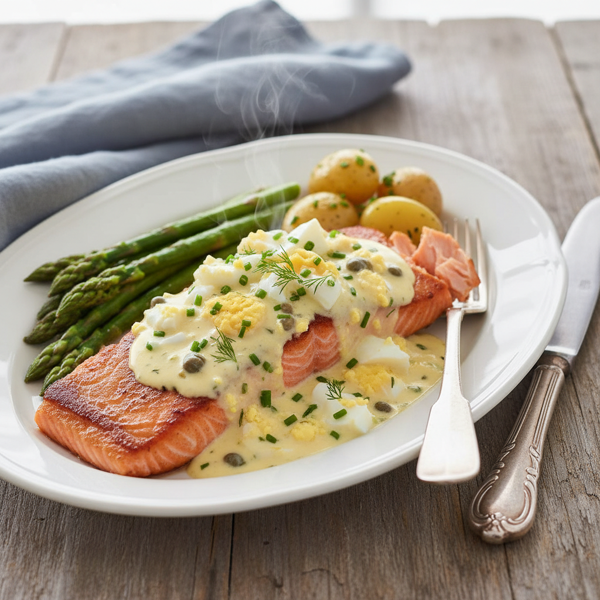
Experience the authentic taste of New England's Independence Day tradition with this timeless recipe: poached salmon elevated by a rich and creamy egg sauce. Perfectly complemented by the fresh flavors of dill and hearty undertones from poaching herbs, this dish offers a delightful combination of textures and flavors. Ideal for a celebratory meal, the egg sauce pairs beautifully with any baked or broiled fish, and serves as a delicious companion to your health-conscious seafood repertoire. Complete your festive dining with seasonal sides like baby peas, new potatoes, and finish with the ultimate summer dessert: strawberry shortcake.
N/A
Servings
N/A
Calories
16
Ingredients
Ingredients
Small Onion
1 (halved)
Peppercorns
5 (whole)
Bay Leaf
1 (whole)
Dill
4 sprigs (plus additional for garnish)
Salmon Steaks
4 (1-inch thick, about 1 1/2 pounds total)
Butter
3 tablespoons (unsalted)
All-purpose Flour
1/4 cup (sifted)
Poaching Liquid
1/2 cup (reserved from poached salmon)
Canned Chicken Broth
3/4 cup (divided)
Heavy Cream
1/2 cup (fresh)
Salt
1 dash (to taste)
White Pepper
1/8 teaspoon (ground)
Carrot
1/4 cup (finely chopped)
Onion
1/4 cup (finely chopped)
Hard-Cooked Eggs
2 (peeled and coarsely chopped)
Chopped Fresh Dill
2 tablespoons (fresh)
Instructions
1
[object Object]
2
[object Object]
3
[object Object]
4
[object Object]
5
[object Object]
Nutrition Information
Frequently Asked Questions
Frequently Asked Questions
What is Classic New England Salmon with Creamy Egg Sauce?
It is a timeless Independence Day tradition from New England featuring poached salmon served with a rich, creamy sauce made with hard-cooked eggs and fresh dill.
How long does it take to poach the salmon?
The salmon steaks should be poached for approximately 8 to 10 minutes until they become opaque.
What are the ingredients for the salmon poaching liquid?
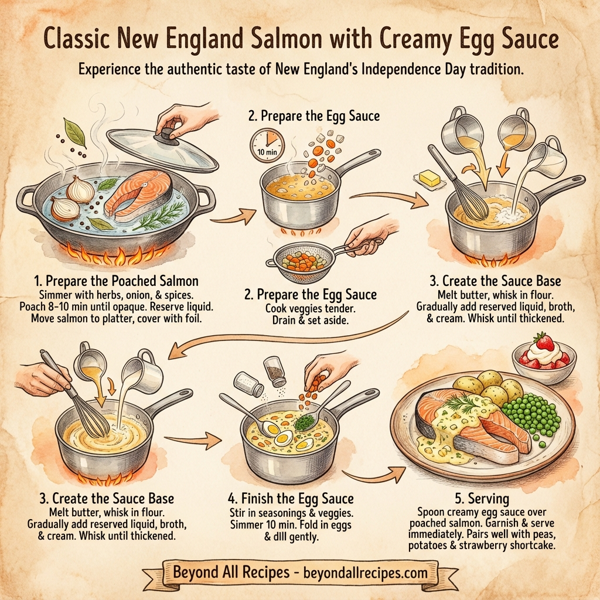
The poaching liquid consists of 3 cups of water, one halved onion, 5 peppercorns, 1 bay leaf, and 4 sprigs of fresh dill.
How do I make the creamy egg sauce?
The sauce is made by creating a roux with butter and flour, then whisking in poaching liquid, chicken broth, and heavy cream before adding cooked vegetables, chopped eggs, and dill.
Can I use the egg sauce with other types of fish?
Yes, this creamy egg sauce pairs beautifully with any baked or broiled fish.
What vegetables are included in the sauce?
The sauce includes 1/4 cup each of finely chopped carrots and onions, which are simmered in chicken broth until tender.
What type of salmon is recommended for this recipe?
The recipe calls for 4 salmon steaks that are 1-inch thick, totaling about 1 1/2 pounds.
How many eggs are needed for the sauce?
You will need 2 hard-cooked eggs that are peeled and coarsely chopped.
What is the best way to serve this dish?
Place the poached salmon on a plate, generously spoon the egg sauce over it, and garnish with fresh dill sprigs.
What sides pair well with New England Salmon?
Traditional seasonal sides include baby peas and new potatoes.
What dessert is suggested to complete this meal?
Strawberry shortcake is recommended as the ultimate summer dessert to finish this festive dining experience.
Do I need to save the liquid used to poach the salmon?
Yes, you should reserve at least 1/2 cup of the poaching liquid to use as a flavorful base for the egg sauce.
Is the onion used in the poaching liquid chopped?
No, the small onion used for poaching is simply halved to flavor the water.
What kind of flour is used in the sauce?
The recipe specifies 1/4 cup of sifted all-purpose flour to thicken the sauce.
Can I use dried dill instead of fresh?
While fresh dill is highly recommended for the authentic flavor and garnish, dried dill can be used in the sauce if fresh is unavailable.
How much butter is required for the roux?
You will need 3 tablespoons of unsalted butter to start the sauce base.
What type of pepper is used in the sauce?
The recipe calls for 1/8 teaspoon of ground white pepper.
How do I ensure the salmon stays warm while making the sauce?
Once removed from the skillet, place the salmon on a platter and cover it loosely with foil.
How much sauce does this recipe produce?
The recipe yields approximately 2 cups of creamy egg sauce.
Should the chicken broth be added all at once?
No, the 3/4 cup of chicken broth is divided: 1/2 cup is used to cook the vegetables and the remaining 1/4 cup is added to the sauce base.
Is the heavy cream added at the end?
The heavy cream is added to the butter and flour mixture along with the poaching liquid and broth before the sauce is boiled.
How finely should the carrots and onions for the sauce be cut?
They should be finely chopped so they become tender quickly and blend well into the sauce.
What is the key to a smooth sauce base?
Whisking the flour into the melted butter and then gradually stirring in the liquids while heating will create a smooth consistency.
Can I make this dish for a large group?
Yes, this is an ideal celebratory meal for festive dinners and can be scaled up by poaching more salmon and increasing the sauce ingredients.
Is this a traditional American recipe?
Yes, it is specifically described as an authentic taste of New England's Independence Day tradition.
How do I prevent the salmon from drying out?
Ensure the salmon is submerged in the poaching liquid and cook it over medium-low heat just until it is opaque.
Should I salt the poaching water?
The recipe does not specify salting the water, as flavor comes from the onion, peppercorns, bay leaf, and dill; salt is added directly to the sauce later.
How do I incorporate the eggs without mashing them?
Gently fold the coarsely chopped hard-cooked eggs into the sauce at the very end of the cooking process.
Does the sauce need to boil for a long time?
The sauce only needs to boil for about 1 minute while stirring constantly, then it is reduced to a simmer for 10 minutes.
Is the bay leaf left in the dish?
No, the bay leaf is used only for flavoring the poaching liquid and is not part of the final plated meal.