Classic Miso Soup with Tofu and Seaweed
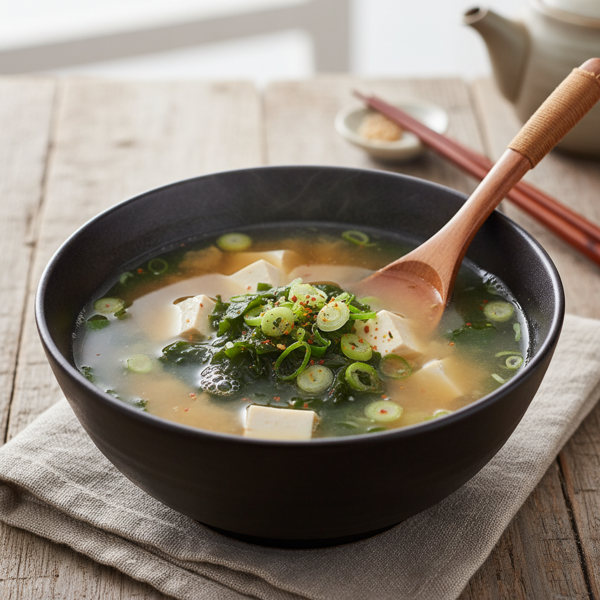
This traditional Japanese Miso Soup is a harmonious blend of flavors and textures, made with a combination of red and white miso for a balanced umami taste. The soup features soft tofu cubes and rehydrated wakame seaweed, which add both nutrition and depth to the dish. It's a comforting, warming soup perfectly paired with steamed rice or served alongside grilled fish and crunchy takuan pickles.
6
Servings
N/A
Calories
7
Ingredients
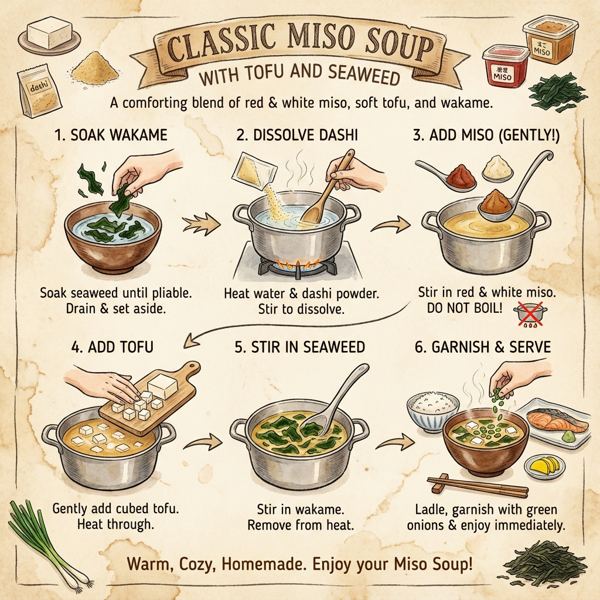
Ingredients
red miso
1 tablespoon (none)
white miso
1 tablespoon (none)
dashi powder
2 tablespoons (none)
water
3-4 cups (none)
soft tofu
1 block (cubed)
wakame seaweed
1 tablespoon (soaked and drained)
green onions
2 stalks (thinly sliced)
Instructions
1
Start by soaking the wakame seaweed in a small bowl of water for a few minutes until it becomes pliable. Drain and set aside.
2
In a soup pot, combine the water and dashi powder, then heat over medium heat, stirring to dissolve the powder completely.
3
Add the red and white miso paste to the pot, stirring continuously until fully dissolved. Be careful not to let the mixture boil, as this can alter the miso's flavor.
4
Add the cubed tofu to the pot and gently stir to combine. Allow the tofu to heat through without boiling.
5
Stir in the rehydrated wakame seaweed and remove the pot from heat.
6
Ladle the soup into bowls and garnish with thinly sliced green onions before serving immediately.
Nutrition Information
Frequently Asked Questions
Frequently Asked Questions
What is Classic Miso Soup with Tofu and Seaweed?
It is a traditional Japanese soup featuring a balanced umami flavor created by a blend of red and white miso, soft tofu, and wakame seaweed.
How many servings does this miso soup recipe make?
This recipe is designed to yield 6 servings.
What is the estimated preparation and cooking time?
The recipe is categorized as taking less than 15 minutes to prepare.
What types of miso are used in this recipe?
The recipe uses a combination of 1 tablespoon of red miso and 1 tablespoon of white miso for a balanced taste.
How much water is required for the broth?
You will need between 3 to 4 cups of water to make the soup base.
What kind of tofu is best for this miso soup?
Soft tofu is recommended, and it should be prepared by cutting it into cubes.
How do I prepare the wakame seaweed?
Soak the seaweed in a small bowl of water for a few minutes until pliable, then drain it before use.
What is dashi powder and how much do I need?
Dashi powder is a Japanese soup stock base, and this recipe requires 2 tablespoons.
Why should I avoid boiling the soup after adding miso?
Boiling the soup after adding miso can alter its delicate flavor and aroma.
When should I add the green onions?
Thinly sliced green onions should be added as a garnish just before serving.
How do I dissolve the miso paste?
Stir the miso paste continuously into the heated dashi broth until it is completely dissolved.
What are the total number of ingredients in this recipe?
There are 7 ingredients in total: red miso, white miso, dashi powder, water, soft tofu, wakame seaweed, and green onions.
What dishes pair well with miso soup?
It pairs perfectly with steamed rice, grilled fish, or crunchy takuan pickles.
Is there a specific way to heat the dashi?
Heat the water and dashi powder over medium heat, stirring to ensure the powder dissolves completely.
When is the wakame seaweed added to the pot?
The rehydrated wakame seaweed is stirred in at the very end, just before removing the pot from the heat.
Can I use only red miso?
While the recipe calls for a blend, you can use one type, though the flavor balance will change; red miso is typically saltier and stronger.
How should the tofu be handled in the soup?
Add the cubed tofu gently and stir carefully to avoid breaking the soft pieces while they heat through.
What is the role of green onions in this dish?
Green onions provide a fresh, sharp contrast to the savory umami flavor of the broth.
Is this recipe considered a traditional Japanese dish?
Yes, it is described as a traditional Japanese dish with a harmonious blend of flavors.
How many stalks of green onions are needed?
The recipe calls for 2 stalks of green onions.
What should I do if the miso is clumped?
Continue stirring over medium heat until all clumps are dissolved, ensuring the liquid does not boil.
What is the texture of the seaweed in the soup?
Once rehydrated and added to the soup, wakame seaweed provides a soft, leafy texture.
Is this soup served hot or cold?
This is a warming, comforting soup meant to be served immediately while hot.
Can I add more seaweed if I like it?
The recipe specifies 1 tablespoon of wakame, but you can adjust based on personal preference.
What is the primary flavor profile of this dish?
The primary flavor profile is umami, derived from the miso and dashi broth.
Does the recipe include nutritional information?
The provided recipe data does not include specific calorie or macronutrient counts.
What is the first step in the instructions?
The first step is soaking the wakame seaweed in water until it becomes pliable.
What kind of pot should I use?
A standard soup pot is sufficient for heating the dashi and mixing the ingredients.
How much white miso is required?
The recipe requires 1 tablespoon of white miso.
What preparation is needed for the green onions?
The green onions should be thinly sliced before being used as a garnish.