Classic Michigan Pasties
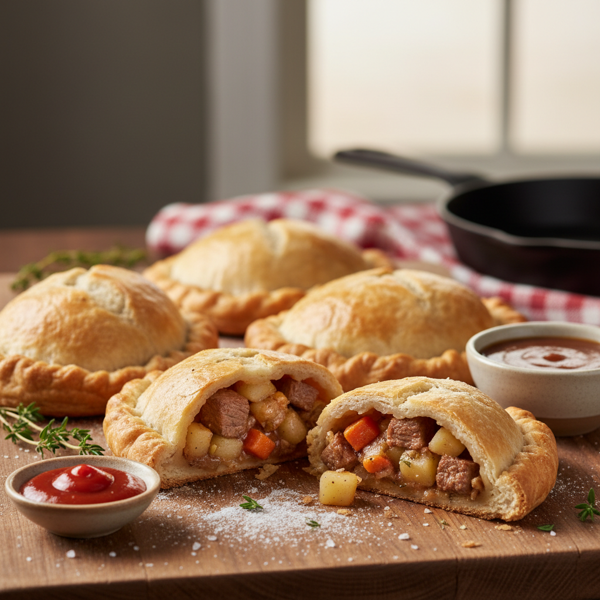
Originating from the mining traditions of Michigan, these Classic Michigan Pasties are a warm, hearty treat perfect for crisp days. My Aunt Nancy’s beloved recipe, sourced from the Eastern Star Recipe book, has been cherished for generations. Typically filled with a savory blend of meats and root vegetables, pasties were originally crafted by miners' wives, who would carefully prepare them for sustenance during long hours underground. Though you may not need to reheat them over a lantern, these pasties taste just as delightful the following day, making them a fantastic meal prep option. Serve these golden, flaky hand pies as a comfort food that captures the essence of Michigan’s culinary heritage!
N/A
Servings
N/A
Calories
17
Ingredients
Ingredients
All-purpose flour
3 cups (sifted)
Salt
1 teaspoon (for dough)
Baking powder
1/2 teaspoon (for dough)
Black pepper
1/2 teaspoon (for dough)
Lard or shortening
1 cup (cut into cubes)
Egg
1 (beaten)
Water
7 tablespoons (cold)
Vinegar
2 teaspoons (white or apple cider)
Round steak
1.5 lbs (cubed)
Rutabaga
3/4 cup (peeled and cubed)
Potatoes
2 cups (peeled and diced)
Carrot
3/4 cup (peeled and diced)
Onion
1/2 cup (diced)
Salt
1/2 teaspoon (for filling)
Pepper
1/2 teaspoon (for filling)
Butter
as needed (for filling)
Milk
as needed (for brushing)
Instructions
1
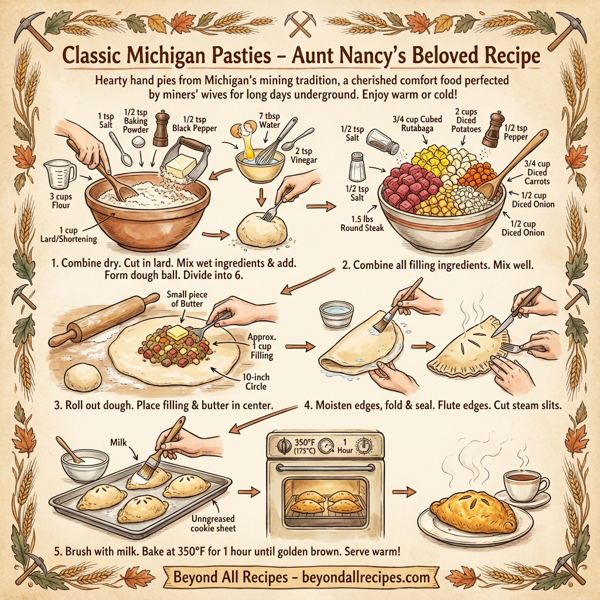
In a mixing bowl, combine 3 cups of flour, 1 teaspoon of salt, 1/2 teaspoon of baking powder, and 1/2 teaspoon of black pepper.
2
Cut in 1 cup of lard or shortening until the mixture resembles coarse crumbs, similar to the texture of peas.
3
In a small bowl, beat 1 egg, then add 7 tablespoons of water and 2 teaspoons of vinegar; mix well.
4
Sprinkle the egg mixture over the flour mixture and stir with a fork until a dough forms into a ball. Avoid over-handling since the pasty needs to be sturdy.
5
Divide the dough into 6 equal balls and set aside to rest.
6
For the filling, in a large bowl, combine 1.5 pounds of cubed round steak, 3/4 cup of cubed rutabaga, 2 cups of diced potatoes, 3/4 cup of diced carrots, 1/2 cup of diced onion, and season with 1/2 teaspoon of salt and 1/2 teaspoon of pepper; mix well.
7
On a floured surface, roll each dough ball into a 10-inch circle.
8
Place approximately 1 cup of the filling in the center of each circle and add a small piece of butter on top.
9
Moisten the edges of the dough, then fold the circle in half, sealing and pinching the edges to create a tight enclosure. Flute the edges for a decorative touch.
10
Cut a few slits in the top of each pasty to allow steam to escape.
11
Brush the tops with milk for a golden finish.
12
Transfer the pasties to an ungreased cookie sheet and bake in a preheated oven at 350°F (175°C) for 1 hour or until golden brown.
Nutrition Information
Frequently Asked Questions
Frequently Asked Questions
What are Classic Michigan Pasties?
Classic Michigan Pasties are savory, golden, flaky hand pies filled with a hearty blend of meats and root vegetables, capturing the essence of Michigan’s culinary heritage.
What is the history behind Michigan pasties?
They originated from the mining traditions of Michigan, where miners' wives prepared them for their husbands to eat as sustenance during long hours underground.
Where did this specific recipe come from?
This recipe is a cherished family heirloom from Aunt Nancy, sourced from the Eastern Star Recipe book.
What type of meat is used in these pasties?
This recipe uses 1.5 pounds of cubed round steak for a traditional savory flavor.
Which vegetables are included in the filling?
The filling consists of cubed rutabaga, diced potatoes, diced carrots, and diced onions.
Is rutabaga necessary for a Michigan pasty?
Yes, rutabaga is a traditional ingredient in Michigan pasties that provides a unique, earthy flavor profile.
What ingredients are in the pasty crust?
The crust is made from flour, salt, baking powder, black pepper, lard or shortening, egg, water, and vinegar.
Why is vinegar added to the pastry dough?
Vinegar helps to create a tender, flaky crust and aids in the structural integrity of the dough.
Can I use shortening instead of lard?
Yes, you can use either 1 cup of lard or shortening depending on your preference.
What should the texture of the dough be before adding liquid?
The fat should be cut into the flour until the mixture resembles coarse crumbs, similar to the texture of peas.
How do I ensure the pasty dough is sturdy enough?
To keep the pasty sturdy, avoid over-handling the dough once the liquid is added and the ball forms.
How many pasties does this recipe make?
The recipe makes 6 large pasties by dividing the dough into 6 equal balls.
How large should I roll out the dough circles?
Each dough ball should be rolled into a 10-inch circle on a floured surface.
How much filling goes into each circle of dough?
You should place approximately 1 cup of the meat and vegetable filling in the center of each dough circle.
Why is butter added to the filling inside the pasty?
A small piece of butter is added on top of the filling to add moisture and richness as the ingredients steam inside the crust.
How do I seal the edges of a pasty?
Moisten the edges of the dough with water, fold the circle in half, then seal and pinch or flute the edges for a tight enclosure.
Why do I need to cut slits in the top of the pasty?
Cutting slits in the top allows steam to escape while baking, which prevents the pasty from bursting.
What should I brush on top of the dough before baking?
Brush the tops with milk to achieve a beautiful golden-brown finish.
What is the correct baking temperature for pasties?
Preheat your oven to 350°F (175°C) for the best results.
How long do the pasties need to bake?
They should bake for 1 hour or until they are golden brown.
Are pasties good for meal prepping?
Absolutely! They are a fantastic meal prep option as they taste just as delightful, if not better, the following day.
Can pasties be eaten cold?
While traditionally served warm, they can be eaten at room temperature, which is why they were popular for miners' lunches.
Should I grease the cookie sheet before baking?
No, the instructions specify using an ungreased cookie sheet.
How should the vegetables be prepared for the filling?
The rutabaga, potatoes, and carrots should be peeled and diced or cubed to ensure they cook evenly.
What kind of seasoning is used for the filling?
The filling is seasoned simply with salt and black pepper to let the natural flavors of the beef and vegetables shine.
What makes the crust flaky?
The combination of cutting in fat (lard or shortening) and adding an egg and vinegar mixture creates the signature flaky texture.
Can I use apple cider vinegar instead of white vinegar?
Yes, either white vinegar or apple cider vinegar works well for the dough recipe.
Is the meat cooked before it goes into the pasty?
No, the cubed round steak is added raw and cooks completely during the one-hour baking time.
Why were pasties originally made for miners?
They were designed as portable, all-in-one meals that were easy to carry and robust enough to be held without utensils.
What is the best way to serve Michigan pasties?
Serve them warm as a comfort food meal; many people enjoy them with a side of gravy or ketchup, though they are flavorful enough to eat plain.