Classic KitchenAid White Bread for Bierocks
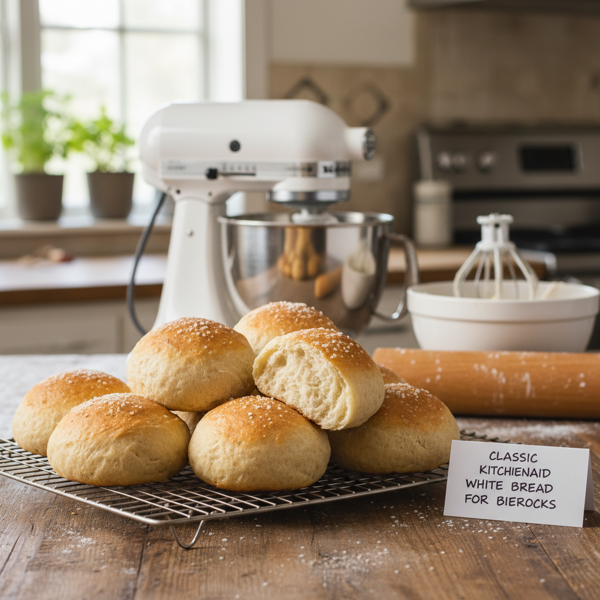
This Classic KitchenAid White Bread recipe is a must-try for any home baker. It's versatile, easy to make, and serves as the perfect base for mouthwatering bierocks or delicious sandwiches. The combination of warm milk, sugar, and butter creates a rich flavor and soft texture that will have everyone coming back for seconds. Whether you're crafting traditional bierocks filled with savory beef and cabbage or simply enjoying slices toasted with butter, this bread will not disappoint. Perfect for gatherings or a hearty family meal, it's a staple recipe to have in your repertoire.
12
Servings
N/A
Calories
7
Ingredients
Ingredients
Milk
1/2 cup (Heated until lukewarm)
Sugar
3 tablespoons (Added to milk mixture)
Salt
2 teaspoons (Added to milk mixture)
Butter or Margarine
3 tablespoons (Heated until melted in milk mixture)
Dry Active Yeast
2 (1/4 ounce) packages (Dissolved in warm water)
Warm Water
1 1/2 cups (Temperature between 105°F and 115°F)
All-Purpose Flour
5 - 6 cups (Used for making dough and adjusting consistency)
Instructions
1
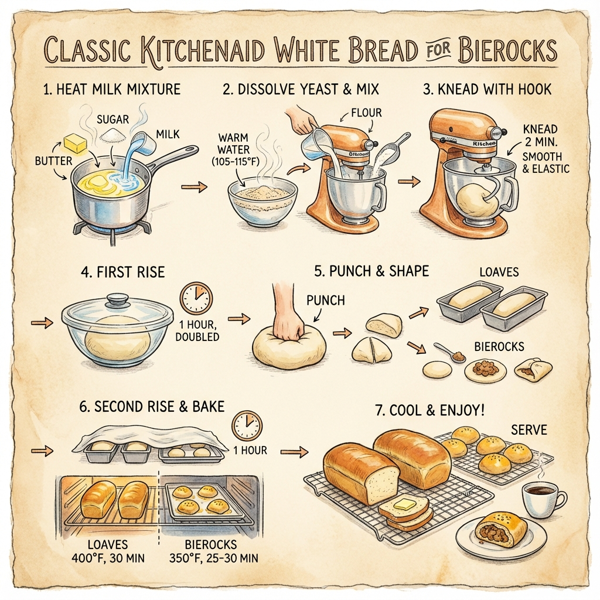
In a small saucepan, combine the milk, sugar, salt, and butter. Heat over low heat until the butter is melted and the sugar is fully dissolved. Remove from heat and allow to cool until lukewarm.
2
In a warmed mixing bowl, dissolve the dry active yeast in the warm water (between 105°F and 115°F). Once dissolved, add the lukewarm milk mixture along with 4 1/2 cups of all-purpose flour.
3
Attach the bowl to the KitchenAid mixer with the dough hook. Mix on speed 2 for 1 minute until well combined. Gradually add the remaining flour, 1/2 cup at a time, while mixing, until the dough clings to the hook and cleans the sides of the bowl.
4
Increase the mixing time to 2 minutes on speed 2, kneading the dough until it becomes smooth and elastic. The dough should feel slightly sticky to the touch, but manageable.
5
Transfer the dough to a greased bowl, turning it to coat the top with grease. Cover the bowl with a clean cloth and let it rise in a warm, draft-free area until doubled in size, approximately 1 hour.
6
After the first rise, punch down the dough to release air, then divide it in half. Shape each half into a loaf and place them into greased 8 1/2 x 4 1/2 x 2 1/2-inch loaf pans. Cover and let rise again in a warm area until doubled in size, about 1 hour.
7
Preheat your oven to 400°F. Once ready, bake the loaves in the oven for 30 minutes, or until golden brown. Immediately remove from the pans and let cool on wire racks.
8
For bierocks, after the first rise, divide the dough into 12 equal pieces. Roll each piece into a circle and fill each with your hamburger and cabbage filling (see recipe #50809). Pinch the edges together, fold the ends, and arrange on a greased baking sheet.
9
Brush the assembled bierocks with egg wash, then sprinkle lightly with coarse ground pepper and salt. Bake at 350°F for 25 to 30 minutes, or until golden. Let cool on a rack before serving.
Nutrition Information
Frequently Asked Questions
Frequently Asked Questions
What is the primary use for this Classic KitchenAid White Bread recipe?
This recipe is designed as a versatile white bread that serves as a perfect base for making traditional bierocks or delicious sandwich loaves.
How much milk is required for the dough?
The recipe requires 1/2 cup of milk, which should be heated with sugar, salt, and butter until lukewarm.
What type of yeast is used in this bread recipe?
You should use 2 packages (1/4 ounce each) of dry active yeast.
What is the ideal temperature for the water when dissolving the yeast?
The warm water should be between 105°F and 115°F to properly activate the dry active yeast.
Can I use margarine instead of butter?
Yes, the recipe allows for the use of either 3 tablespoons of butter or margarine.
How much all-purpose flour will I need in total?
The recipe calls for between 5 to 6 cups of all-purpose flour, added gradually to reach the right consistency.
What KitchenAid mixer attachment should be used?
The dough hook attachment should be used for both mixing and kneading the bread dough.
What speed setting should the KitchenAid mixer be on?
The mixer should be set to speed 2 for both the initial mixing and the kneading process.
How long should I knead the dough using the mixer?
After the initial mixing, increase the time to 2 minutes on speed 2 to knead the dough until it is smooth and elastic.
What should the texture of the dough feel like after kneading?
The dough should be smooth and elastic, feeling slightly sticky to the touch but still manageable.
How long does the first rise take?
The first rise takes approximately 1 hour, or until the dough has doubled in size in a warm, draft-free area.
What is the process for the first rise?
Place the dough in a greased bowl, turn it to coat the top, cover with a cloth, and let it sit in a warm area until doubled.
What do I do with the dough after the first rise?
You must punch down the dough to release air before dividing it for loaves or bierocks.
How many loaves does this recipe make?
This recipe makes 2 loaves if shaped into bread instead of bierocks.
What size loaf pans are recommended?
The recipe suggests using greased 8 1/2 x 4 1/2 x 2 1/2-inch loaf pans.
How long is the second rise for the loaves?
The second rise for the shaped loaves takes about 1 hour in a warm area until doubled in size.
What oven temperature is needed for baking bread loaves?
The bread loaves should be baked at 400°F.
How long do the bread loaves need to bake?
Bake the loaves for 30 minutes or until they turn golden brown.
How should the bread be cooled?
Immediately remove the bread from the pans and let them cool on wire racks.
How do I prepare the dough specifically for bierocks?
After the first rise, divide the dough into 12 equal pieces and roll each piece into a circle to be filled.
How many bierocks does this recipe yield?
The recipe yields 12 bierocks.
What filling is typically used for the bierocks?
Bierocks are traditionally filled with a savory hamburger and cabbage mixture.
How do you seal the bierocks?
Pinch the edges of the dough circle together over the filling, fold the ends, and place them on a greased baking sheet.
What toppings are added to the bierocks before baking?
Brush the assembled bierocks with an egg wash and sprinkle them lightly with coarse ground pepper and salt.
What temperature should I bake the bierocks at?
Bierocks should be baked at a lower temperature than the loaves, specifically 350°F.
How long do the bierocks take to bake?
The bierocks take between 25 to 30 minutes to bake until golden.
Does the recipe include the instructions for the hamburger filling?
The bread recipe refers to another recipe (#50809) for the specific hamburger and cabbage filling details.
Can this dough be made without a KitchenAid mixer?
While the instructions are specific to a KitchenAid mixer, the dough can be mixed and kneaded by hand using similar timing and texture cues.
How much salt and sugar are in the dough?
The dough contains 2 teaspoons of salt and 3 tablespoons of sugar.
What makes this bread particularly soft?
The combination of warm milk, sugar, and butter creates a rich flavor and a soft, tender texture.