Classic Kimmelweck Rolls with Caraway and Sea Salt

Kimmelweck rolls are a beloved culinary treasure from New York State, renowned for their unique crunchy texture and special toppings. Resembling crusty Kaiser rolls, these delightful creations are generously topped with caraway seeds and coarse sea salt, providing a rich flavor profile that elevates any meal. Traditionally served with roast beef sandwiches in Buffalo, New York, these rolls are also a fantastic standalone snack, reminiscent of pretzels with their hearty crust and flavorful accents. This recipe is inspired by 'The Neighborhood Bake Shop' by Jill Van Cleave. Let's dive into crafting your own batch of these tasty rolls, perfect for gatherings or simply enjoying at home.
N/A
Servings
N/A
Calories
11
Ingredients
Ingredients
active dry yeast
2 1/2 teaspoons (1 envelope)
water
1 cup (lukewarm)
vegetable oil
2 tablespoons
sugar
1 tablespoon
salt
1/2 tablespoon
honey or barley malt syrup
1 teaspoon
egg whites
2 large
bread flour (preferably high-gluten)
3 - 3 1/4 cups
water
1 tablespoon
coarse salt
(for sprinkling)
caraway seed
(for sprinkling)
Instructions
1
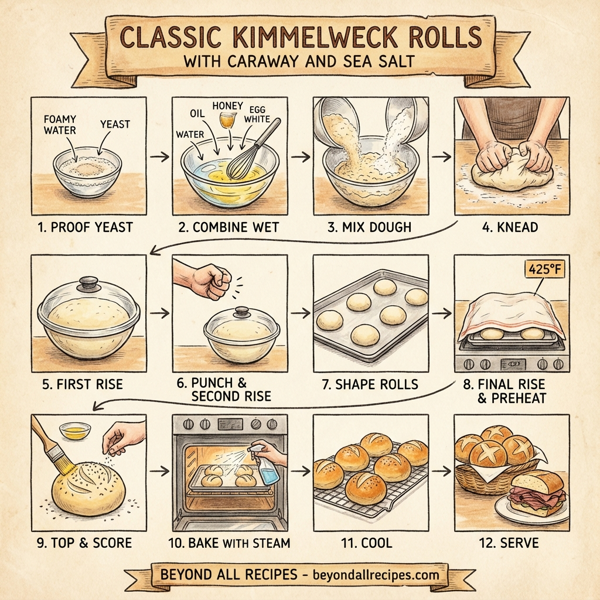
In a small bowl, sprinkle the active dry yeast over 1/4 cup of lukewarm water and let it proof for about 5 minutes until it becomes foamy.
2
In a large mixing bowl, combine the remaining 3/4 cup of lukewarm water, vegetable oil, sugar, salt, honey (or barley malt syrup), and one large egg white. Stir well to ensure the sugar is dissolved.
3
Gradually add 1-1/2 cups of bread flour to the mixture, stirring until smooth. Then, add the yeast mixture and incorporate the additional 1-1/2 cups of flour until a dough begins to form.
4
Transfer the dough to a lightly floured surface and knead for 5 to 7 minutes, until the dough is smooth and elastic, yet slightly tacky. Only add more flour as necessary to prevent sticking.
5
Place the kneaded dough in a large greased bowl, cover with plastic wrap, and allow it to rise at room temperature until it doubles in size, approximately 1 hour.
6
After the first rise, punch down the dough, cover again, and let it rise for an additional 30 minutes.
7
On a floured surface, divide the dough into 8 equal pieces. Shape each piece into a smooth round ball, then gently flatten each ball.
8
Arrange the flattened dough on a parchment-lined or greased baking sheet, ensuring they are spaced adequately to allow for expansion during baking.
9
Cover the rolls loosely with a kitchen towel and let them rise for 30 minutes.
10
Preheat your oven to 425°F (220°C).
11
In a small bowl, combine the remaining egg white and 1 tablespoon of water, mixing thoroughly to create an egg wash. Brush this mixture lightly over the tops of each roll.
12
Using a sharp knife, score 4 crescent-shaped slits into each roll, radiating from the center. Sprinkle generously with coarse salt and caraway seeds, followed by a light mist of water.
13
Bake the rolls for 5 minutes, then quickly open the oven door to spritz the rolls with more water before closing the door again. Continue baking for an additional 20 minutes or until they are golden brown and have a crisp crust.
14
Allow the rolls to cool on a wire rack before serving.
Nutrition Information
Frequently Asked Questions
Frequently Asked Questions
What are Kimmelweck rolls?
Kimmelweck rolls are a specialty roll from New York State, known for their crusty exterior and unique topping of caraway seeds and coarse sea salt.
Where did Kimmelweck rolls originate?
These rolls are a beloved culinary treasure specifically from Buffalo, New York.
What is the traditional way to serve Kimmelweck rolls?
They are most famously used to make 'Beef on Weck' sandwiches, which feature roast beef, but they can also be enjoyed as a standalone snack.
What ingredients are used for the topping?
The rolls are topped with an egg wash, coarse sea salt, and caraway seeds.
How long should I proof the active dry yeast?
The yeast should be sprinkled over lukewarm water and left to proof for about 5 minutes until it becomes foamy.
What temperature should the oven be set to?
The oven should be preheated to 425 degrees Fahrenheit (220 degrees Celsius).
How much bread flour is required for this recipe?
The recipe calls for 3 to 3-1/4 cups of bread flour, preferably a high-gluten variety.
Can I use honey in this recipe?
Yes, you can use 1 teaspoon of either honey or barley malt syrup to add flavor and assist the yeast.
How many times does the dough need to rise?
The dough undergoes three rising periods: a primary 1-hour rise, a secondary 30-minute rise after punching down, and a final 30-minute rise once shaped into rolls.
How many rolls does this recipe produce?
This recipe is designed to produce 8 equal-sized rolls.
How long should I knead the dough?
You should knead the dough for 5 to 7 minutes until it is smooth, elastic, and slightly tacky.
What is the purpose of scoring the rolls?
Scoring 4 crescent-shaped slits into each roll helps control the expansion and creates the traditional aesthetic of a Kaiser-style roll.
Why do I need to spritz the rolls with water during baking?
Spritzing the rolls with water helps create a hearty, crisp crust reminiscent of a pretzel.
What type of salt is best for the topping?
Coarse sea salt is recommended for the topping to provide the characteristic crunch and flavor.
What is the total baking time?
The rolls bake for an initial 5 minutes, followed by an additional 20 minutes after the second water spritz, totaling about 25 minutes.
Should I use whole eggs for the dough?
No, this recipe specifically uses two large egg whites: one for the dough mixture and one for the egg wash.
Is the dough supposed to be sticky?
The dough should be smooth and elastic, but it is normal for it to remain slightly tacky to the touch.
What is the best way to cool the rolls?
Allow the rolls to cool on a wire rack to ensure the bottoms do not become soggy and the crust remains crisp.
Can I use vegetable oil in the dough?
Yes, 2 tablespoons of vegetable oil are included in the dough to provide moisture and a tender crumb.
What is the role of sugar in the dough?
One tablespoon of sugar is used to feed the yeast and provide a hint of sweetness and browning.
How do I prepare the egg wash?
Combine one egg white with 1 tablespoon of water and mix thoroughly before brushing it onto the rolls.
Do I need to grease the baking sheet?
You can either grease the baking sheet or line it with parchment paper to prevent the rolls from sticking.
What texture should the rolls have?
They should have a crunchy, salty exterior with a flavorful, hearty interior similar to a crusty Kaiser roll.
Can I use barley malt syrup instead of honey?
Yes, barley malt syrup is an excellent traditional alternative to honey for this recipe.
How much water is used in the main dough mixture?
The main mixture uses 3/4 cup of lukewarm water, in addition to the 1/4 cup used to proof the yeast.
When should I add the yeast mixture to the flour?
Add the yeast mixture after you have stirred 1-1/2 cups of bread flour into the wet ingredients, then incorporate the remaining flour.
How should the dough be shaped?
Divide the dough into 8 pieces, shape them into smooth round balls, and then gently flatten them before the final rise.
What does 'punching down' the dough do?
Punching down releases excess gas and redistributes the yeast for a better second rise.
Are these rolls similar to pretzels?
Yes, their hearty crust and the use of salt and caraway seeds make them reminiscent of pretzels.
How do I know the rolls are finished baking?
The rolls are done when they are golden brown and have developed a distinct, crisp crust.