Classic Japanese Beef and Potato Stew (Nikujaga)
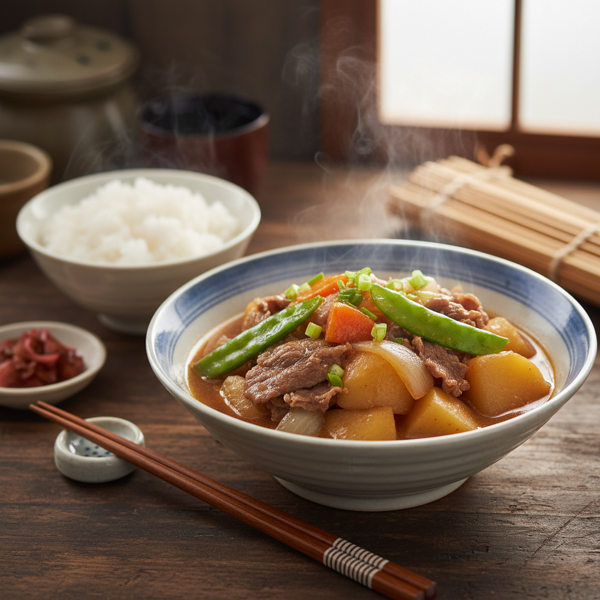
Nikujaga, meaning 'meat and potatoes' in Japanese, is a beloved comfort food that embodies the essence of Japanese home cooking. This hearty stew combines tender pieces of beef or pork with an assortment of vegetables, simmered in a flavorful blend of dashi, sake, soy sauce, and mirin. The origins of Nikujaga can be traced back to Admiral Togo Heihachiro, a pivotal figure in Japan's naval history, who inspired its creation by introducing elements of British beef stew into Japanese cuisine. Every family has their own cherished version, making it a dish rich in tradition and personal touch. Often enjoyed with a side of fluffy white rice and comforting miso soup, Nikujaga can also be served atop rice for a delightful and filling meal. It's perfect for gatherings, family dinners, or a cozy day at home.
N/A
Servings
N/A
Calories
18
Ingredients
Ingredients
vegetable oil
1 tablespoon
ground beef or pork loin
1 lb (cubed for pork, or ground for beef)
potatoes
4 (halved and cut into 1/4-inch cubes)
carrot
1 (peeled and quartered)
white pearl onions
12
shiitake mushrooms
8 large (stemmed and quartered)
minced ginger
1 teaspoon
yellow bell pepper
1
red bell pepper
1
dashi
3 cups
sake
2 cups
soy sauce
2 tablespoons
mirin
2 tablespoons
sugar
2 tablespoons
curry powder (optional)
1 tablespoon
green onions
2 tablespoons (chopped for garnish)
shichimi togarashi (optional)
to taste (for garnish)
steamed Japanese rice
as needed (for serving)
Instructions
1
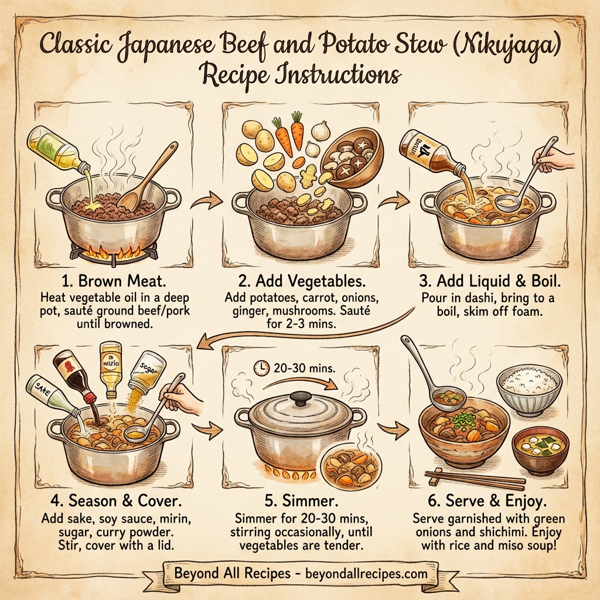
In a deep pot or Dutch oven, heat the vegetable oil over medium-high heat. Once hot, add the ground beef (or pork) and sauté until browned, breaking it apart as it cooks.
2
Add the halved potatoes, quartered carrot, pearl onions, ginger, and shiitake mushrooms to the pot. Stir and sauté them for about 2-3 minutes until they begin to soften.
3
Pour in the dashi and bring the mixture to a boil. Once boiling, reduce the heat to medium and skim off any foam or impurities that rise to the surface.
4
Add the sake, soy sauce, mirin, sugar, and curry powder (if using). Stir well to combine all the flavors, then cover the pot with a lid.
5
Allow the stew to simmer for 20-30 minutes, or until the vegetables are tender. Stir occasionally to prevent sticking and ensure even cooking.
6
Once the vegetables are tender and the flavors have melded together, remove the lid and taste. Adjust seasoning with additional soy sauce or salt if desired.
7
To serve, ladle the stew into bowls, garnishing with chopped green onions and shichimi togarashi if using. Enjoy with a side of steamed Japanese rice and miso soup for a complete meal.
Nutrition Information
Frequently Asked Questions
Frequently Asked Questions
What is Nikujaga?
Nikujaga is a classic Japanese comfort food consisting of a hearty stew made with meat and potatoes simmered in a dashi-based broth.
What does the name Nikujaga mean?
The name Nikujaga literally translates to 'meat and potatoes' in Japanese.
Who is credited with the creation of Nikujaga?
Admiral Togo Heihachiro is credited with its creation, having been inspired by British beef stew.
What kind of meat can be used in this recipe?
You can use either ground beef or cubed pork loin for this stew.
What are the primary vegetables in Nikujaga?
The primary vegetables are potatoes, carrots, pearl onions, and shiitake mushrooms.
How should the potatoes be prepared?
The potatoes should be halved and then cut into 1/4-inch cubes.
What is the base of the stew broth?
The broth is made from a combination of dashi, sake, soy sauce, mirin, and sugar.
How many pearl onions are required?
The recipe calls for 12 white pearl onions.
How long should the stew simmer?
The stew should simmer for 20 to 30 minutes, or until the vegetables are tender.
Why is the foam skimmed off the top during cooking?
Skimming off the foam removes impurities that rise to the surface, resulting in a cleaner flavor and appearance.
Is curry powder a required ingredient?
No, curry powder is an optional ingredient that can be added for extra flavor if desired.
What can I serve with Nikujaga for a complete meal?
It is traditionally served with steamed Japanese rice and a side of miso soup.
What garnish is used for Nikujaga?
Common garnishes include chopped green onions and shichimi togarashi.
What is the purpose of adding sake to the recipe?
Sake is used to add depth of flavor and help tenderize the ingredients.
Can this dish be served as a single-bowl meal?
Yes, Nikujaga can be served directly atop rice for a delightful and filling meal.
How much dashi is needed?
The recipe requires 3 cups of dashi stock.
What type of mushrooms are used?
The recipe uses 8 large shiitake mushrooms, which should be stemmed and quartered.
What amount of soy sauce is used?
The recipe uses 2 tablespoons of soy sauce, though more can be added to taste at the end.
How do you prepare the carrots?
The carrot should be peeled and quartered before being added to the pot.
What is the first step in cooking Nikujaga?
The first step is to heat vegetable oil in a deep pot and brown the ground beef or pork.
Are bell peppers used in this version of the recipe?
Yes, the ingredient list includes one yellow bell pepper and one red bell pepper.
How much ginger should be added?
The recipe calls for one teaspoon of minced ginger.
Is mirin included in the seasoning?
Yes, 2 tablespoons of mirin are used to provide a mild sweetness and glaze.
What heat setting should be used for simmering?
After bringing the mixture to a boil, the heat should be reduced to medium for simmering.
What is shichimi togarashi?
Shichimi togarashi is an optional Japanese seven-spice blend used as a garnish to add a bit of heat.
Can I adjust the final flavor?
Yes, you can adjust the seasoning with additional soy sauce or salt after the vegetables are tender.
What role does sugar play in this savory dish?
Sugar is used to balance the salty flavors of the soy sauce and dashi, a common technique in Japanese cooking.
How much sake is used?
The recipe uses 2 cups of sake.
How should the ginger be prepared?
The ginger should be finely minced before being sautéed with the vegetables.
Is Nikujaga considered a family dish?
Yes, it is a cherished tradition in many families, with every family having their own unique version.