Classic Italian-Style Homemade Meatballs
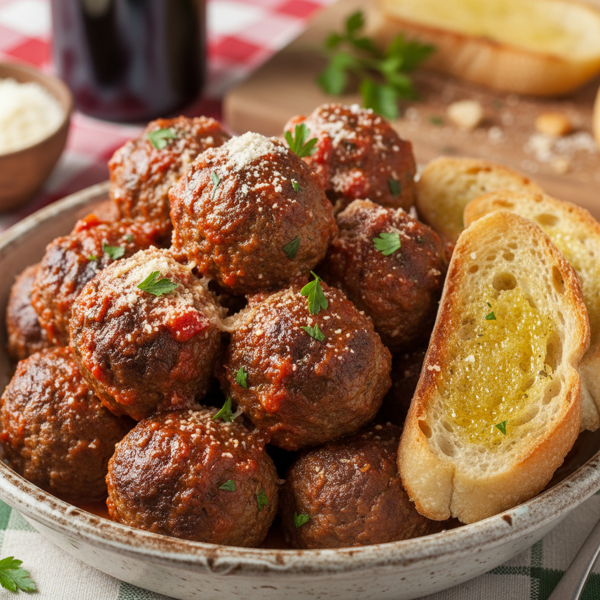
Experience the warmth and comfort of an Italian kitchen with these Classic Homemade Meatballs. This recipe combines fresh ground beef with a medley of aromatic ingredients to create tender, savory meatballs that are not only a crowd-pleaser but also a versatile staple for weeknight dinners. These meatballs are perfect for family gatherings and can easily be frozen for later use, ensuring you always have a delicious meal at hand. Paired with marinara sauce and served over pasta or in a sub, these meatballs promise to deliver a taste of Italy with every bite. Try them out for dinner this week, and they may become as essential in your home as they are in mine, where they make an appearance at least once a week!
N/A
Servings
N/A
Calories
10
Ingredients
Ingredients
Fresh Ground Beef
2 lbs (grass-fed is recommended)
Breadcrumbs
1/2 cup (preferably from stale bread)
Grated Romano Cheese
2 tablespoons
Whole Eggs
2
Chopped Fresh Parsley
1 tablespoon
Virgin Olive Oil
1 tablespoon (for greasing baking sheet)
Salt
1/2 teaspoon (to taste)
Ground Black Pepper
1/2 teaspoon (to taste)
Diced Onion
to your liking (optional)
Fresh Parsley
for garnish (optional)
Instructions
1
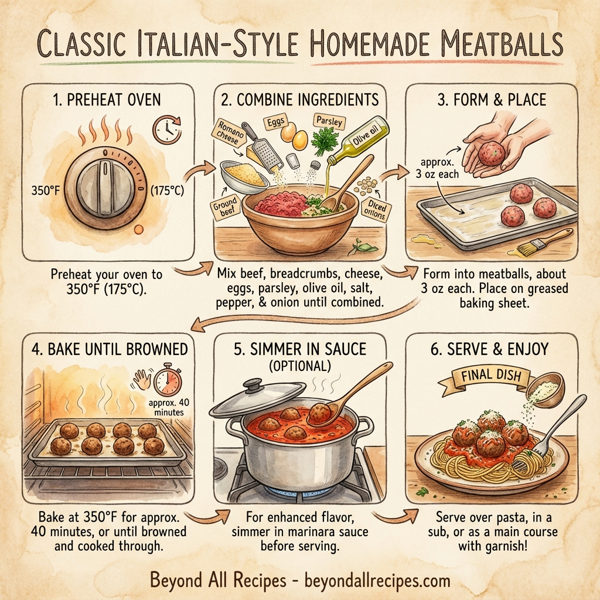
Preheat your oven to 350°F (175°C).
2
In a large mixing bowl, combine the fresh ground beef, breadcrumbs, grated Romano cheese, whole eggs, chopped parsley, olive oil, salt, pepper, and diced onion if using. Mix until well combined.
3
Using your hands, form the mixture into meatballs, about 3 oz each, or to your preferred size. Place them on a greased baking sheet.
4
Bake the meatballs in the preheated oven for approximately 40 minutes, or until they're browned and cooked through.
5
For an enhanced flavor, consider simmering the meatballs in your favorite marinara sauce for a while before serving. This step infuses the sauce with rich, meaty flavors and results in incredibly tender meatballs.
6
Serve your homemade meatballs garnished with additional grated cheese and fresh parsley. Enjoy them as a main course or featured in a delightful pasta or sub sandwich!
Nutrition Information
Frequently Asked Questions
Frequently Asked Questions
What are Classic Italian-Style Homemade Meatballs?
They are a tender and savory staple made from ground beef, Romano cheese, and aromatic herbs, designed to bring the comfort of an Italian kitchen to your home.
What type of meat is recommended for this recipe?
The recipe calls for 2 lbs of fresh ground beef, with a recommendation for grass-fed beef for the best results.
What temperature should the oven be set to?
You should preheat your oven to 350°F (175°C) before baking the meatballs.
How long do the meatballs need to bake?
The meatballs should bake for approximately 40 minutes, or until they are browned and cooked through.
What kind of breadcrumbs are best for meatballs?
The recipe suggests using 1/2 cup of breadcrumbs, preferably made from stale bread for the best texture.
Which cheese is used in these meatballs?
This recipe uses 2 tablespoons of grated Romano cheese to provide a sharp, savory flavor.
How many eggs act as a binder in this recipe?
Two whole eggs are used to help bind the meat and other ingredients together.
Is onion included in the meatball mixture?
Diced onion is optional and can be added to the mixture according to your personal preference.
How large should each meatball be formed?
It is recommended to form the mixture into meatballs weighing about 3 oz each, though you can adjust to your preferred size.
Should I grease the baking sheet?
Yes, you should place the meatballs on a greased baking sheet to prevent sticking.
Can I simmer these meatballs in sauce?
Yes, simmering them in your favorite marinara sauce after baking infuses the sauce with meat flavors and makes the meatballs incredibly tender.
Are these meatballs suitable for freezing?
Yes, these meatballs can easily be frozen for later use, making them a great meal-prep option.
What are some serving suggestions for Italian meatballs?
They are perfect when served over pasta, in a sub sandwich, or simply as a main course with marinara sauce.
What herbs are used for seasoning?
The recipe uses chopped fresh parsley in the mix and suggests additional fresh parsley for garnish.
How much salt and pepper should I add?
The recipe suggests 1/2 teaspoon each of salt and ground black pepper, but you can adjust these to your taste.
What type of oil is used?
Virgin olive oil is used, primarily for greasing the baking sheet.
How do I ensure the meatballs are well combined?
Mix the beef, breadcrumbs, cheese, eggs, herbs, and spices in a large bowl until they are thoroughly blended.
What makes these meatballs a good weeknight dinner?
They are a crowd-pleaser, versatile, and the recipe is easy enough to prepare for a standard family gathering.
Can I use these meatballs for a party?
Absolutely, they are described as an essential staple for family gatherings and comfort food occasions.
What is the primary protein source in this recipe?
The primary protein source is fresh ground beef.
How many ingredients are in this recipe?
There are 10 total ingredients, including optional items like onion and garnish.
Is this a traditional Italian recipe?
Yes, it is designed as a classic Italian-style recipe intended to deliver a taste of Italy with every bite.
Do I need any special equipment?
You only need basic kitchen tools: a large mixing bowl, a baking sheet, and an oven.
What should I garnish the final dish with?
Garnish with additional grated cheese and fresh parsley for a professional presentation.
Why use Romano cheese instead of Parmesan?
Romano cheese offers a specific aromatic and salty profile traditional to many Italian meatball recipes.
Can I make the meatballs smaller for appetizers?
Yes, you can form them into any size you prefer, though baking times may need to be adjusted for smaller sizes.
Is it better to mix with hands or a spoon?
Using your hands is recommended for forming the meatballs to ensure they are the correct size and shape.
Does this recipe include nutritional information?
The provided data does not specify exact calorie, fat, or carbohydrate counts.
What is the main benefit of oven-baking over frying?
Oven-baking allows for even cooking and is often easier for large batches compared to pan-frying.
How often does the author recommend eating these?
The author enjoys them so much they make an appearance at least once a week in their home!