Classic Italian Pomodoro Sauce
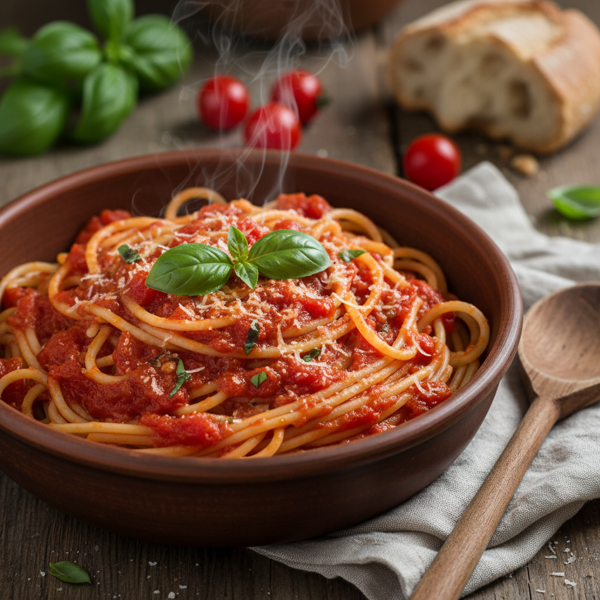
Discover the authentic taste of Italian cuisine with this Classic Pomodoro Sauce recipe. This versatile red sauce is perfect for enhancing your favorite dishes, from rich pasta dishes to comforting baked ziti and traditional eggplant parmesan. Made with simple yet flavorful ingredients, this sauce captures the essence of Italian cooking. The balance of fresh tomatoes, aromatic garlic, and fragrant herbs creates a robust sauce that can stand alone or serve as a base for a heartier ragù. Customize the sweetness to your liking; some may prefer a hint of sugar depending on the acidity of the tomatoes. This sauce is meant to be enjoyed fresh, with the vibrant flavors of basil added just before serving, ensuring every dish bursts with authentic Italian goodness.
4
Servings
274
Calories
14
Ingredients
Ingredients
Extra virgin olive oil
1/2 cup (None)
Plum tomatoes, packed in puree, no salt
1 (28 ounce) can (Remove from can and pulse in food processor)
Crushed tomatoes, no salt
1 (28 ounce) can (None)
Red onion
1/4 cup (Finely minced)
Garlic cloves
3-4 (Minced and formed into paste)
Tomato paste
1-2 tablespoons (None)
Red wine
1/2-1 cup (Good quality, no cooking wine)
Red pepper flakes
1/4 teaspoon (None)
Salt
1 teaspoon (Or 3 large pinches)
Pepper
1/2 teaspoon (None)
Sugar
1 teaspoon (To taste)
Dried oregano
1 teaspoon (None)
Fresh basil
1/4 cup (Torn by hand)
Pasta cooking water
As needed (Reserve from cooked pasta)
Instructions
1
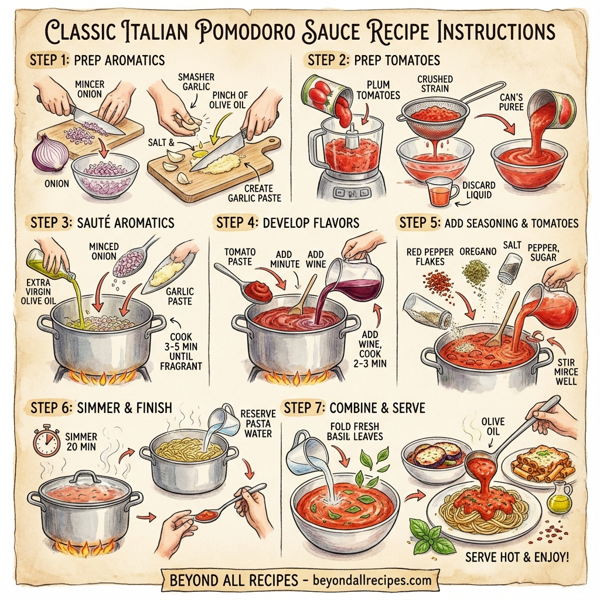
Begin by finely mincing the red onion and set it aside in a bowl.
2
Mince the garlic until finely chopped, then combine it with a pinch of sea salt and olive oil to create a garlic paste. Use the back of your chef's knife to work it into a smooth consistency.
3
Remove the plum tomatoes from the can and place them into a food processor, keeping the puree in the can. Pulse until you achieve a slightly chunky texture, then strain the mixture through a fine mesh sieve to remove about 1 cup of excess liquid; discard the liquid. Combine the crushed tomatoes back with the puree and set aside.
4
In a large saucepan, heat the extra virgin olive oil over medium heat. Add the minced onions and garlic paste to the pan, stirring constantly for about 3-5 minutes, until the garlic emits a roasted aroma and the onions become translucent. Pay close attention to the smell rather than the color of the garlic.
5
Stir in the tomato paste and cook for another minute to develop flavors.
6
Pour in the red wine, stirring well. The wine should thicken immediately from the tomato paste; allow it to cook for 2-3 minutes without reducing.
7
Lower the heat to medium/low and add the red pepper flakes, oregano, salt, pepper, and sugar to the pot. Stir briefly to combine and then add both the pureed and crushed tomatoes, mixing well.
8
Cover the pot and simmer for 20 minutes, allowing the flavors to meld. During this time, prepare your pasta—remember to reserve 1 cup of pasta water before draining.
9
Taste the sauce after 20 minutes and adjust the seasoning as needed. You can let it simmer longer for a deeper flavor, depending on your preference.
10
Once the pasta is cooked, add at least 1/4 cup of reserved pasta water to the sauce to help it adhere to the pasta.
11
Just before serving, fold in the torn basil leaves to preserve their fragrant flavor, along with a final seasoning adjustment if needed. A drizzle of high-quality extra virgin olive oil and an additional pinch of red pepper flakes can enhance the dish beautifully.
12
Serve hot over your pasta of choice and enjoy the comforting taste of homemade Italian Pomodoro Sauce.
Nutrition Information
18g
Fat
28g
Carbs
Frequently Asked Questions
Frequently Asked Questions
What is Classic Italian Pomodoro Sauce?
Classic Italian Pomodoro Sauce is a versatile red sauce made with tomatoes, garlic, and fresh herbs, perfect for pasta, baked ziti, or eggplant parmesan.
What type of tomatoes are used in this recipe?
The recipe uses a combination of one 28-ounce can of plum tomatoes packed in puree and one 28-ounce can of crushed tomatoes.
Why should I strain the plum tomatoes?
Straining about 1 cup of excess liquid from the pulsed plum tomatoes prevents the sauce from becoming too watery.
How do I make the garlic paste?
Mince the garlic and combine it with sea salt and olive oil, then use the back of a chef's knife to work it into a smooth consistency.
Can I use any type of red wine?
Use a good quality red wine that you would drink; avoid using labeled 'cooking wine' as it often contains excess salt and lower-quality flavors.
What is the purpose of adding sugar to the sauce?
A small amount of sugar is used to balance the natural acidity of the tomatoes.
When should I add the fresh basil?
Fold in the torn basil leaves just before serving to preserve their bright, fragrant flavor.
Why is pasta water added to the sauce?
Adding at least 1/4 cup of reserved pasta water helps the sauce adhere better to the noodles.
How many calories are in a serving of this sauce?
There are approximately 274 calories per serving.
Is this recipe suitable for vegans?
Yes, this Pomodoro sauce recipe uses only plant-based ingredients and is suitable for a vegan diet.
How many servings does this recipe yield?
This recipe makes 4 servings.
How long does the sauce need to simmer?
The sauce should simmer for at least 20 minutes to allow the flavors to meld, though you can simmer longer for deeper flavor.
What if I don't have red onion?
While red onion is specified for its flavor profile, you can substitute with yellow or white onion if necessary.
What is the fat content per serving?
Each serving contains approximately 18g of fat, primarily from the extra virgin olive oil.
Can I use dried basil instead of fresh?
Fresh basil is highly recommended for the authentic taste, but if you must use dried, add it earlier in the cooking process with the other dried herbs.
Should the garlic be browned?
No, you should focus on the aroma. Sauté until it emits a roasted scent and the onions are translucent, but avoid browning the garlic to prevent bitterness.
How much tomato paste is required?
The recipe calls for 1 to 2 tablespoons of tomato paste to help develop the flavor and thicken the sauce.
What are the main seasonings in this sauce?
The primary seasonings are red pepper flakes, dried oregano, salt, black pepper, and fresh basil.
Can this sauce be used for meal prep?
Yes, the sauce can be made ahead of time and reheated, making it excellent for meal planning.
How do I store leftovers?
Store any leftover sauce in an airtight container in the refrigerator for up to 4-5 days.
Is the sauce chunky or smooth?
The sauce has a slightly chunky texture because the plum tomatoes are pulsed in a food processor rather than fully pureed.
Can I freeze this Pomodoro sauce?
Yes, this sauce freezes well. Allow it to cool completely before transferring to a freezer-safe container.
What is the carbohydrate count per serving?
There are approximately 28g of carbohydrates per serving.
Do I need to peel the tomatoes?
Since the recipe uses canned plum tomatoes, they are already peeled and ready for pulsing.
Can I omit the red wine?
Yes, you can omit the wine if preferred, though it does add a layer of complexity to the final dish.
What should I do if the sauce is too acidic?
You can add an extra pinch of sugar or a small amount of butter at the end to mellow out the acidity.
How much olive oil is used?
The recipe uses 1/2 cup of extra virgin olive oil.
What kind of pot is best for cooking this sauce?
A large saucepan or a heavy-bottomed pot is ideal for even heat distribution while simmering.
Can I add meat to this recipe?
While this is a classic meatless Pomodoro, it can serve as a base for a heartier ragù if you choose to add browned ground meat.
What pasta pairs best with this sauce?
This sauce is versatile and pairs beautifully with spaghetti, penne, rigatoni, or even as a base for lasagna.