Classic Italian Bolognese Ragù
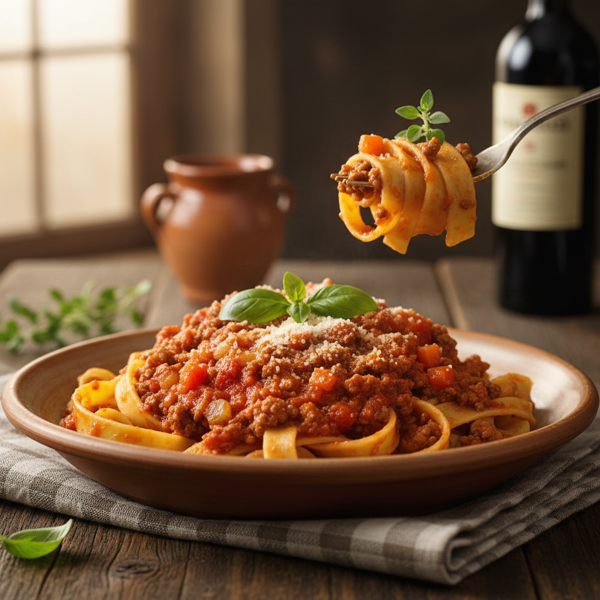
Experience the true essence of Italian comfort cooking with this Classic Italian Bolognese Ragù. A rich and savory sauce made with a harmonious blend of vegetables, meat, and aromatic herbs. Slow-cooked to perfection, this sauce envelops pasta with an irresistible depth of flavor infused with a creamy touch of milk, a traditional Italian secret. Perfect for gathering with loved ones over a leisurely meal, letting memories and flavors simmer together.
8
Servings
N/A
Calories
17
Ingredients
Ingredients
medium onions
2 (peeled and coarsely chopped)
carrots
2 (peeled and coarsely chopped)
celery ribs
2 (coarsely chopped)
garlic clove
1 (crushed)
uncooked bacon
1/4 cup (chopped)
extra virgin olive oil
1/4 cup
salt
1 1/2 teaspoons
fresh ground pepper
3/4 teaspoon
dried basil
1 teaspoon
dried oregano
1 teaspoon
dried thyme leaves
1 teaspoon
ground veal
1 1/2 lbs
dry white wine
1 cup
tomato paste
1/4 cup
crushed tomatoes
1 can (28 oz)
milk
1/2 cup
ground nutmeg
1 pinch
Instructions
1
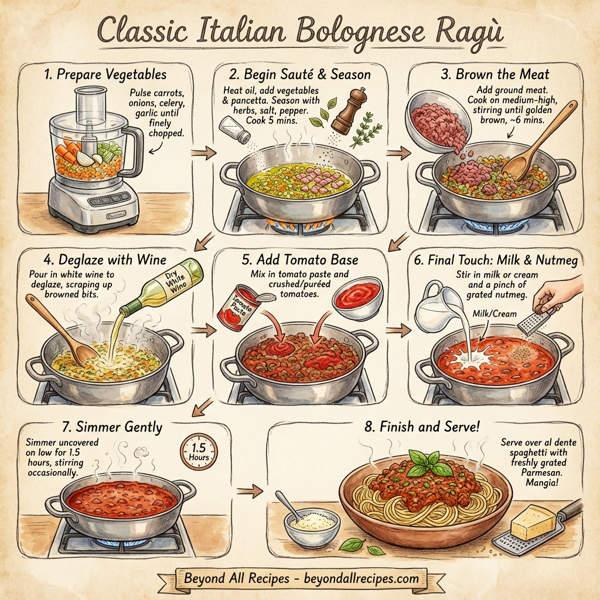
Prepare Vegetables: In a food processor, combine the onions, carrots, celery, and a garlic clove. Pulse until all vegetables are finely and consistently chopped.
2
Begin Sauté: Heat the extra virgin olive oil over medium heat in a large, heavy-bottom saucepan. Add the chopped vegetable mix along with the chopped bacon or pancetta.
3
Seasoning: Sprinkle in salt, freshly ground pepper, dried basil, oregano, and thyme. Stir occasionally to coat the vegetables generously with oil and seasoning. Cook for about 5 minutes till vegetables become soft and aromatic.
4
Brown the Meat: Introduce the ground veal or beef to the spice-laden vegetable mix. Increase heat to medium-high and cook while stirring, breaking up clumps of meat with a wooden spoon till it loses its pinkness and turns golden brown, about 6 minutes.
5
Deglaze: Pour in dry white wine to deglaze the pan, subtly scrubbing any browned bits for enriched flavors.
6
Add Tomato Base: Mix in the tomato paste, crushed or puréed tomatoes which bring a sweetness to balance the zest.
7
Final Touch: Stir in the milk or cream, ensuring the sauce achieves a velvety texture. Add a pinch of grated nutmeg to infuse a warm, nutty undertone.
8
Simmer: Reduce the heat to low. Allow the sauce to simmer gently, uncovered, for 1.5 hours. Stir occasionally, ensuring the sauce thickens beautifully without sticking to the pan.
9
Finish and Serve: Pair the simmered Bolognese Sauce with al dente spaghetti, lending each bite to the experienced harmony of flavors. Serve with freshly grated Parmesan cheese on the side for those who like a cheesy finish. Mangia!
Nutrition Information
Frequently Asked Questions
Frequently Asked Questions
What is Classic Italian Bolognese Ragù?
It is a rich, savory Italian meat sauce made with a blend of vegetables, meat, aromatic herbs, and a touch of milk, slow-cooked to develop deep flavors.
What vegetables are needed for the base of this sauce?
The base, often called a soffritto, consists of finely chopped onions, carrots, and celery.
Can I use a food processor to prepare the vegetables?
Yes, the recipe recommends using a food processor to pulse the onions, carrots, celery, and garlic until they are finely and consistently chopped.
What type of meat is used in this recipe?
The recipe calls for 1.5 lbs of ground veal, though ground beef can also be used as a traditional alternative.
Why is bacon or pancetta included in the recipe?
Chopped bacon or pancetta is sautéed with the vegetables to add a smoky, salty depth of flavor to the sauce.
What is the purpose of adding milk or cream to the Bolognese?
Milk is a traditional Italian secret used to give the sauce a velvety texture and a creamy touch that balances the acidity of the tomatoes.
Why is nutmeg added to the sauce?
A pinch of ground nutmeg is added to infuse a warm, nutty undertone that complements the meat and dairy components.
How long should the Bolognese sauce simmer?
The sauce should simmer gently on low heat for 1.5 hours to allow the flavors to meld and the sauce to thicken.
Should I cover the pan while the sauce is simmering?
No, the recipe specifies to simmer the sauce uncovered so it can thicken beautifully.
What kind of wine is best for deglazing this sauce?
The recipe calls for one cup of dry white wine to deglaze the pan and scrub up browned bits for enriched flavor.
How many servings does this recipe provide?
This recipe is designed to yield approximately 8 servings.
What type of pasta is recommended for serving?
The recipe suggests pairing the sauce with al dente spaghetti, though it works well with many pasta shapes.
What herbs provide the aroma for this Ragù?
A combination of dried basil, dried oregano, and dried thyme leaves provides the aromatic herbal profile.
How do I know when the meat is properly cooked?
The meat should be cooked over medium-high heat until it loses its pinkness and turns golden brown, which takes about 6 minutes.
What type of tomato products are used?
The recipe uses a combination of tomato paste for intensity and a 28 oz can of crushed or puréed tomatoes for sweetness and bulk.
What should I do if the sauce starts to stick to the pan?
Stir the sauce occasionally and ensure the heat is kept on low to prevent sticking or burning during the long simmer.
Is extra virgin olive oil necessary for this recipe?
Yes, 1/4 cup of extra virgin olive oil is used to sauté the vegetable mix and bacon for an authentic flavor base.
Can I substitute the ground veal with another meat?
Yes, ground beef is a very common and suitable substitute for ground veal in this traditional recipe.
How much garlic is included in the sauce?
The recipe uses one crushed garlic clove, which is pulsed with the other vegetables in the food processor.
What kind of cheese should be served with this dish?
Freshly grated Parmesan cheese is recommended as a side for those who prefer a cheesy finish.
How long does it take to sauté the initial vegetable mix?
The vegetable and bacon mix should be cooked for about 5 minutes until the vegetables become soft and aromatic.
What is the first step in making this Bolognese?
The first step is preparing the vegetables by finely chopping onions, carrots, celery, and garlic in a food processor.
Does this recipe use fresh or dried herbs?
This specific recipe uses dried basil, dried oregano, and dried thyme leaves.
Why is deglazing the pan important?
Deglazing with wine helps lift the browned bits (fond) from the bottom of the pan, which contains concentrated flavor.
What is the texture of the finished sauce?
The finished sauce has a thick, rich, and velvety texture due to the long simmering process and the addition of milk.
Can I use red wine instead of white wine?
While the recipe calls for dry white wine, many traditional variations use red wine for a deeper, more robust flavor profile.
How much salt is recommended?
The recipe suggests 1 1/2 teaspoons of salt, though you should always taste and adjust as needed.
Is this recipe considered 'comfort food'?
Yes, it is tagged as Italian comfort food due to its rich flavor and slow-cooked nature.
What is the role of tomato paste in the sauce?
Tomato paste adds a concentrated sweetness and zest that balances the savory flavors of the meat.
What does 'al dente' mean when preparing the pasta?
'Al dente' means cooking the pasta so that it is still firm to the bite, providing the perfect texture to pair with the rich sauce.