Classic Italian Beef Braciole with Garlic and Romano
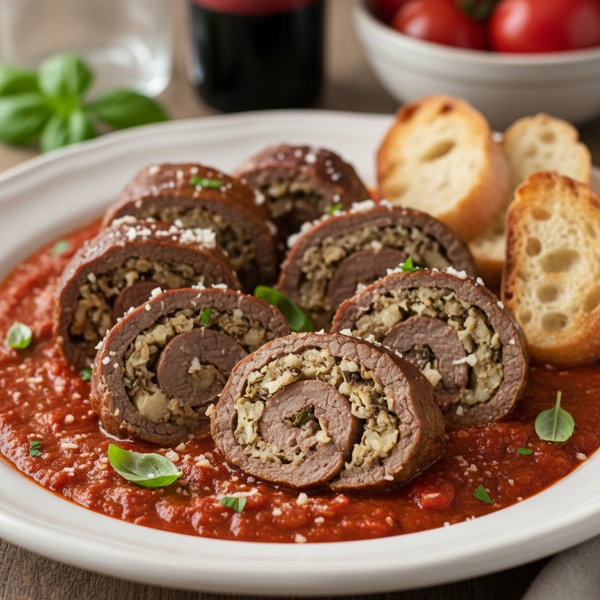
This Classic Italian Beef Braciole is a cherished family recipe inspired by generations of Italian cooking. Tender, flavorful rounds of beef are pounded thin and generously filled with a savory mixture of garlic, fresh parsley, and aged Romano cheese. Rolled tightly and simmered in a rich tomato sauce, this dish transforms humble ingredients into a hearty meal that's perfect for Sunday dinners or festive occasions. Serve it alongside pasta or crusty bread to soak up the delicious sauce, and delight in the warm, comforting flavors that make this dish a timeless favorite in Italian households.
4
Servings
400
Calories
9
Ingredients

Ingredients
Round steak
2 lb (butterflied)
Garlic cloves
3 (minced fine)
Italian parsley
1 bunch (minced)
Grated Romano cheese
1/4 lb (grated)
Salt
to taste
Pepper
to taste
Onion
1 small (peeled and quartered)
Olive oil
as needed (for frying)
Tomato sauce
28 ounce can (simmering)
Instructions
1
Using a very sharp knife, butterfly the steak by slicing it horizontally to create a pocket. If you're unsure, ask your butcher to do this for you.
2
Place the butterflied steak between two pieces of plastic wrap and pound it with a meat mallet until it's an even thickness of about 1/4 inch. This helps tenderize the meat and provides a better surface for rolling.
3
Season the pounded steak lightly with salt and pepper on both sides to enhance the flavor.
4
Evenly spread the minced garlic, minced parsley, and grated Romano cheese over one side of the meat, making sure to leave a 1/4 inch border around the edges.
5
Starting from the long edge, carefully roll the steak up tightly, similar to rolling a jelly roll, and tuck in the edges as you go. Secure the ends of the roll well.
6
Using kitchen twine, tie the rolled meat tightly at 2-inch intervals to maintain its shape during cooking.
7
In a heavy frying pan, heat olive oil over medium heat. Once hot, add the braciole and quartered onion.
8
Fry the braciole, turning frequently until all sides are nicely browned, about 10-15 minutes.
9
Transfer the browned braciole to a pot of simmering tomato sauce. Allow it to cook gently for 45 minutes, ensuring the flavors meld together and the meat becomes tender.
10
To serve, carefully remove the kitchen twine from the braciole, then slice it into 1-inch thick pieces. Spoon some of the rich tomato sauce over the slices for a perfect finish.
Nutrition Information
18.75g
Fat
7.5g
Carbs
37.5g
Protein
Frequently Asked Questions
Frequently Asked Questions
What is Classic Italian Beef Braciole?
Classic Italian Beef Braciole consists of tender rounds of beef pounded thin, filled with a savory mixture of garlic, parsley, and Romano cheese, then rolled and simmered in tomato sauce.
What cut of steak is recommended for this recipe?
This recipe calls for 2 pounds of round steak.
How do I prepare the round steak for filling?
You should butterfly the steak by slicing it horizontally to create a pocket and then pound it to an even thickness.
How thin should the beef be pounded?
The beef should be pounded with a meat mallet until it reaches an even thickness of about 1/4 inch.
What seasonings are used for the meat?
The pounded steak is seasoned lightly with salt and pepper on both sides.
What ingredients are in the braciole filling?
The filling is made of minced garlic, minced Italian parsley, and grated Romano cheese.
How much garlic is needed for the recipe?
You will need 3 garlic cloves, minced fine.
What kind of cheese is used in Italian Beef Braciole?
The recipe uses 1/4 pound of grated Romano cheese.
How do I ensure the filling doesn't leak out?
When spreading the filling, make sure to leave a 1/4 inch border around the edges of the meat.
How is the braciole rolled?
Starting from the long edge, roll the steak up tightly, similar to a jelly roll, and tuck in the edges as you go.
How do I keep the meat roll from falling apart while cooking?
Secure the rolled meat tightly at 2-inch intervals using kitchen twine.
What type of oil is used for frying?
Olive oil is used as needed for frying the meat.
Why is an onion added during the frying process?
A small, quartered onion is added to the frying pan to flavor the oil and meat as they brown.
How long should I brown the braciole?
Fry the braciole for about 10-15 minutes, turning frequently until all sides are nicely browned.
What kind of sauce is the meat simmered in?
The beef is simmered in a 28-ounce can of tomato sauce.
How long does the beef need to simmer?
The meat should simmer gently in the sauce for 45 minutes until tender.
What should I do before serving the braciole?
Carefully remove the kitchen twine from the meat before slicing.
How is the finished braciole sliced?
It should be sliced into 1-inch thick pieces.
What are the suggested side dishes?
It is traditionally served alongside pasta or crusty bread to soak up the tomato sauce.
How many servings does this recipe provide?
This recipe yields 4 servings.
How many calories are in one serving of beef braciole?
Each serving contains 400 calories.
What is the protein content per serving?
Each serving provides 37.5 grams of protein.
How much fat is in this dish?
There are 18.75 grams of fat per serving.
What is the carbohydrate count?
There are 7.5 grams of carbohydrates per serving.
Is this a traditional recipe?
Yes, it is described as a cherished family recipe inspired by generations of Italian cooking.
What type of parsley is best for the filling?
The recipe specifies using one bunch of minced Italian parsley.
Can I ask my butcher for help with the meat?
Yes, if you are unsure about butterflying the steak, you can ask your butcher to do it for you.
What is the category of this recipe?
This recipe is categorized under Cheese due to its significant Romano cheese component.
What type of heat is used to fry the meat?
The meat is fried over medium heat.
Is this dish suitable for special occasions?
Yes, it is perfect for Sunday dinners or festive occasions.