Classic Irish Lamb Stew
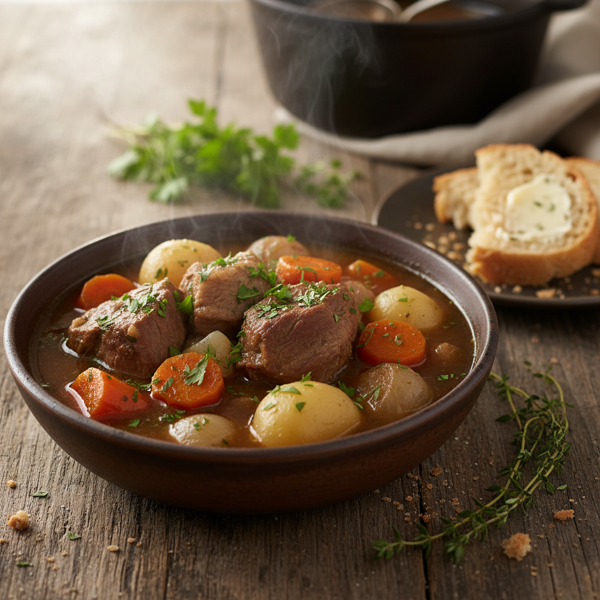
Experience the heartwarming flavors of Ireland with this Classic Irish Lamb Stew. This dish embodies the essence of traditional Irish cooking, utilizing simple, wholesome ingredients that were easily accessible to peasant communities. Featuring tender lamb simmered with hearty vegetables, this stew is a comforting meal for family gatherings or a cozy night in. The unique preparation style, known as a 'white' stew, allows the natural flavors of the lamb to shine through without browning the meat. Finished with a touch of herbs and garnished with fresh parsley, this stew is sure to warm the soul and fill the belly.
N/A
Servings
N/A
Calories
13
Ingredients
Ingredients
boneless lamb
1 lb (cut into 3/4 inch pieces)
beef broth
4 cups
medium onions
2 (cut into wedges)
salt
1 1/2 teaspoons
black pepper
1/4 teaspoon
bay leaf
1
medium potatoes
4 (peeled and quartered)
medium carrots
6 (sliced 1/2 inch thick)
dried thyme
1/2 teaspoon (crushed)
dried basil
1/4 teaspoon (crushed)
cold water
1/2 cup
all-purpose flour
1/4 cup
snipped parsley
to garnish
Instructions
1
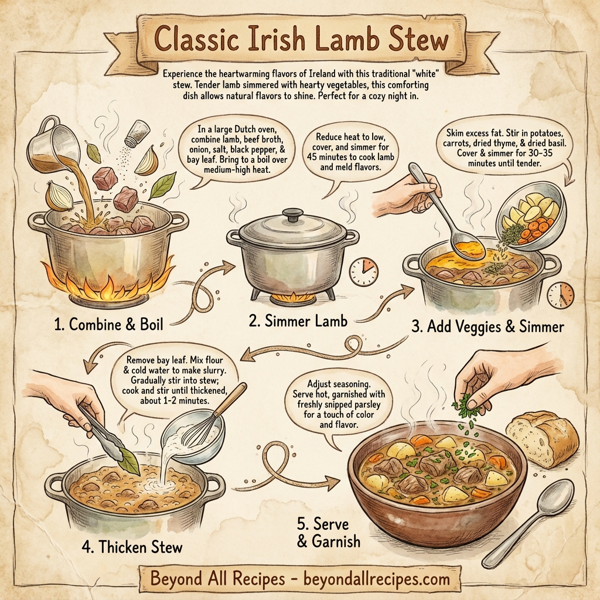
In a large Dutch oven, combine the boneless lamb, beef broth, onion wedges, salt, black pepper, and bay leaf. Bring the mixture to a boil over medium-high heat.
2
Once boiling, reduce the heat to low, cover, and allow the stew to simmer for 45 minutes to cook the lamb and meld the flavors.
3
After 45 minutes, skim off any excess fat from the surface of the stew. Stir in the quartered potatoes, sliced carrots, dried thyme, and dried basil. Cover again and let it simmer for an additional 30 to 35 minutes, or until the vegetables are tender.
4
Remove the bay leaf and discard it. In a small bowl, combine the cold water and all-purpose flour to make a slurry. Gradually stir this mixture into the stew, cooking and stirring until thickened and bubbly, about 1 to 2 minutes.
5
Adjust seasoning to taste with additional salt and black pepper if needed. Serve hot, garnished with freshly snipped parsley for a touch of color and fresh flavor.
Nutrition Information
Frequently Asked Questions
Frequently Asked Questions
What is Classic Irish Lamb Stew?
Classic Irish Lamb Stew is a traditional dish featuring tender lamb and hearty vegetables in a simple, wholesome broth.
What is a 'white' stew?
A white stew is a preparation style where the meat is not browned before simmering, allowing the natural flavors of the ingredients to be the focus.
What kind of meat is used in this recipe?
This recipe specifically uses 1 lb of boneless lamb cut into 3/4 inch pieces.
What type of broth is recommended for this stew?
The recipe calls for 4 cups of beef broth to create a savory base.
How many onions should I use?
You should use 2 medium onions cut into wedges.
What seasonings are added at the beginning?
The lamb is initially seasoned with 1 1/2 teaspoons of salt, 1/4 teaspoon of black pepper, and one bay leaf.
How long does the lamb simmer before adding vegetables?
The lamb should simmer covered for 45 minutes to ensure it is cooked through and the flavors meld.
Is it necessary to skim the fat?
Yes, after the initial 45-minute simmer, you should skim off any excess fat from the surface for a better texture.
What kind of potatoes work best?
The recipe calls for 4 medium potatoes that are peeled and quartered.
How many carrots are included?
The recipe includes 6 medium carrots sliced 1/2 inch thick.
What dried herbs are used in the stew?
The stew is flavored with 1/2 teaspoon of crushed dried thyme and 1/4 teaspoon of crushed dried basil.
How long do the vegetables need to cook?
After adding the vegetables and herbs, the stew should simmer for an additional 30 to 35 minutes until they are tender.
Should I keep the bay leaf in the stew when serving?
No, you should remove and discard the bay leaf once the cooking process is complete.
How do I thicken the Irish lamb stew?
Thicken the stew by stirring in a slurry made from 1/2 cup cold water and 1/4 cup all-purpose flour.
How long does it take for the stew to thicken?
Once the slurry is added, it takes about 1 to 2 minutes of stirring until it becomes thickened and bubbly.
What is the suggested garnish?
Freshly snipped parsley is suggested as a garnish to add color and a fresh flavor.
What kind of pot is best for cooking this?
A large Dutch oven is the ideal vessel for preparing this slow-cooked stew.
Can I adjust the seasoning at the end?
Yes, you should adjust the seasoning with additional salt and black pepper to taste before serving.
Is this a traditional Irish recipe?
Yes, it is a traditional Irish recipe that utilizes simple, wholesome ingredients once common in peasant communities.
What makes this stew 'comfort food'?
Its combination of tender meat, hearty vegetables, and warm broth makes it a cozy and soul-warming meal.
How small should I cut the lamb?
The lamb should be cut into 3/4 inch pieces for even cooking and bite-sized portions.
Should the water for the slurry be hot or cold?
The water must be cold when mixing with flour to prevent lumps from forming in the slurry.
What temperature should I use for simmering?
After the initial boil, you should reduce the heat to low to simmer the stew gently.
Is the lamb browned first?
No, the lamb is not browned; it is simmered directly in the broth to maintain its natural flavor.
How many servings does this make?
While the exact count isn't specified, the use of 1 lb of lamb and 10 large vegetables typically serves a family.
Can I substitute the dried herbs?
While dried thyme and basil are specified, you can use fresh herbs if you adjust the quantities accordingly.
What is the total simmering time?
The total simmering time is approximately 75 to 80 minutes, excluding the initial boiling and final thickening.
How should the carrots be sliced?
The carrots should be sliced into pieces about 1/2 inch thick.
What is the purpose of the flour slurry?
The flour slurry acts as a thickening agent to give the broth a heartier, more stew-like consistency.
Should the stew be covered while simmering?
Yes, keep the Dutch oven covered during both simmering stages to retain moisture and heat.