Classic Homemade Scones
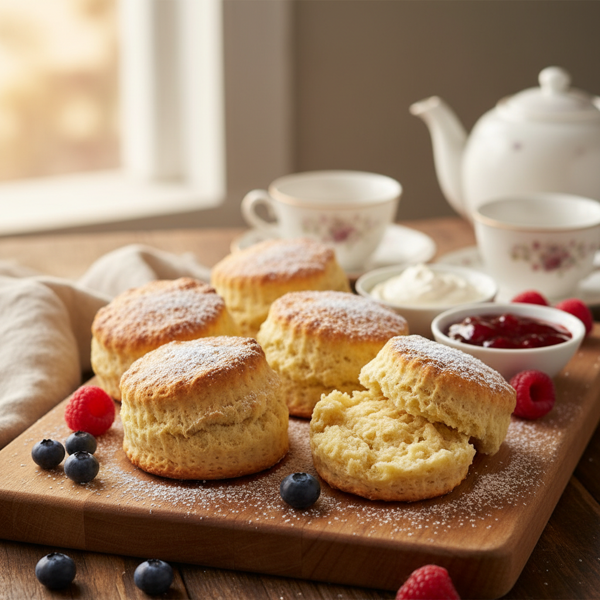
These Classic Homemade Scones are an easy and budget-friendly way to enjoy a traditional teatime treat. Passed down from generation to generation, this straightforward recipe requires only a few simple ingredients—self-rising flour, butter, and milk—to create perfectly fluffy scones. Delight in these scones with a dollop of whipped cream and strawberry jam for a classic Devonshire tea, or try adding cheese and herbs for a savory variation to complement soups and casseroles. Suitable for any occasion, these scones are sure to bring a sense of comforting nostalgia and warm hospitality to your table.
12
Servings
N/A
Calories
4
Ingredients
Ingredients
Self-rising flour
2 cups (sifted)
Salt
1/4 teaspoon
Butter
30 g (cold)
Milk
250 ml
Instructions
1
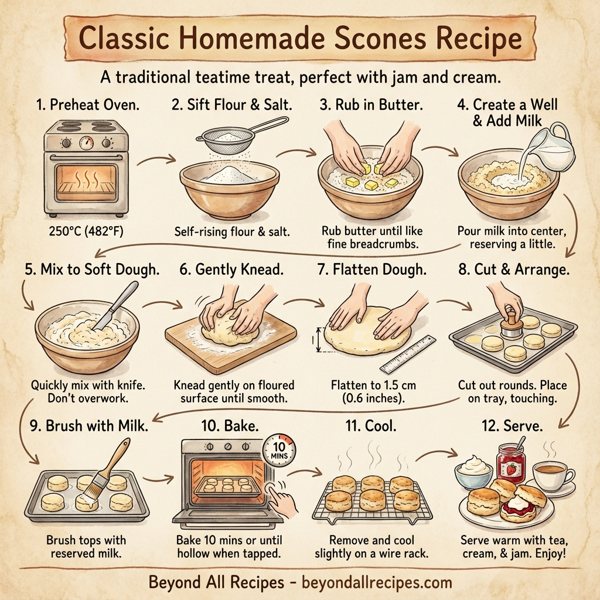
Preheat your oven to 250°C (482°F).
2
In a large mixing bowl, sift together the self-rising flour and salt.
3
Add the butter to the flour mixture and rub it in with your fingertips until the mixture resembles fine breadcrumbs.
4
Create a well in the center of the flour mixture, and pour in almost all of the milk, reserving about one tablespoon.
5
Using a butter knife, quickly mix the milk into the flour to form a soft dough. Be careful not to overwork the dough.
6
Transfer the dough onto a lightly floured surface and knead it very gently just until smooth.
7
Flatten the dough gently with your hands to a thickness of about 1.5 cm (approximately 0.6 inches).
8
Using a round cutter, cut out scone discs and place them on a buttered baking tray with the sides touching.
9
Brush the tops of the scones with the reserved milk to encourage browning.
10
Bake in the preheated oven for 10 minutes or until the scones sound hollow when tapped gently on top.
11
Remove from the oven and allow to cool slightly on a wire rack.
12
Serve warm with tea, whipped cream, and strawberry jam for a traditional Devonshire tea experience. For a savory version, add herbs or grated cheese to the dough before baking to pair with soups and casseroles.
Nutrition Information
Frequently Asked Questions
Frequently Asked Questions
What are Classic Homemade Scones?
Classic Homemade Scones are traditional, fluffy teatime treats made with simple ingredients like flour, butter, and milk.
Is this scone recipe budget-friendly?
Yes, these scones are an easy and budget-friendly way to enjoy a traditional treat with simple pantry staples.
How many ingredients are required for this recipe?
This recipe requires only 4 main ingredients: self-rising flour, salt, butter, and milk.
What type of flour is best for these scones?
You should use 2 cups of self-rising flour, which provides the necessary lift for fluffy scones.
Should the butter be cold or at room temperature?
The recipe calls for 30g of cold butter to be rubbed into the flour mixture.
How much milk is needed?
The recipe requires 250 ml of milk, though you should reserve a small amount for brushing on top.
What is the correct oven temperature for baking scones?
Preheat your oven to a high temperature of 250°C (482°F) before baking.
How do I incorporate the butter into the flour?
Rub the cold butter into the sifted flour and salt using your fingertips until the mixture resembles fine breadcrumbs.
Why is a butter knife used to mix the dough?
A butter knife is used to quickly mix the milk into the flour to form a soft dough without overworking it.
How thick should I flatten the scone dough?
Flatten the dough gently with your hands to a thickness of about 1.5 cm or approximately 0.6 inches.
What is the recommended baking time?
The scones should be baked in the preheated oven for 10 minutes.
How can I tell if the scones are fully cooked?
The scones are ready when they sound hollow when tapped gently on the top.
Why should the scones touch on the baking tray?
Placing them with sides touching on a buttered baking tray helps them rise upwards and stay moist.
What is a Devonshire tea?
A traditional Devonshire tea experience involves serving warm scones with whipped cream and strawberry jam.
Can I make these scones savory?
Yes, you can add herbs or grated cheese to the dough before baking to create a savory version.
How many scones does this recipe produce?
This recipe makes approximately 12 servings.
Is it necessary to sift the flour?
Yes, sifting the self-rising flour and salt together ensures a light and airy texture.
What should I brush on the tops of the scones?
Brush the tops with a small amount of reserved milk to encourage browning during baking.
How do I ensure the scones stay fluffy?
To keep them fluffy, avoid overworking the dough and knead it very gently only until smooth.
Can I add cheese to this recipe?
Yes, grated cheese is a great addition for a savory variation to pair with soups and casseroles.
Is this recipe suitable for beginners?
Absolutely, this is a straightforward, easy recipe that has been passed down through generations.
How should the scones be cooled?
After removing them from the oven, allow the scones to cool slightly on a wire rack.
What tools do I need to cut the dough?
Use a round cutter to cut out scone discs from the flattened dough.
Can I use these scones for a party?
Yes, they are suitable for any occasion and bring a sense of comforting nostalgia to the table.
What is the salt measurement for this recipe?
The recipe requires 1/4 teaspoon of salt.
How much butter is used?
This recipe uses 30 grams of cold butter.
What do I do after preheating the oven?
Once the oven is preheating, begin by sifting your flour and salt into a large mixing bowl.
What is the total ingredient count?
There are 4 ingredients in total: flour, salt, butter, and milk.
Should the dough be smooth?
The dough should be kneaded very gently just until it becomes smooth on a lightly floured surface.
What is the best way to serve these scones?
Serve them warm with tea, whipped cream, and strawberry jam for a classic experience.