Classic Homemade Pasta Dough
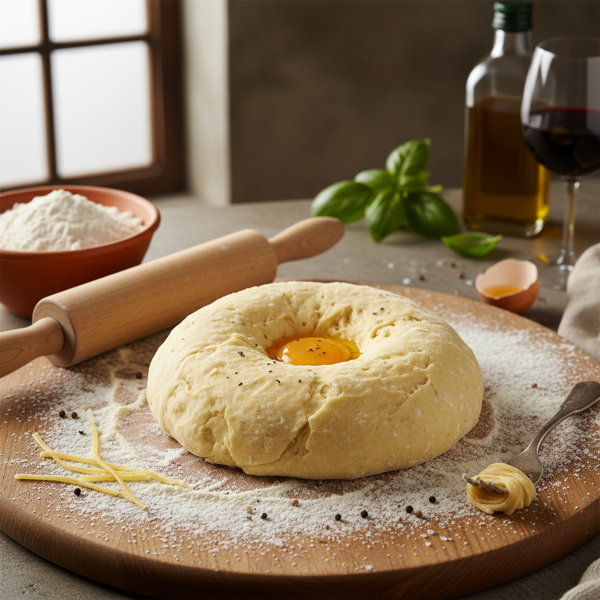
This is a traditional homemade pasta dough recipe inspired by the expert guidance of Domenica Marchetti. Ideal for creating a variety of pasta shapes like fettuccine, lasagna, and ravioli, this dough is easy to make and versatile. By following these detailed steps, you'll achieve a smooth, silky dough perfect for your favorite pasta dishes. The preparation time includes a brief resting period, allowing flavors to meld and the dough to become more pliable. This recipe yields approximately 18 ounces of dough, ideal for serving up to six pasta enthusiasts.
6
Servings
N/A
Calories
5
Ingredients

Ingredients
All-purpose flour
12 ounces (about 2 1/4 cups)
Semolina flour
1 tablespoon (plus more for dusting)
Fine sea salt
1/2 teaspoon
Beaten eggs
7 ounces (from 4 large eggs)
Extra-virgin olive oil
1 tablespoon (drizzle through processor opening)
Instructions
1
In a food processor, combine the all-purpose flour, semolina flour, and sea salt. Pulse several times until the mixture is evenly blended.
2
Add the beaten eggs to the processor all at once. Process for 30 seconds, slowly drizzling the extra-virgin olive oil through the lid's opening. The dough should have a texture akin to coarse, wet sand.
3
Generously dust a work surface with semolina.
4
Transfer the dough from the food processor onto the prepared work surface, combining it into a cohesive ball.
5
Knead the dough for 3 to 4 minutes, using your hands to push it away and rotate it periodically. The dough should be smooth and silky, without being sticky.
6
Wrap the dough in plastic wrap, allowing it to rest for 20 minutes to achieve desired texture and elasticity.
7
Position your pasta maker near your work surface and sprinkle semolina over a rimmed baking sheet.
8
Dust your work surface with semolina, ensuring it remains coated to prevent sticking during the rolling and cutting process.
9
Once ready to roll the pasta, divide the dough into quarters. Keep unused portions wrapped while working.
10
Form each dough quarter into a rough 3x4 inch rectangle using your fingers.
11
Press the dough with your hand to a thickness of 1/2 inch, passing it through the widest setting of your pasta machine.
12
Fold the dough as you would a letter, flatten to 1/2 inch again, and pass through the machine twice more.
13
Gradually decrease roller settings while passing the dough through twice at each increment, achieving your chosen thickness.
14
For fettuccine and lasagna, use setting 3; for filled pasta or thinner lasagna sheets, use setting 2.
15
Ensure semolina is plentiful to prevent sticking as the dough folds out of the rollers.
16
For filled pastas, work one sheet at a time to prevent drying or tearing.
17
For other pasta types, cut sheets with a knife for lasagna noodles or use machine cutters for fettuccine or spaghetti.
18
Use semolina to stack lasagna noodles or fluff cut pasta into piles.
19
Transfer prepared pasta to the baking sheet as you work.
20
To freeze, place baking sheet in the freezer for 1-2 hours until pasta is frozen. Store in plastic wrap or bags for up to a month.
21
Make ahead option: Dough can be made in advance and stored in the freezer.
22
Note: Adjust olive oil as needed depending on conditions like humidity, egg size, or flour brand for optimal dough texture.
Nutrition Information
Frequently Asked Questions
Frequently Asked Questions
What is the main use for this dough?
This dough is ideal for creating a variety of pasta shapes such as fettuccine, lasagna, and ravioli.
How much dough does this recipe produce?
This recipe yields approximately 18 ounces of dough.
How many people can this recipe serve?
It is designed to serve up to six pasta enthusiasts.
What specific flours are required?
You will need 12 ounces of all-purpose flour and at least one tablespoon of semolina flour, plus more for dusting.
What is the first step in combining the ingredients?
Combine the all-purpose flour, semolina flour, and sea salt in a food processor and pulse until evenly blended.
How should eggs be added to the flour mixture?
Add 7 ounces of beaten eggs (from about 4 large eggs) all at once to the food processor.
How should the olive oil be incorporated?
Drizzle the extra-virgin olive oil through the processor lid opening while processing the dough for 30 seconds.
What texture should the dough have after processing?
The dough should have a texture similar to coarse, wet sand.
How should the work surface be prepared?
Generously dust your work surface with semolina flour to prevent the dough from sticking.
How do you knead the dough?
Transfer the dough to a dusted surface, form it into a ball, and knead it for 3 to 4 minutes by pushing it away and rotating it.
What is the sign that the dough is kneaded enough?
The dough should be smooth and silky to the touch without being sticky.
How long does the dough need to rest?
Wrap the dough in plastic wrap and let it rest for 20 minutes before rolling.
Why is resting the dough important?
Resting allows the flavors to meld and ensures the dough has the desired texture and elasticity.
How do you prepare to roll the pasta?
Divide the dough into quarters, keeping the unused portions wrapped to prevent them from drying out.
What initial shape should the dough quarters be formed into?
Form each dough quarter into a rough 3x4 inch rectangle using your fingers.
What thickness should the dough be before putting it in the machine?
Press the dough by hand to a thickness of 1/2 inch before passing it through the widest setting of the pasta machine.
What is the folding process for the dough?
Fold the dough like a letter, flatten it to 1/2 inch again, and pass it through the machine twice more.
How many times do you pass the dough through each machine setting?
Gradually decrease the roller settings while passing the dough through twice at each increment.
Which machine setting is best for fettuccine?
Use setting 3 for rolling fettuccine or standard lasagna sheets.
Which machine setting is best for filled pasta?
Use setting 2 for filled pasta or thinner lasagna sheets.
How do you prevent sticking during the rolling process?
Ensure semolina is plentiful on the work surface and baking sheet as the dough folds out of the rollers.
Why should you work one sheet at a time for filled pastas?
Working one sheet at a time prevents the dough from drying out or tearing during the filling process.
How do you cut lasagna noodles?
You can use a knife to manually cut the rolled sheets into lasagna noodles.
How do you cut fettuccine or spaghetti?
Use the specific machine cutters on your pasta maker for fettuccine or spaghetti shapes.
What is the best way to stack lasagna noodles?
Use semolina to stack the lasagna noodles or to fluff cut pasta into piles to prevent sticking.
How do you freeze the prepared pasta?
Place the pasta on a baking sheet in the freezer for 1-2 hours until frozen solid.
How should frozen pasta be stored long-term?
Once frozen, store the pasta in plastic wrap or bags in the freezer for up to one month.
Can the dough itself be made in advance?
Yes, the dough can be made ahead of time and stored in the freezer for later use.
What factors might require an adjustment in olive oil?
Humidity, egg size, or the specific flour brand may require slight adjustments to the olive oil for optimal texture.
What kind of salt should be used in the dough?
The recipe calls for 1/2 teaspoon of fine sea salt.