Classic Homemade English Muffins
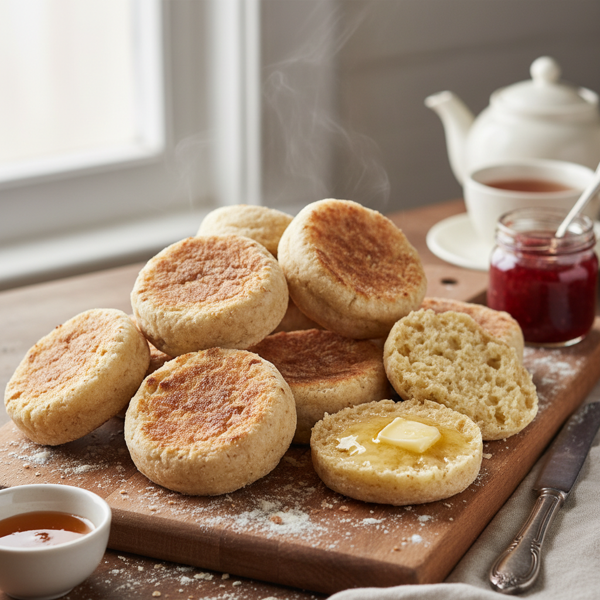
Delve into the delightful world of homemade breakfasts with these Classic English Muffins. Perfectly golden and slightly chewy, these muffins are characterized by their unique nooks and crannies, ideal for holding butter and jam. This simple yet satisfying recipe allows you to bring a touch of the British breakfast experience right into your kitchen. Whether toasted with a slab of butter, served with poached eggs, or used as a base for eggs Benedict, these English muffins are the perfect addition to your brunch table. Enjoy sharing this delicious treat with family and friends!
N/A
Servings
N/A
Calories
10
Ingredients
Ingredients
Yeast
1 envelope (Active dry yeast)
Salt
1 1/2 teaspoons (Coarse salt)
Lukewarm Milk
1/2 cup (For proofing yeast)
Egg
1 (Beaten)
Sugar
2 tablespoons (Granulated sugar)
All-Purpose Flour
4 1/2-5 cups (Unbleached flour)
Scalded Milk
1 cup (For mixing with butter)
Cornmeal
1/2 cup (For coating muffins)
Butter
1/4 cup (Melted for mixing)
Melted Butter
2 tablespoons (For greasing the skillet)
Instructions
1
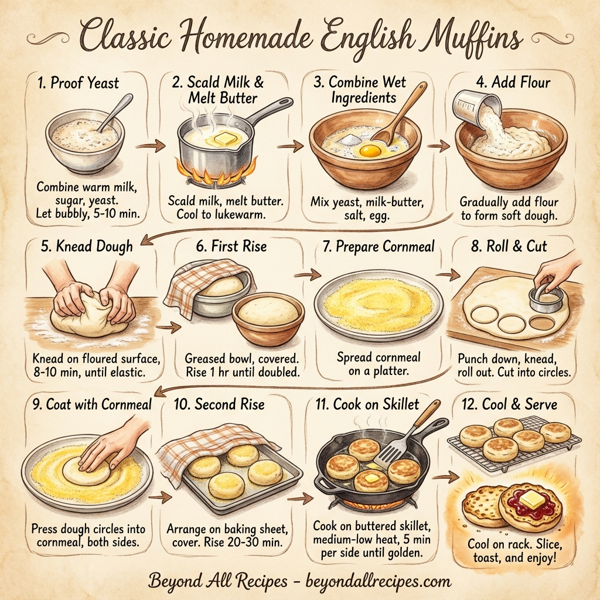
Start by proofing the yeast: In a small bowl, combine 1/2 cup of lukewarm milk with the sugar and yeast. Let it sit for about 5 to 10 minutes until bubbly.
2
In a saucepan, scald 1 cup of milk and melt 1/4 cup of butter in it. Allow the mixture to cool until lukewarm.
3
In a large mixing bowl, combine the yeast mixture, the lukewarm milk-butter blend, salt, and the beaten egg. Stir until well combined.
4
Gradually add the flour, 1 cup at a time, mixing until a soft dough forms.
5
Turn the dough out onto a lightly floured surface and knead for about 8-10 minutes until the dough is elastic and shiny. Add flour as needed to prevent sticking.
6
Place the kneaded dough into a greased bowl. Cover with a kitchen towel and let rise in a warm area for about 1 hour, or until doubled in size.
7
While the dough rises, spread cornmeal on a large platter and set aside.
8
Once the dough has risen, punch it down and knead it for a couple of minutes. Roll it out to about 1/3 inch thick.
9
Using a round cutter or a glass, cut out circles from the dough and transfer them to the platter with the cornmeal. Gently press down to coat both sides with cornmeal.
10
Arrange the cornmeal-coated muffins on a baking sheet, cover with the towel, and allow them to rise for an additional 20 to 30 minutes until doubled in size.
11
Preheat a skillet over medium heat. Once hot, brush with melted butter and reduce the heat to low. Place about 5-6 muffins in the skillet.
12
Cook for approximately 5 minutes on each side until they turn a golden brown color. Repeat with remaining muffins.
13
Once cooked, transfer the muffins to a rack to cool completely.
14
For serving, slice them open and toast them to perfection right before enjoying with your favorite spreads!
Nutrition Information
Frequently Asked Questions
Frequently Asked Questions
What are the characteristics of these Classic English Muffins?
These muffins are perfectly golden and slightly chewy, featuring unique nooks and crannies that are ideal for holding butter and jam.
What type of yeast is used in this recipe?
The recipe calls for one envelope of active dry yeast.
How do I proof the yeast?
Combine 1/2 cup of lukewarm milk with sugar and yeast in a small bowl and let it sit for 5 to 10 minutes until it becomes bubbly.
Why do I need to scald the milk?
You scald 1 cup of milk to melt the 1/4 cup of butter into it, creating a warm liquid base for the dough.
How long should I knead the dough?
The dough should be kneaded for about 8-10 minutes until it becomes elastic and shiny.
What is the total rising time for the first rise?
The first rise takes about 1 hour in a warm area, or until the dough has doubled in size.
How thick should I roll the dough before cutting?
You should roll the dough out to approximately 1/3 inch thick.
What can I use to cut the muffin circles?
You can use a standard round cutter or even a simple drinking glass.
What is the purpose of cornmeal in this recipe?
Cornmeal is used to coat both sides of the muffins, providing texture and preventing them from sticking during the second rise and cooking.
How long is the second rise?
The second rise lasts between 20 to 30 minutes, or until the muffins have doubled in size again.
How are these muffins cooked?
They are cooked in a skillet over low heat rather than being baked in an oven.
What heat setting should I use for the skillet?
Preheat the skillet on medium, then reduce the heat to low before adding the muffins.
How long does it take to cook each muffin in the skillet?
Cook the muffins for approximately 5 minutes on each side until they are golden brown.
Do I need to grease the skillet?
Yes, brush the hot skillet with 2 tablespoons of melted butter before placing the muffins inside.
Should I let the muffins cool after cooking?
Yes, transfer the cooked muffins to a rack to cool completely before slicing.
What is the best way to serve English muffins?
Slice them open and toast them to perfection, then serve with butter, jam, poached eggs, or as a base for Eggs Benedict.
What type of flour is recommended?
The recipe recommends 4 1/2 to 5 cups of unbleached all-purpose flour.
Does this recipe include eggs?
Yes, the recipe requires one beaten egg mixed into the dough.
What kind of sugar should I use?
Standard granulated sugar is used to help feed the yeast.
What kind of salt should I use?
The recipe specifies 1 1/2 teaspoons of coarse salt.
What do I do if the dough is too sticky while kneading?
You should add more flour as needed to prevent the dough from sticking to your hands or the surface.
How many muffins can I cook in the skillet at once?
You can typically fit about 5 to 6 muffins in the skillet at one time.
Why is it important to wait for the scalded milk to cool?
The milk-butter mixture must be lukewarm before adding it to the yeast; if it is too hot, it will kill the yeast.
What is the texture of the dough after mixing?
The dough should be soft but manageable enough to turn out onto a floured surface for kneading.
What happens when I punch the dough down?
Punching the dough down after the first rise releases excess air bubbles before you knead it briefly and roll it out.
Can I use these for brunch?
Absolutely, these are described as a perfect addition to any brunch table, especially with poached eggs.
How do I ensure the muffins get a golden brown color?
The combination of the butter in the skillet and the low, steady heat ensures a beautiful golden brown exterior.
What is the preparation for the salt?
The salt used should be coarse salt for the best flavor profile in the dough.
Should the milk for proofing be hot?
No, it should be lukewarm. If it is too hot, the yeast will not survive; if too cold, it will not activate.
How do I apply the cornmeal?
Spread the cornmeal on a platter and gently press each cut dough circle into it to coat both sides before the final rise.