Classic Fresh Egg Pasta Dough
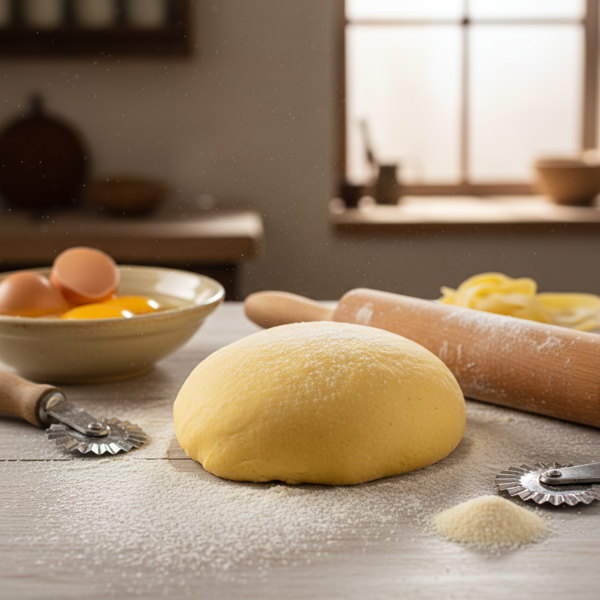
This Classic Fresh Egg Pasta Dough is a time-honored recipe that embodies the essence of traditional Italian cooking. Made with simple ingredients—just flour and eggs—this dough creates a feather-light pasta that’s perfect for various dishes, from delicate fettuccine to hearty lasagna. Unlike other recipes, this dough avoids olive oil and water, allowing the flavors of your toppings and sauces to shine through. Allowing the dough to rest is crucial, as it lets the gluten relax, resulting in a smoother texture for rolling out. Whether you’re a novice or an experienced chef, this recipe is sure to become a staple in your kitchen!
N/A
Servings
N/A
Calories
3
Ingredients
Ingredients
plain flour or unbleached all-purpose flour
2 cups (measured (265 g))
salt
1/4 teaspoon (measured)
large eggs
3 (at room temperature)
Instructions
1
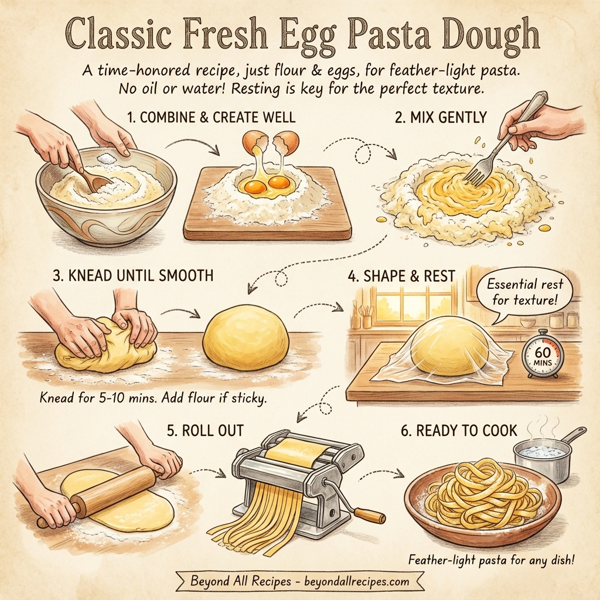
In a large mixing bowl or food processor, combine the flour and salt. Mix well until uniform.
2
Create a well in the center of the flour mixture and crack the eggs into the well.
3
Using a fork or the food processor, gently mix the eggs with the flour, starting from the inner rim of the well. Continue until the mixture begins to come together.
4
Transfer the dough onto a lightly floured work surface and knead the dough with your hands. Knead until the dough becomes smooth, satiny, and somewhat elastic, which should take about 5 to 10 minutes.
5
Ensure that the dough is not sticky; if it is, sprinkle in a little more flour as needed while continuing to knead.
6
Once the dough reaches the right consistency, shape it into a ball, wrap it tightly in plastic wrap, and let it rest on the counter for at least 1 hour. This resting period is essential for developing the dough's texture.
7
After resting, your pasta dough is ready to be rolled out using a pasta machine or by hand to your desired thickness.
Nutrition Information
Frequently Asked Questions
Frequently Asked Questions
What is Classic Fresh Egg Pasta Dough?
It is a time-honored recipe that embodies traditional Italian cooking, made using only flour and eggs to create a feather-light pasta.
What ingredients are needed for this pasta dough?
You will need 2 cups of plain or unbleached all-purpose flour, 1/4 teaspoon of salt, and 3 large eggs at room temperature.
How much flour is required by weight?
The recipe calls for 265 grams of flour.
Why does this recipe exclude olive oil and water?
Excluding these ingredients allows the natural flavors of your toppings and sauces to shine through more clearly.
What is the first step in making the dough?
In a large mixing bowl or food processor, combine the flour and salt and mix until uniform.
How do I incorporate the eggs into the flour?
Create a well in the center of the flour, crack the eggs into it, and gently mix with a fork starting from the inner rim.
Can I use a food processor for this recipe?
Yes, a food processor can be used for both mixing the initial flour and salt and for combining the eggs with the flour.
How long should I knead the pasta dough?
The dough should be kneaded for approximately 5 to 10 minutes.
How do I know when the dough is finished being kneaded?
The dough should become smooth, satiny, and somewhat elastic.
What should I do if the pasta dough is sticky?
If the dough is sticky, sprinkle in a little more flour as needed while you continue to knead.
How long does the dough need to rest?
The dough must rest on the counter for at least 1 hour.
Why is the resting period essential?
Resting allows the gluten to relax, which results in a smoother texture when rolling out the pasta.
How should I store the dough while it rests?
The dough should be shaped into a ball and wrapped tightly in plastic wrap.
Can I roll this dough by hand?
Yes, after resting, the dough can be rolled out by hand or using a pasta machine to your desired thickness.
What types of pasta can I make with this dough?
This dough is perfect for various styles, ranging from delicate fettuccine to hearty lasagna.
What temperature should the eggs be?
The eggs should be at room temperature for the best results.
Is this recipe suitable for beginners?
Yes, it is designed to be a staple for both novice cooks and experienced chefs.
Does the dough require a specific type of flour?
The recipe recommends plain flour or unbleached all-purpose flour.
How much salt is included in the recipe?
The recipe uses 1/4 teaspoon of salt.
What texture should I look for in the finished dough?
Look for a texture that is smooth, satiny, and elastic, indicating the gluten has been properly developed.
Can this dough be used for lasagna?
Yes, it is specifically mentioned as being perfect for hearty lasagna dishes.
Is a pasta machine required?
No, while a machine is helpful, you can roll out the dough by hand.
What is the purpose of creating a well in the flour?
The well holds the eggs in place, allowing you to gradually incorporate flour from the edges without the eggs running out.
How many ingredients are in this recipe?
There are 3 main ingredients: flour, salt, and eggs.
Where should the dough be kept while resting?
It should be kept on the kitchen counter at room temperature.
Is this dough light or heavy?
The recipe produces a feather-light pasta dough.
What if I don't have unbleached flour?
You can use standard plain flour as a substitute.
Should the work surface be floured?
Yes, you should transfer the dough onto a lightly floured work surface for kneading.
Does the dough need to be refrigerated?
The recipe specifies letting it rest on the counter, though it must be tightly wrapped.
What is the final step before cutting the pasta?
The final step is rolling the rested dough to your desired thickness.