Classic Food Processor Fresh Pasta Dough
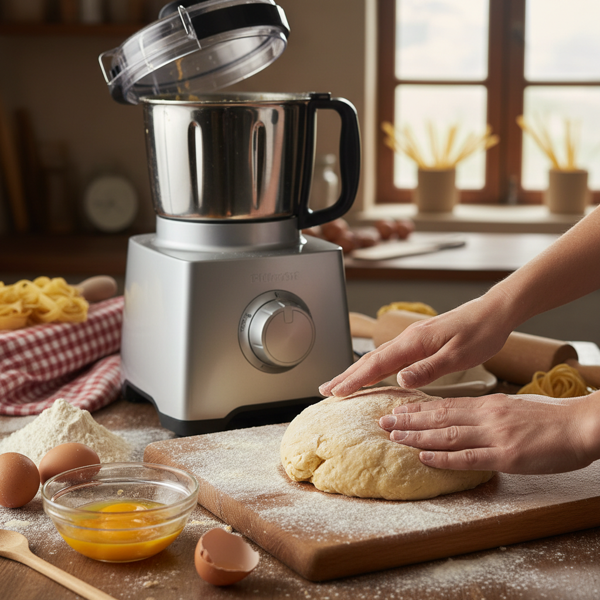
Experience the art of pasta making with this Classic Food Processor Fresh Pasta Dough recipe. Ideal for creating your favorite pasta dishes, this easy-to-follow guide allows you to whip up fresh, homemade pasta with just a few simple ingredients. Using a food processor streamlines the process, making it accessible even for beginner cooks. Enjoy the delightful taste and texture of freshly made pasta, perfect for spaghetti, fettuccine, or any shapes your culinary creativity desires. Share this delightful experience with family and friends, and elevate your next meal with homemade pasta.
4
Servings
160
Calories
5
Ingredients

Ingredients
Flour
1 2/3 cups (All-purpose flour, measured)
Eggs
2 medium (At room temperature)
Olive oil
1 tablespoon (Extra virgin recommended)
Sea salt
1/4 teaspoon (Fine sea salt)
Fresh ground black pepper
To taste (Freshly ground)
Instructions
1
In the bowl of a food processor, combine the flour, eggs, olive oil, sea salt, and fresh ground black pepper. Pulse in short bursts until the mixture begins to form a cohesive dough, approximately 15 seconds.
2
Check the consistency of the dough. If it appears too dry, add a few drops of cold water. If the dough feels too wet or sticky, incorporate additional flour, little by little, until the desired consistency is achieved.
3
Turn the dough out onto a clean, lightly floured wooden surface. Gently knead the dough for about 5-7 minutes until it becomes smooth and elastic. Lightly rub the dough ball with olive oil, then wrap it in plastic wrap.
4
Allow the dough to rest at room temperature for a minimum of 30 minutes. For optimal flavor and texture, consider chilling the wrapped dough overnight in the refrigerator. Remove it from the fridge just before you are ready to roll it out.
5
When rolling out the dough, follow the manufacturer's instructions for your pasta machine. Work with small portions of the dough to ensure even thickness and prevent sticking.
6
To cook the fresh pasta, bring a large pot containing 4 quarts of salted water to a rapid boil. Add the pasta and stir gently to prevent sticking. Boil, uncovered, until the pasta is al dente, which typically takes significantly less time than dried pasta. Cooking times will vary based on the thickness and shape of the pasta.
7
Once cooked, drain the pasta and return it to the pot. Serve immediately, tossing with your favorite sauce or simply a drizzle of olive oil and a sprinkle of cheese.
Nutrition Information
4.5g
Fat
25g
Carbs
5g
Protein
1g
Fiber
Frequently Asked Questions
Frequently Asked Questions
What is the Classic Food Processor Fresh Pasta Dough recipe?
It is an easy-to-follow guide for creating homemade fresh pasta dough using a food processor to streamline the process.
How many servings does this recipe yield?
This recipe yields 4 servings.
What are the main ingredients needed?
The main ingredients are flour, eggs, olive oil, sea salt, and fresh ground black pepper.
How much flour is required for the dough?
The recipe calls for 1 2/3 cups of all-purpose flour.
What type of flour should I use?
All-purpose flour is recommended for this pasta dough.
How many eggs do I need?
You need 2 medium-sized eggs.
What is the ideal temperature for the eggs?
The eggs should be at room temperature for the best results.
How much olive oil is added to the mixture?
The recipe uses 1 tablespoon of olive oil, with extra virgin recommended.
What type of salt is best for this recipe?
Fine sea salt is recommended for the dough.
How do I incorporate black pepper into the pasta?
Freshly ground black pepper is added directly into the food processor bowl with the other ingredients to taste.
How long should I pulse the ingredients in the food processor?
Pulse the ingredients in short bursts for approximately 15 seconds until a cohesive dough forms.
What should I do if the dough is too dry?
If the dough is too dry, add a few drops of cold water until the right consistency is reached.
What should I do if the dough is too wet or sticky?
Incorporate additional flour little by little until the desired consistency is achieved.
How long should I knead the dough by hand?
After removing it from the food processor, knead the dough on a floured surface for 5 to 7 minutes.
What texture should the dough have after kneading?
The dough should be smooth and elastic.
Why is the dough rubbed with olive oil before resting?
Lightly rubbing the dough with olive oil prevents it from drying out while it rests.
How long does the pasta dough need to rest?
The dough should rest at room temperature for a minimum of 30 minutes.
Can I prepare the dough in advance?
Yes, for optimal flavor and texture, you can wrap the dough and chill it overnight in the refrigerator.
How should I roll out the pasta dough?
Work with small portions of the dough and follow your pasta machine's manufacturer instructions for even thickness.
How much water is needed to cook the fresh pasta?
Bring a large pot containing 4 quarts of salted water to a rapid boil.
How do I keep the pasta from sticking during boiling?
Stir the pasta gently as soon as you add it to the boiling water to prevent sticking.
What is the target doneness for fresh pasta?
The pasta should be cooked until it is al dente.
Does fresh pasta cook faster than dry pasta?
Yes, fresh pasta typically takes significantly less time to cook than dried store-bought pasta.
How should I serve the fresh pasta?
Drain the pasta and serve immediately with your favorite sauce, a drizzle of olive oil, or a sprinkle of cheese.
What are the calories per serving?
Each serving contains approximately 160 calories.
How much protein is in this recipe?
Each serving provides 5 grams of protein.
What is the fat content per serving?
The fat content per serving is 4.5 grams.
How many carbohydrates are in one serving?
There are 25 grams of carbohydrates per serving.
Is there fiber in this pasta dough?
Yes, there is 1 gram of fiber per serving.
Is this recipe suitable for beginner cooks?
Yes, the use of a food processor makes this recipe accessible even for those new to pasta making.