Classic Flaky Shortening Pie Crust
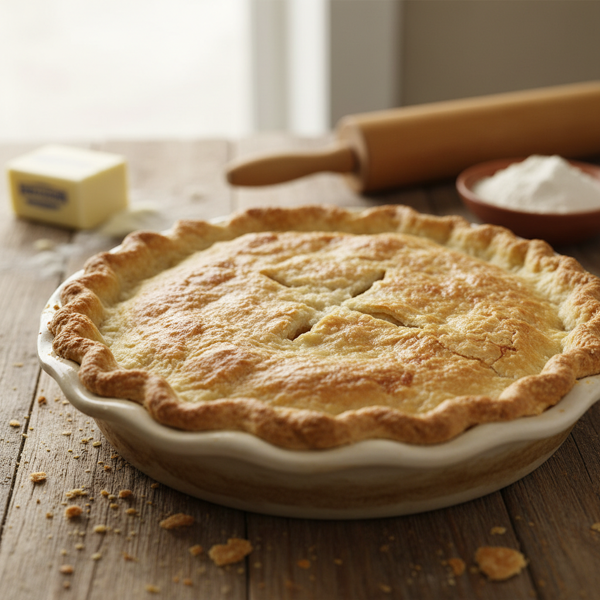
This Classic Flaky Shortening Pie Crust is a simple and reliable recipe that promises a tender, flaky crust for all your pie-making needs. Utilizing vegetable shortening instead of butter, this dough offers a sturdier texture while still being incredibly easy to work with. Whether you're preparing a sweet dessert pie or a savory quiche, this adaptable dough will be the perfect foundation. With its minimal ingredients and straightforward technique, you’ll find this pie crust a breeze to whip up, making it a staple in your baking repertoire.
N/A
Servings
N/A
Calories
8
Ingredients
Ingredients
all-purpose flour
1 1/2 cups (dip-and-sweep)
salt
1/2 teaspoon (none)
vegetable shortening
1/2 cup (at room temperature)
ice-cold water
1/4 cup (chilled)
all-purpose flour
2 1/4 cups (none)
salt
3/4 teaspoon (none)
vegetable shortening
3/4 cup (none)
ice-cold water
6 tablespoons (chilled)
Instructions
1
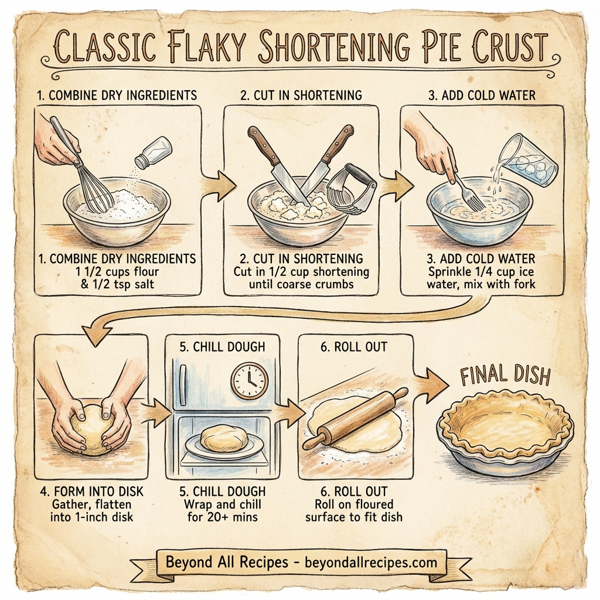
In a medium mixing bowl, combine 1 1/2 cups all-purpose flour and 1/2 teaspoon salt. Mix well to ensure even distribution.
2
Using two knives (or a pastry blender if available), cut in 1/2 cup of room-temperature vegetable shortening. Continue until the mixture resembles coarse crumbs with a few pea-sized pieces remaining.
3
Gradually sprinkle 1/4 cup of ice-cold water over the flour mixture. Using a fork, gently stir until the dough begins to come together. Add more water a tablespoon at a time if needed, just until the mixture is moistened.
4
Once the dough holds together, gather it into a ball and flatten it into a disk about 1-inch thick.
5
Wrap the disk in wax paper or plastic wrap. Chill in the refrigerator for at least 20 minutes, or up to overnight to allow it to firm up and the flavors to meld.
6
If the dough is chilled until hard, let it sit at room temperature for about 10 minutes to soften slightly before rolling out.
7
Roll the dough out on a floured surface to fit your pie dish. Use the dough immediately, or proceed to prepare a double-crust pie by dividing the dough into two equal pieces.
Nutrition Information
Frequently Asked Questions
Frequently Asked Questions
What is the primary benefit of using shortening in this pie crust recipe?
Using vegetable shortening offers a sturdier texture while remaining tender and flaky, and it is generally easier to work with than butter-based doughs.
Can this crust be used for both sweet and savory pies?
Yes, this adaptable dough is an ideal foundation for everything from sweet dessert pies to savory quiches.
How much flour is needed for a standard batch of this crust?
The recipe calls for 1 1/2 cups of all-purpose flour for a standard single crust.
What is the recommended method for measuring the flour?
The recipe suggests using the dip-and-sweep preparation method for the 1 1/2 cups of all-purpose flour.
What temperature should the vegetable shortening be?
The vegetable shortening should be at room temperature when you begin the mixing process.
How much salt is included in the single crust recipe?
The recipe requires 1/2 teaspoon of salt to ensure proper seasoning.
What tools can I use to combine the shortening and flour?
You can use either a pastry blender or two knives to cut the shortening into the flour mixture.
What should the texture of the dough look like after cutting in the shortening?
The mixture should resemble coarse crumbs, with a few remaining pea-sized pieces of shortening.
Why is ice-cold water necessary for this recipe?
Using ice-cold water is essential to keep the fat from melting, which helps create the desired flaky layers in the crust.
How much water should I add initially?
You should start by gradually sprinkling 1/4 cup of ice-cold water over the flour mixture.
What should I do if the dough doesn't hold together after the initial water is added?
Add more ice-cold water one tablespoon at a time, just until the mixture is moistened and holds together.
What tool is recommended for stirring the water into the dough?
A fork is recommended to gently stir the dough until it begins to come together.
How should the dough be shaped before it is chilled?
Gather the dough into a ball and flatten it into a disk that is approximately 1-inch thick.
What should I use to wrap the dough disk for chilling?
You can wrap the dough disk in either wax paper or plastic wrap.
How long does the dough need to rest in the refrigerator?
The dough should chill for a minimum of 20 minutes, though it can be left in the refrigerator up to overnight.
What is the purpose of chilling the pie dough?
Chilling allows the dough to firm up and provides time for the flavors to meld, making it easier to roll out later.
What if the dough is too hard to roll out after being in the fridge?
If the dough is too hard, let it sit at room temperature for about 10 minutes to soften slightly before rolling.
What kind of surface is best for rolling out the dough?
The dough should be rolled out on a floured surface to prevent it from sticking.
How do I make a double-crust pie with this recipe?
To make a double-crust pie, divide the dough into two equal pieces and roll each out separately to fit your dish.
What is the ingredient ratio for a larger 2 1/4 cup flour batch?
A larger batch uses 2 1/4 cups flour, 3/4 teaspoon salt, 3/4 cup shortening, and 6 tablespoons of ice-cold water.
Is this recipe considered easy for beginner bakers?
Yes, with its minimal ingredients and straightforward technique, it is designed to be a simple staple for any baker.
Does this recipe contain dairy?
No, this recipe uses vegetable shortening instead of butter, making it a dairy-free crust option.
How should I ensure the salt is evenly distributed?
Mix the flour and salt together in a medium mixing bowl thoroughly before adding the shortening.
Can I use a food processor for this recipe?
The instructions specifically mention using two knives or a pastry blender, but a food processor can typically be used to pulse shortening into flour.
How much shortening is needed for a single crust?
A single crust requires 1/2 cup of vegetable shortening.
Is the flour for the 2 1/4 cup batch prepared differently?
The recipe does not specify a special preparation like 'dip-and-sweep' for the larger batch, but it is generally good practice for all flour measurements.
What tags are associated with this recipe for searching?
Common tags include 'pie crust', 'shortening', 'flaky crust', 'easy pie dough', and 'baking'.
Can I use this dough immediately after mixing?
While it is best to chill it for at least 20 minutes for the best results, the recipe implies you can use it after rolling it out.
How many ingredients are in the total recipe list?
There are 8 total ingredient entries in the list, covering both single and larger batch measurements.
Does the recipe specify nutritional information?
The current recipe data does not include specific values for calories, fat, or carbohydrates.