Classic Flaky Pie Crust with Expert Tips
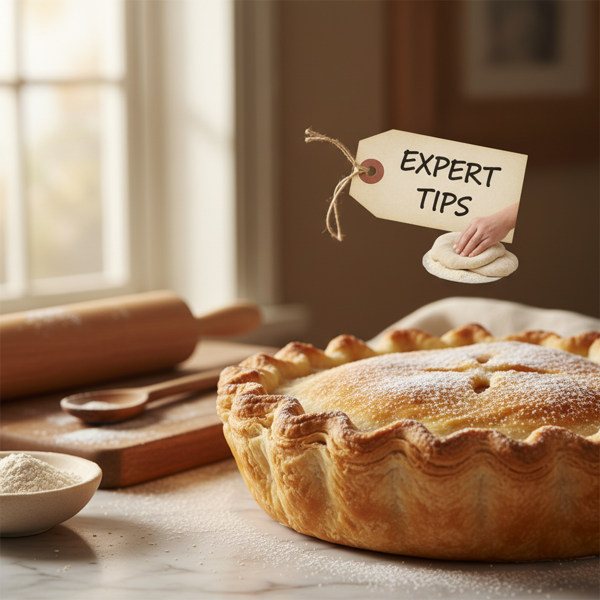
Perfecting a pie crust is an art, and this classic flaky pie crust recipe is your canvas. With just a few simple ingredients, you'll create a buttery, tender, and flaky pie crust that serves as the foundation for any delicious pie, from fruit to cream fillings. With this recipe, you'll not only learn how to make a basic pie crust but also receive valuable tips and tricks that will elevate your baking skills, ensuring each crust is a masterpiece worthy of any dessert table.
N/A
Servings
N/A
Calories
4
Ingredients

Ingredients
All-purpose flour
3 cups (measured)
Shortening
1 cup (at room temperature)
Salt
1/2 teaspoon (fine)
Ice-cold water
1/2-2/3 cup (very cold)
Instructions
1
In a large mixing bowl, combine the flour and salt. Using a pastry cutter, cut in the shortening until the mixture resembles coarse crumbs, with small pieces of shortening still visible.
2
Pour in the very cold water all at once. Use a fork to gently toss the mixture together until it begins to form a shaggy dough, being careful to avoid over-mixing.
3
Gather the dough together with your hands and shape it into a ball. Divide the dough in half and flatten each half into a disk. Wrap in plastic wrap and refrigerate for at least 30 minutes before rolling out.
4
After chilling, lightly flour your work surface and roll out the first disk into a shape that will fit your pie plate, about 1/8-inch thick. Gently place the rolled dough into the pie plate, being careful not to stretch it.
5
Repeat the rolling process with the second disk if making a double crust, or reserve it for later use. Trim any excess dough, crimp the edges, and supercharge your pie by trying the tips for extra flavor and texture as recommended.
6
Bake according to the pie recipe instructions, and enjoy your beautifully flaky crust!
Nutrition Information
Frequently Asked Questions
Frequently Asked Questions
What is the key to making this pie crust flaky?
The key is to cut the shortening into the flour until it resembles coarse crumbs with small pieces of fat still visible, and to use ice-cold water to prevent the fat from melting.
What type of flour is recommended for this recipe?
This recipe calls for 3 cups of measured all-purpose flour.
How much shortening do I need?
You will need 1 cup of shortening to achieve a buttery and tender texture.
Why must the water be ice-cold?
Ice-cold water ensures that the shortening remains solid throughout the mixing process, which creates the distinct layers and pockets necessary for a flaky crust.
How much water should I add to the dough?
You should use between 1/2 to 2/3 cup of very cold water, adding it all at once and tossing gently.
What tool should I use to mix the shortening and flour?
A pastry cutter is recommended to effectively cut the shortening into the flour and salt mixture.
Should I mix the dough thoroughly?
No, you should use a fork to gently toss the mixture until it forms a shaggy dough, being very careful to avoid over-mixing which can make the crust tough.
How should I prepare the dough for chilling?
Gather the dough into a ball, divide it in half, and flatten each half into a disk before wrapping in plastic wrap.
How long does the dough need to refrigerate?
The dough disks should be refrigerated for at least 30 minutes before you attempt to roll them out.
How thick should I roll the pie crust?
The dough should be rolled out to a thickness of approximately 1/8-inch.
How do I prevent the dough from sticking while rolling?
Lightly flour your work surface before you begin rolling out the chilled dough disks.
What is the best way to move the dough to the pie plate?
Gently place the rolled dough into the plate, making sure not to stretch it, as stretching can cause the crust to shrink during baking.
Can I use this recipe for a double-crust pie?
Yes, this recipe provides enough dough for two disks, which can be used for a top and bottom crust or reserved for two separate single-crust pies.
How do I finish the edges of the pie?
Trim any excess dough and then crimp the edges using your fingers or a fork for a decorative finish.
Is this crust suitable for fruit pies?
Yes, it is a perfect foundation for all types of pies, including fruit and cream fillings.
What flavor profile does this crust have?
The crust is buttery, tender, and neutral enough to complement both sweet and savory fillings.
How much salt is included in the recipe?
The recipe calls for 1/2 teaspoon of fine salt to enhance the flavor of the pastry.
Can I make the dough in advance?
Yes, since the dough requires at least 30 minutes of chilling, it can be prepared ahead of time and kept in the refrigerator.
What should the dough look like before chilling?
It should be a shaggy dough that has just come together after the water was added.
How do I bake the crust?
Baking times and temperatures vary depending on your specific pie filling; follow the instructions of the pie recipe you are using.
Does this recipe use butter or shortening?
This specific classic recipe uses shortening for maximum flakiness and ease of handling.
What if I don't have a pastry cutter?
You can use two knives or a fork to 'cut' the shortening into the flour until the desired crumb consistency is reached.
Can this crust be used for savory dishes like pot pie?
Yes, its flaky and tender nature makes it an excellent choice for savory meat pies and quiches.
What happens if I over-work the dough?
Over-working the dough develops too much gluten, which results in a tough and chewy crust rather than a light and flaky one.
Why is the shortening kept at room temperature in the list but the water is ice-cold?
Shortening is easier to cut into flour when it is slightly pliable, but the ice-cold water ensures the overall temperature of the dough stays low to maintain those fat pockets.
How many pie crusts does this recipe make?
This recipe yields two disks of dough, enough for one double-crust pie or two single-crust pies.
Can I freeze the dough disks?
Yes, you can wrap the disks tightly and freeze them for later use; just thaw them in the refrigerator before rolling.
What is the texture of the dough when first mixed with water?
The dough should be 'shaggy,' meaning it is just barely holding together and may still look slightly irregular.
Do I need to prick the bottom of the crust?
Pricking (docking) the crust is usually done if you are blind-baking the crust without a filling; follow your specific pie recipe for those details.
How do I make the crust look professional?
Trimming excess dough and carefully crimping or fluting the edges will give your pie a professional, handcrafted appearance.