Classic Filipino Lumpia Spring Rolls
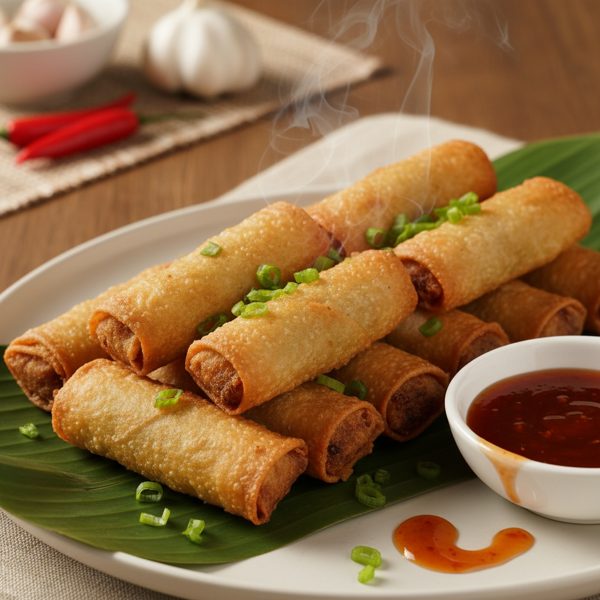
Experience the rich flavors of the Philippines with these Classic Lumpia Spring Rolls! Bursting with a savory pork and vegetable filling, these crispy delights are a staple in Filipino gatherings and a must-try for anyone who loves Asian cuisine. Whether you're serving them as an appetizer for a party or enjoying them as a snack, these spring rolls are sure to disappear quickly. Serve them with your choice of sweet and sour sauce or a spicy vinegar dip for an authentic experience.
25
Servings
N/A
Calories
12
Ingredients
Ingredients
spring roll wrappers
25
ground lean pork
1 lb
garlic cloves
3 (minced)
onion
1 (minced)
medium carrot
1 (peeled and grated)
celery
1/2 cup (diced into small pieces)
soy sauce
2 tablespoons
egg
1
salt
1/4 teaspoon
fresh ground black pepper
1/4 teaspoon
egg white
1 (for sealing rolls)
canola oil
2-4 cups (for frying)
Instructions
1
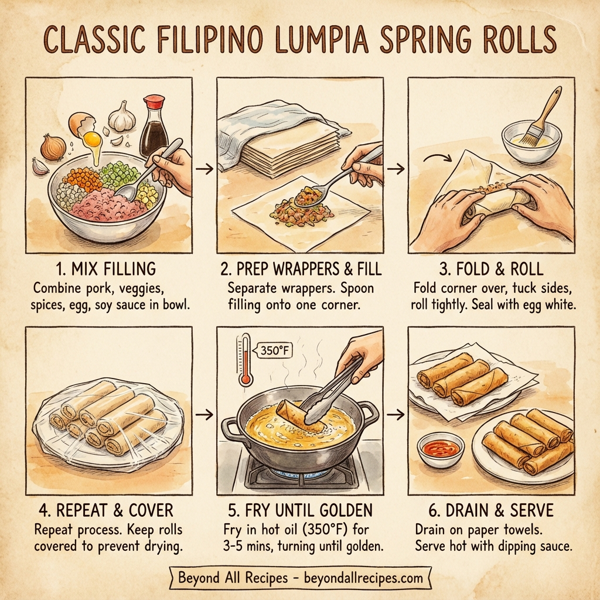
1. In a large mixing bowl, combine the ground pork, minced garlic, minced onion, grated carrot, diced celery, soy sauce, egg, salt, and freshly ground black pepper. Mix until well combined.
2
2. Carefully separate the spring roll wrappers, keeping them covered with a barely damp paper towel while working to prevent them from drying out.
3
3. Place one wrapper on a clean, flat surface. Spoon a heaping tablespoon of the pork mixture and position it diagonally near one corner of the wrapper. Shape the filling into a 4-inch log, leaving approximately 1½ inches on both sides.
4
4. Fold the bottom corner of the wrapper over the filling, then tuck in the sides to enclose the mixture. Continue rolling tightly towards the top corner. Moisten the edge with beaten egg white to seal the roll.
5
5. Cover the completed rolls with plastic wrap to keep them moist. Repeat the process with the remaining wrappers and filling. These can be frozen until needed.
6
6. In a deep pan, pour canola oil to a 1-inch depth and heat to 350°F. Check if the oil is ready by dipping in the edge of one roll; it should sizzle and bubble.
7
7. Carefully place several lumpia into the hot oil without overcrowding. Fry them for 3-5 minutes, turning as needed, until they are golden brown and crispy on all sides.
8
8. Use a slotted spoon to remove the lumpia and let them drain on paper towels. Ensure the oil returns to 350°F before frying the next batch.
9
9. Serve the lumpia hot with your preferred dipping sauce, such as sweet and sour or spicy vinegar. Enjoy!
Nutrition Information
Frequently Asked Questions
Frequently Asked Questions
What are Classic Filipino Lumpia Spring Rolls?
Classic Filipino Lumpia are crispy spring rolls filled with a savory mixture of ground pork and vegetables, commonly served as an appetizer or snack in the Philippines.
What type of meat is used in this Lumpia recipe?
This recipe uses 1 lb of ground lean pork as the primary protein for the filling.
How do I prevent the spring roll wrappers from drying out while working?
Keep the separated wrappers covered with a barely damp paper towel while you assemble the rolls to prevent them from becoming brittle.
What is the recommended oil temperature for frying Lumpia?
The canola oil should be heated to 350°F in a deep pan to ensure the rolls cook evenly and become crispy.
How do I seal the Lumpia rolls so they don't open during frying?
Moisten the top corner edge of the wrapper with beaten egg white to create a secure seal.
Can I freeze these spring rolls for later use?
Yes, once the rolls are assembled and covered with plastic wrap, they can be frozen until you are ready to fry them.
What vegetables are included in the filling?
The filling includes minced garlic, minced onion, peeled and grated medium carrot, and finely diced celery.
How many servings does this recipe yield?
This recipe is designed to make approximately 25 spring rolls.
How much filling should I put in each wrapper?
Spoon a heaping tablespoon of the pork mixture into each wrapper and shape it into a 4-inch log.
How long does it take to fry Lumpia?
Fry the rolls for 3 to 5 minutes, turning as needed, until they are golden brown and crispy on all sides.
What are the best dipping sauces for Filipino Lumpia?
Lumpia is traditionally served with sweet and sour sauce or a spicy vinegar dip.
How do I know if the oil is hot enough without a thermometer?
You can check the oil by dipping the edge of one roll into the pan; if the oil is ready, it should sizzle and bubble immediately.
What should I do after removing the Lumpia from the oil?
Use a slotted spoon to remove the rolls and let them drain on paper towels to remove excess oil.
Why is it important to wait for the oil to return to 350°F between batches?
Maintaining the correct temperature ensures that the next batch of rolls fries quickly and becomes crispy rather than absorbing too much oil and becoming greasy.
What kind of oil is recommended for frying?
Canola oil is recommended because of its high smoke point and neutral flavor.
Is the meat cooked before rolling it into the wrappers?
No, the raw ground pork and vegetable mixture is combined and then cooked inside the wrapper during the frying process.
What seasonings are used in the filling?
The filling is seasoned with soy sauce, salt, and freshly ground black pepper.
How do I roll the Lumpia?
Position the filling diagonally near a corner, fold the bottom corner over, tuck in the sides, and roll tightly toward the top corner.
What is the role of the whole egg in the recipe?
One whole egg is mixed into the filling to act as a binder for the pork and vegetables.
Are these considered a healthy snack?
While they contain fresh vegetables and lean protein, they are deep-fried, making them a delicious occasional treat or party food.
Can I use different vegetables in this recipe?
This classic version uses carrots and celery, but many variations include water chestnuts, cabbage, or green beans.
Should the vegetables be finely prepared?
Yes, the garlic and onion should be minced, the carrot grated, and the celery diced into small pieces to ensure even cooking.
How many wrappers are needed for one pound of pork?
For one pound of ground lean pork, you will typically need 25 spring roll wrappers.
What makes Lumpia 'Classic'?
The use of ground pork, simple aromatics like garlic and onion, and the specific thin, crispy wrapper style defines the classic Filipino version.
Can these be served cold?
Lumpia is best served hot and fresh to maintain the crunchiness of the wrapper.
How do I avoid overcrowding the pan?
Fry only several lumpia at a time, ensuring there is enough space for each roll to be turned and for the oil to circulate.
Is this a traditional Filipino dish?
Yes, Lumpia is a staple at Filipino gatherings, celebrations, and as a popular street food.
What depth should the oil be for frying?
You should pour canola oil to a depth of approximately 1 inch in your frying pan.
Can I substitute soy sauce?
Soy sauce provides the essential salty and umami flavor; if needed, you could use tamari or liquid aminos as a substitute.
What is the texture of Lumpia?
The outside is very thin and shattered-crispy, while the inside remains moist and savory.