Classic English Cream Tea Scones
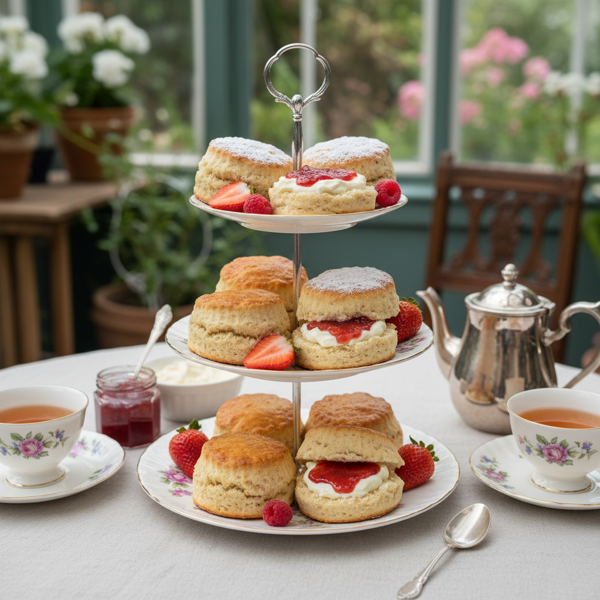
Indulge in the delightful tradition of English tea time with these Classic Cream Tea Scones. Perfectly light and fluffy, these scones are a heavenly treat to accompany your favorite tea. This recipe, adapted from a cherished 1987 Canadian Living Cookbook, promises simplicity and flavor, making it an ideal choice for gatherings or a quiet afternoon indulgence. Serve them warm, slathered in butter, fruity jams, and a luscious spoonful of Devonshire cream for an authentic experience. Get ready to impress your guests or simply savor this comforting homemade biscuit with a twist!
12
Servings
200
Calories
10
Ingredients

Ingredients
All-purpose flour
2 cups
Granulated sugar
2 tablespoons
Baking powder
4 teaspoons
Salt
1/2 teaspoon
Cold butter
1/3 cup (cut into small cubes)
Egg
1 (large)
Egg yolk
1 (reserved from the large egg above)
Half-and-half cream
1/2 cup
Egg white
1 (lightly beaten for brushing)
Granulated sugar
to taste (for sprinkling)
Instructions
1
Preheat your oven to 425°F (220°C) and prepare an ungreased baking sheet.
2
In a large mixing bowl, whisk together the flour, sugar, baking powder, and salt until evenly combined.
3
Add the cold butter cubes to the dry ingredients. Using a pastry cutter or your fingertips, cut in the butter until the mixture resembles coarse crumbs.
4
In a separate small bowl, combine the egg, egg yolk, and half-and-half cream. Beat with a fork until well blended.
5
Pour the liquid mixture into the flour mixture all at once, stirring gently with a fork until a soft, slightly sticky dough forms. If the dough seems dry, add a little more half-and-half until desired consistency is achieved.
6
Turn the dough out onto a floured surface. Gently knead it about 10 times until just combined, being careful not to overwork it.
7
Roll or pat the dough to a thickness of approximately 1/2 inch. Use a sharp knife or a round cutter to cut the dough into triangles or rounds.
8
Arrange the scones on the prepared baking sheet, ensuring they are spaced slightly apart. Brush the tops with the beaten egg white and sprinkle lightly with granulated sugar.
9
Bake in the preheated oven for 12 to 15 minutes, or until the scones are golden brown on top.
10
Remove from the oven and serve warm with butter, raspberry or strawberry jam, and a generous dollop of Devonshire cream or whipping cream for a truly delightful experience.
Nutrition Information
8.3g
Fat
25g
Carbs
2.5g
Protein
Frequently Asked Questions
Frequently Asked Questions
What are Classic English Cream Tea Scones?
They are light and fluffy traditional biscuits often served during English tea time with jam and cream.
What temperature should I preheat the oven to?
The oven should be preheated to 425 degrees Fahrenheit (220 degrees Celsius).
How long do the scones need to bake?
Bake the scones for 12 to 15 minutes or until they are golden brown on top.
What is the calorie count for one scone?
Each scone contains 200 calories.
How many servings does this recipe yield?
This recipe makes 12 servings.
What type of flour is required for this recipe?
The recipe calls for 2 cups of all-purpose flour.
How much baking powder is used in the dough?
You will need 4 teaspoons of baking powder.
What should the texture of the butter be when adding it to the flour?
The butter should be cold and cut into small cubes to create a coarse crumb texture.
How do I incorporate the butter into the dry ingredients?
Use a pastry cutter or your fingertips to cut the cold butter into the flour until it resembles coarse crumbs.
What liquids are needed for the scone dough?
The dough requires 1 large egg, 1 extra egg yolk, and 1/2 cup of half-and-half cream.
What should I do if the dough seems too dry?
Add a little more half-and-half cream until the desired soft, slightly sticky consistency is achieved.
How many times should the dough be kneaded?
Turn the dough onto a floured surface and gently knead it approximately 10 times until just combined.
Why is it important not to overwork the dough?
Overworking the dough can lead to tough scones instead of light and fluffy ones.
What is the recommended thickness for rolling out the dough?
The dough should be rolled or patted to a thickness of approximately 1/2 inch.
What shapes can I cut the scones into?
You can use a sharp knife or round cutter to create triangles or rounds.
Do I need to grease the baking sheet?
No, the recipe specifies using an ungreased baking sheet.
How should the scones be arranged on the baking sheet?
Arrange them slightly apart to ensure even baking.
What is used to brush the tops of the scones before baking?
The tops should be brushed with a lightly beaten egg white.
What topping is added before the scones go in the oven?
A light sprinkle of granulated sugar is added on top of the egg white wash.
What are the traditional accompaniments for these scones?
They are best served with butter, raspberry or strawberry jam, and Devonshire cream.
Can I substitute Devonshire cream?
Yes, you can use a generous dollop of whipping cream as an alternative.
What is the nutritional fat content per scone?
There is 8.3g of fat in each serving.
How much protein is in one scone?
Each scone provides 2.5g of protein.
What is the carbohydrate count per serving?
There are 25g of carbohydrates per scone.
What is the origin of this specific recipe?
This recipe was adapted from a 1987 Canadian Living Cookbook.
Is this recipe considered easy to make?
Yes, the recipe promises simplicity and flavor, making it suitable for beginners.
How much salt is included in the dough?
The recipe calls for 1/2 teaspoon of salt.
Should the scones be served hot or cold?
They are best served warm for the most authentic and delightful experience.
What category of food does this recipe fall under?
It is categorized as a Dessert or a snack for afternoon tea.
What is the total number of ingredients required?
The recipe uses 10 ingredients in total.