Classic Creamy Fondant Candy
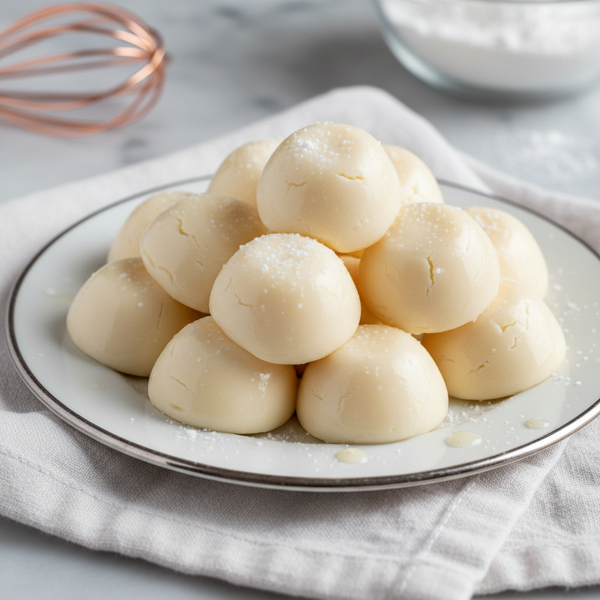
This nostalgic fondant candy is a timeless confectionery treat originating from the deep history of the Mississippi Valley. As featured in the 1947 United States Regional Cookbook by the Culinary Arts Institute of Chicago, this recipe promises a smooth, creamy texture and a melt-in-mouth experience. Perfect for special occasions or as a sweet treat to enjoy at home, this fondant candy requires patience and precise technique to achieve perfection. Follow each step attentively for a delectable fondant that becomes creamier over time.
2
Servings
N/A
Calories
4
Ingredients
Ingredients
sugar
4 cups (none)
water
2 cups (none)
cream of tartar
1/4 teaspoon (none)
light corn syrup (Karo)
4 tablespoons (none)
Instructions
1
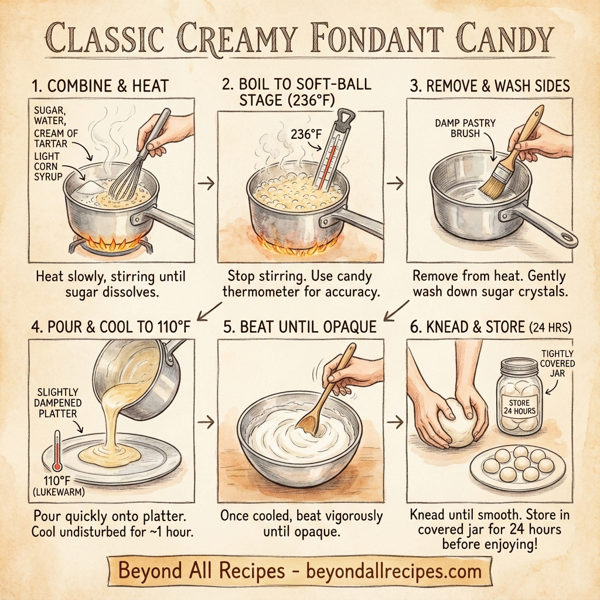
Combine sugar, water, cream of tartar, and light corn syrup in a saucepan.
2
Heat slowly over medium heat while stirring constantly until the mixture begins to boil. Ensure all sugar is thoroughly dissolved.
3
Once boiling, stop stirring and allow the mixture to reach 236°F (the soft-ball stage), using a candy thermometer for accuracy.
4
Remove the saucepan from the heat source to halt the boiling process.
5
Gently use a damp pastry brush to wash down any sugar crystals that may have formed on the sides of the saucepan.
6
Quickly pour the hot candy mixture onto a slightly dampened platter to prevent sticking, and let it cool undisturbed to lukewarm (approximately 110°F).
7
Allow the candy approximately one hour to cool at room temperature before proceeding.
8
Once cooled, beat the fondant vigorously until it becomes opaque and loses its transparency.
9
Cease beating and knead the fondant by hand until it is smooth and free of lumps.
10
Store the smooth fondant in a tightly covered jar to maintain creaminess and avoid drying out. Allow it to stand for at least 24 hours to enhance its flavor before using.
Nutrition Information
Frequently Asked Questions
Frequently Asked Questions
What is Classic Creamy Fondant Candy?
It is a nostalgic, smooth confectionery treat originating from the Mississippi Valley, known for its creamy texture and melt-in-the-mouth experience.
Where does this specific recipe originate?
This recipe originates from the deep history of the Mississippi Valley and was featured in the 1947 United States Regional Cookbook.
What are the primary ingredients?
The main ingredients are sugar, water, cream of tartar, and light corn syrup.
How much sugar is needed for this recipe?
The recipe calls for 4 cups of sugar.
What is the required amount of water?
You will need 2 cups of water.
What is the purpose of cream of tartar in fondant?
Cream of tartar helps prevent the sugar from crystallizing too quickly, ensuring a smooth and creamy texture.
Can I use dark corn syrup instead of light?
The recipe specifically calls for 4 tablespoons of light corn syrup (such as Karo) for the correct color and flavor profile.
What temperature must the mixture reach?
The mixture should reach 236°F, which is the soft-ball stage.
Why is a candy thermometer necessary?
A candy thermometer is essential for accuracy to ensure the mixture reaches the exact soft-ball stage without overcooking.
Should I stir the mixture while it boils?
No, once the mixture begins to boil and the sugar is dissolved, you should stop stirring.
How do I prevent sugar crystals from forming on the sides of the pan?
Use a damp pastry brush to gently wash down any sugar crystals that form on the sides of the saucepan during the boiling process.
What is the first step in the cooling process?
Quickly pour the hot candy mixture onto a slightly dampened platter to prevent sticking.
To what temperature should the fondant cool?
The mixture should cool undisturbed to lukewarm, which is approximately 110°F.
How long does the cooling phase take?
It typically takes about one hour for the candy to cool to the required room temperature.
What do I do after the fondant has cooled?
Once cooled, you must beat the fondant vigorously until it becomes opaque and loses its transparency.
When do I stop beating the fondant?
Stop beating once the mixture is no longer transparent and has become opaque.
Is kneading required for this recipe?
Yes, after beating, you must knead the fondant by hand until it is smooth and free of lumps.
How should the finished fondant be stored?
Store the smooth fondant in a tightly covered jar to maintain its creaminess and prevent it from drying out.
How long should the fondant rest before use?
The fondant should stand for at least 24 hours to enhance its flavor before it is used.
Does the texture change over time?
Yes, the fondant actually becomes creamier the longer it stands, provided it is stored correctly.
What category of food does this fall into?
This recipe is categorized as Candy.
How many servings does this recipe make?
This recipe yields 2 servings.
What is the difficulty level implied?
The recipe requires patience and precise technique, making it a moderately technical confectionery task.
What is the significance of the year 1947?
1947 is the publication year of the United States Regional Cookbook which featured this classic recipe.
Who published the cookbook containing this recipe?
The Culinary Arts Institute of Chicago published the cookbook featuring this fondant.
What should I do if the fondant is lumpy?
Knead the mixture thoroughly by hand until all lumps are gone and the texture is completely smooth.
Why must the platter be dampened?
Dampening the platter helps prevent the hot, sticky candy mixture from adhering to the surface.
What does 'soft-ball stage' mean?
It refers to a specific sugar concentration reached at 236°F where a drop of syrup in cold water forms a soft, flexible ball.
Can I speed up the cooling process in the fridge?
The recipe recommends letting it cool undisturbed at room temperature for the best results.
What are common tags for this recipe?
Common tags include classic, vintage, homemade, creamy, and confectionery.