Classic Cornish Pasties
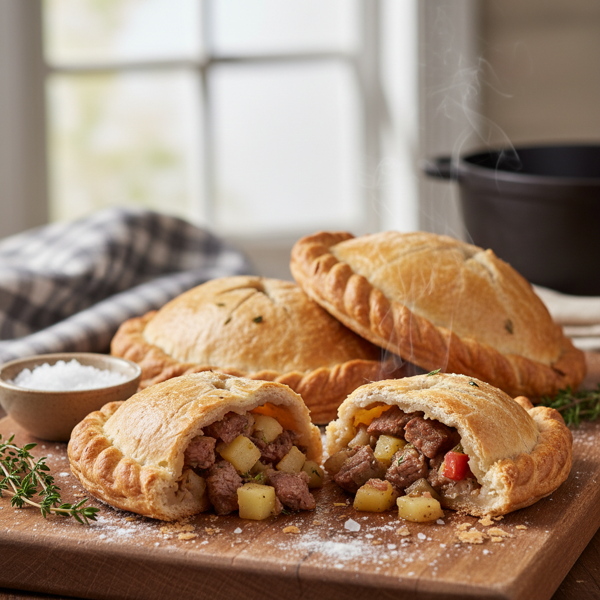
Experience the authentic taste of Cornwall with these homemade Cornish pasties, perfect for a hearty meal on-the-go. Traditionally made by miners' wives, these delicious hand-held pies are filled with an ideal mix of tender meat and fresh vegetables. This version uses a simple shortcrust pastry and is packed with a savory filling of potatoes, onions, and meat—perfectly seasoned to satisfy even the hungriest of workers. Whether served hot with gravy or cold for a picnic, these pasties bridge the gap between comforting home-cooked meals and convenient snacks.
2
Servings
N/A
Calories
8
Ingredients
Ingredients
unbaked pie crusts
2 (ready to roll)
potato
1 medium (peeled and cubed into small cubes)
onion
1 medium (chopped)
rutabaga
1 small (uncooked, peeled and chopped)
lean roast or skirt steak
0.5 lb (cut into small cubes)
salt
1 teaspoon (to taste)
black pepper
1 teaspoon (to taste)
cold water
small amount (for dampening edges)
Instructions
1
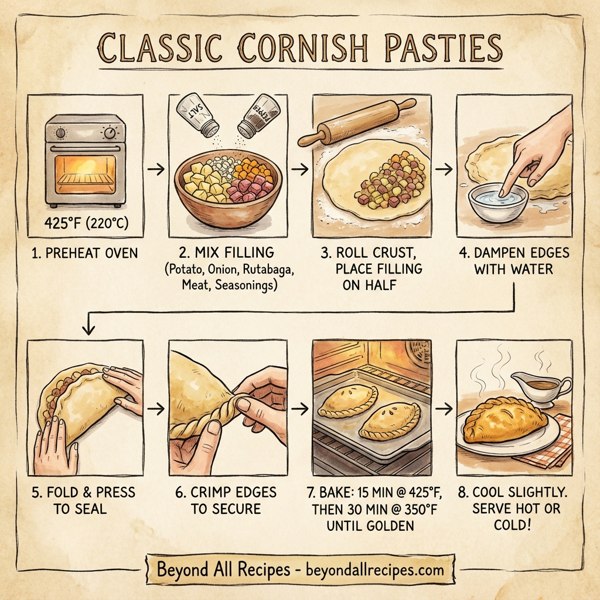
Preheat your oven to 425 degrees F (220 degrees C).
2
In a large bowl, combine the cubed potato, chopped onion, chopped rutabaga, and cubed meat. Season this mixture with salt and black pepper, and mix thoroughly until well combined.
3
Roll out one of the pie crusts on a lightly floured surface. Place half of the filling mixture onto one half of the pie crust, leaving about 1 inch of space around the edge.
4
Dampen the edges of the pie crust lightly with cold water using your fingertips. This will help the dough seal properly.
5
Carefully fold the other half of the pie crust over the filling to create a pocket. Press the edges firmly together, sealing in the delicious filling.
6
To further secure the pasty, fold the sealed edge toward the center, crimping the edges either with your fingers or using the tines of a fork to create a decorative border.
7
Transfer the pasty to a baking sheet lined with parchment paper. Bake in the preheated oven for 15 minutes, then reduce the temperature to 350 degrees F (175 degrees C) and continue baking for an additional 30 minutes or until the crust is golden brown.
8
Remove from the oven and let cool slightly before serving. Enjoy hot with brown or white gravy, or serve cold for a delightful snack.
Nutrition Information
Frequently Asked Questions
Frequently Asked Questions
What are Classic Cornish Pasties?
Classic Cornish Pasties are traditional hand-held pies from Cornwall filled with a savory mix of tender meat, potatoes, onions, and rutabaga, originally made for miners.
What type of meat is used in this recipe?
This recipe uses 0.5 lb of lean roast or skirt steak, cut into small cubes for the filling.
Is the meat cooked before adding it to the pasty?
No, the meat and vegetables are combined raw and then baked inside the crust, allowing them to cook thoroughly together.
What vegetables are included in the filling?
The traditional filling includes one medium potato, one medium onion, and one small rutabaga.
What kind of pastry is required?
The recipe calls for two unbaked pie crusts, which should be ready-to-roll shortcrust pastry.
What is the preheating temperature for the oven?
The oven should be preheated to 425 degrees F (220 degrees C) for the initial baking phase.
How long do Cornish Pasties need to bake?
Bake them for 15 minutes at 425 degrees F, then reduce the heat to 350 degrees F and bake for another 30 minutes.
How do I seal the pasty edges?
Dampen the edges of the pie crust with a small amount of cold water, fold the crust over the filling, and press the edges firmly together.
What is crimping?
Crimping is the process of folding and securing the sealed edge toward the center using your fingers or a fork to create a decorative, leak-proof border.
Can I eat Cornish Pasties cold?
Yes, Cornish pasties can be enjoyed hot out of the oven or served cold as a convenient snack or picnic meal.
What should I serve with these pasties?
They are delicious served hot with brown or white gravy, though they are also great on their own.
How many pasties does this recipe make?
This specific recipe is designed to yield 2 servings, with one large pasty per serving.
What is a rutabaga?
A rutabaga is a root vegetable common in British cooking; it should be peeled and chopped before being added to the filling.
Do I need to peel the potato?
Yes, the recipe specifies that the potato should be peeled and then cubed into small pieces.
What seasonings are used in the filling?
The mixture is seasoned simply with one teaspoon of salt and one teaspoon of black pepper, or to taste.
Should I use parchment paper for baking?
Yes, transferring the pasties to a baking sheet lined with parchment paper prevents sticking and helps with cleanup.
How do I know when the pasties are finished?
The pasties are done when the crust has turned a beautiful golden brown color.
How much meat is needed per pasty?
Since the recipe uses 0.5 lb of meat for two servings, each pasty contains approximately 0.25 lb of cubed meat.
Can I use a different type of beef?
While lean roast or skirt steak is recommended, you can use any tender cut of beef that can cook relatively quickly in the oven.
How small should I cube the meat and vegetables?
They should be cut into small, uniform cubes to ensure even cooking throughout the 45-minute baking period.
Why do I need to leave an inch of space on the crust edge?
Leaving space around the edge allows you to fold and seal the dough without the filling spilling out.
Can I add more ingredients to the filling?
Traditional Cornish pasties focus on meat, potato, onion, and rutabaga, but you can adjust seasonings to your preference.
Is this a good recipe for beginners?
Yes, using ready-to-roll pie crusts and a simple mixing process makes this an easy recipe for those new to making savory pastries.
Why do I reduce the oven temperature halfway through?
Starting at 425F sets the pastry, while lowering to 350F allows the raw meat and root vegetables to cook through without burning the crust.
Should I let them cool before eating?
Yes, letting them cool slightly helps the filling settle and makes them easier to handle.
Can these be frozen?
While the instructions don't specify, savory meat pies like these generally freeze well after baking and cooling.
Is water necessary for the dough?
Water is used only for dampening the edges of the dough to create a better seal before crimping.
What is the texture of the filling?
The filling is hearty and savory, featuring tender cubes of meat and softened root vegetables.
Is rutabaga required for an authentic taste?
Yes, rutabaga (often called 'swede' in Cornwall) is a key ingredient for a traditional Cornish pasty flavor profile.
What makes this a 'Classic' Cornish Pasty?
It is considered classic because it uses the traditional ingredients of beef, potato, onion, and rutabaga in a hand-held pastry format.