Classic Comfort Homemade Noodles
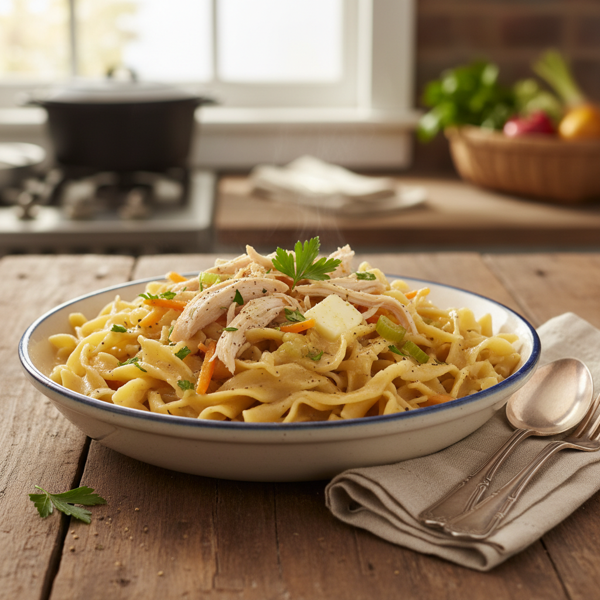
Experience the warm nostalgia of homemade noodles with this easy and quick recipe that brings generations of family tradition to your table. With just a handful of ingredients—flour, egg, salt, and a splash of milk—you can create delicious, tender noodles that are perfect for soaking up savory chicken broth. These noodles add a delightful texture to your homemade chicken soup, a favorite among kids and adults alike. The added flexibility of making smaller dumpling-style noodles when in a hurry makes them an ideal choice for any busy day. Recreate this family favorite and enjoy the satisfaction of homemade noodles that capture the love and comfort of home cooking.
N/A
Servings
N/A
Calories
4
Ingredients
Ingredients
all-purpose flour
1 cup (sifted)
egg
1 (lightly beaten)
salt
1 pinch
milk
2 tablespoons
Instructions
1
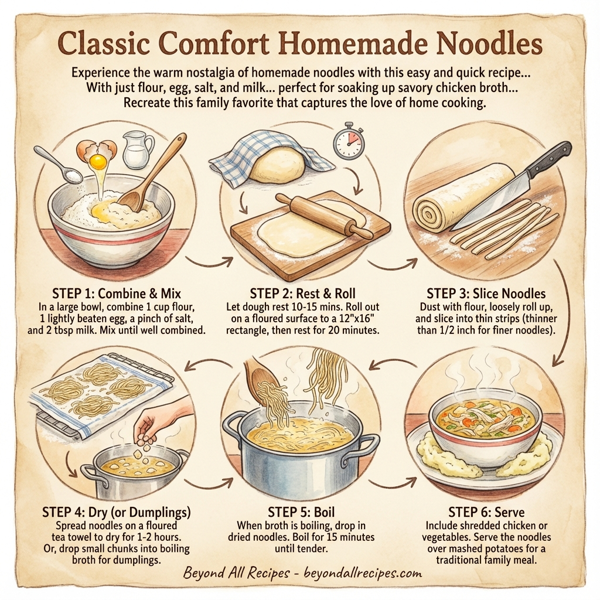
In a large mixing bowl, combine 1 cup of all-purpose flour, 1 lightly beaten egg, a pinch of salt, and 2 tablespoons of milk. Mix until well combined.
2
To make handling easier, let the dough rest for 10-15 minutes. After resting, roll out the dough on a floured surface into a 12"x16" rectangle, then let it rest for another 20 minutes.
3
Once rested, dust the dough with additional flour and loosely roll it up jelly roll-style. Use a sharp knife to slice the roll into thin strips (you can go thinner than 1/2 inch for a finer noodle).
4
Spread the cut noodles out on a floured tea towel to dry for at least 1-2 hours, or until slightly firm. If you're short on time, you can also drop very small chunks of the dough straight into boiling broth to create dumpling-like noodles.
5
When your broth is boiling, gently drop in the dried noodles. Allow them to boil for about 15 minutes until tender.
6
For an added touch, feel free to include shredded chicken or vegetables in the soup as it cooks. Serve the noodles over mashed potatoes for a traditional family style meal.
Nutrition Information
Frequently Asked Questions
Frequently Asked Questions
What are Classic Comfort Homemade Noodles?
Classic Comfort Homemade Noodles are a traditional family favorite made with flour, egg, salt, and milk, resulting in tender noodles perfect for chicken soup.
What ingredients do I need for this noodle recipe?
You will need 1 cup of all-purpose flour, 1 lightly beaten egg, a pinch of salt, and 2 tablespoons of milk.
How many ingredients are used in this recipe?
This recipe requires only 4 basic ingredients.
What type of flour should be used for these noodles?
The recipe calls for all-purpose flour, which should be sifted for the best results.
Should the egg be prepared in a specific way?
Yes, the egg should be lightly beaten before being added to the mixing bowl.
How much milk is required for the dough?
The recipe uses 2 tablespoons of milk.
How long should the noodle dough rest after mixing?
The dough should rest for 10-15 minutes to make handling easier.
What dimensions should the dough be rolled into?
After the initial rest, roll the dough out on a floured surface into a 12 inch by 16 inch rectangle.
Is there a second resting period for the dough?
Yes, after rolling the dough into a rectangle, let it rest for another 20 minutes.
How do you cut the noodles into strips?
Dust the dough with flour, roll it up jelly roll-style, and use a sharp knife to slice it into thin strips.
How thin should the noodles be sliced?
You can slice the strips thinner than 1/2 inch to achieve a finer noodle texture.
How long do the cut noodles need to dry?
Spread the noodles on a floured tea towel and let them dry for at least 1-2 hours until they are slightly firm.
Can I make these noodles if I am short on time?
Yes, you can skip the drying process and drop very small chunks of dough directly into boiling broth to create dumpling-like noodles.
How long do the noodles need to boil?
The noodles should boil in broth for approximately 15 minutes until they become tender.
What is the best way to cook the noodles?
Gently drop the dried noodles into boiling broth and cook until tender.
Can I add meat or vegetables to the noodle soup?
Yes, you can include shredded chicken or vegetables in the soup as it cooks for added flavor and nutrition.
What is a traditional way to serve homemade noodles?
A traditional family-style method is to serve the noodles and broth over mashed potatoes.
Are these noodles kid-friendly?
Yes, these noodles are a favorite among both kids and adults due to their tender texture and comforting taste.
What makes these noodles 'comfort food'?
They represent family tradition and provide a warm, nostalgic experience that captures the love of home cooking.
Do I need any special equipment to make these?
No special equipment is needed; just a mixing bowl, a rolling pin, a sharp knife, and a tea towel.
What is the texture of these homemade noodles?
These noodles are described as delicious, tender, and perfect for soaking up savory broth.
How do you prevent the dough from sticking?
Rolling the dough on a floured surface and dusting the noodles with additional flour before cutting prevents sticking.
Can I use these for chicken noodle soup?
Absolutely, these noodles are specifically recommended for homemade chicken soup.
Is the recipe considered easy?
Yes, it is an easy and quick recipe that uses a handful of common pantry ingredients.
What does the milk add to the noodle recipe?
The milk helps create a tender texture and binds the flour and egg together.
What should I do with the dough after rolling it into a rectangle?
You should let it rest for 20 minutes before proceeding to dust and roll it for cutting.
Are these noodles similar to dumplings?
They can be; if you drop small chunks of dough directly into the broth without drying, they become dumpling-style noodles.
How much salt is used?
The recipe calls for just one pinch of salt.
What is 'jelly roll-style' rolling?
It means rolling the flat sheet of dough into a tight cylinder so it can be easily sliced into strips.
Why do the noodles need to be spread on a tea towel?
Spreading them on a floured tea towel allows air to circulate so they can dry and become firm before boiling.