Classic Chicken Stock
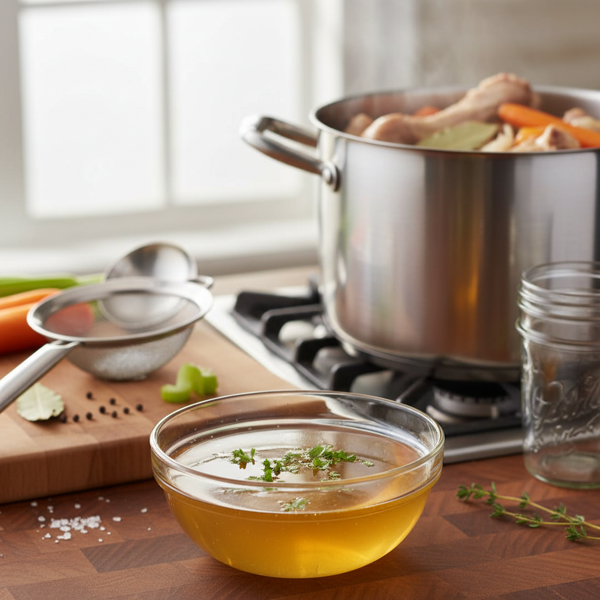
This classic chicken stock recipe, inspired by Julia Child, transforms leftover chicken bones and scraps into a rich, flavorful base for soups and sauces. Perfect for home cooks seeking to elevate their culinary creations, this easy-to-follow recipe allows for customization with whatever vegetables and herbs you have on hand. After several hours of gentle simmering, you’ll have a deeply nourishing stock that captures the essence of homemade comfort. Whether you’re making a hearty chicken soup or a delicate risotto, this versatile stock is a must-have in any kitchen.
8
Servings
N/A
Calories
12
Ingredients
Ingredients
meat and bones
3 quarts (chopped into 3-inch pieces (or use a poultry carcass, scrapings, and giblets))
cold water
as needed (to cover the meat by 2 inches)
salt
2 teaspoons (to taste)
carrots
2 medium (peeled and chopped)
onions
2 medium (peeled and quartered)
celery ribs
2 (chopped)
thyme
1/4 teaspoon (dried or fresh)
bay leaf
1 (whole)
parsley sprigs
6 (fresh)
garlic cloves
2 (unpeeled)
whole cloves
2 (whole)
leeks
2 (washed and chopped)
Instructions
1
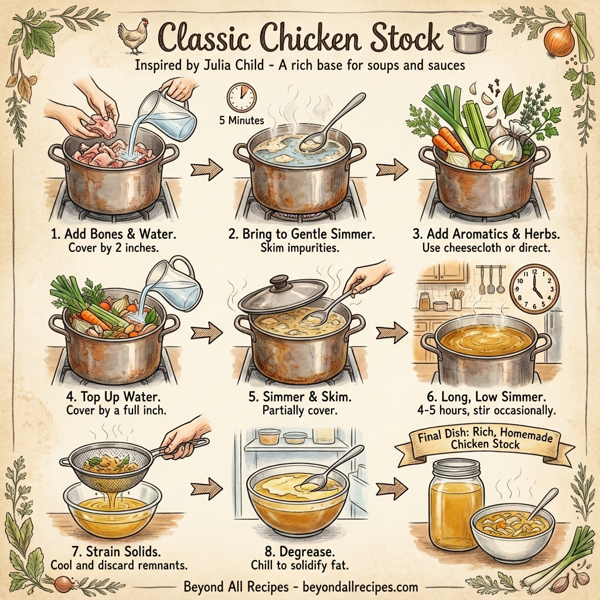
Place the chopped meat and bones in a large stockpot. Pour in enough cold water to cover the contents by 2 inches.
2
Set the pot over moderate heat and bring the water to a gentle simmer. As the liquid heats up, impurities will rise to the surface. Use a spoon or ladle to skim off any scum that forms for about 5 minutes, until it slows down.
3
Once the scum has been removed, add the carrots, onions, celery, thyme, bay leaf, parsley sprigs, garlic cloves, whole cloves, and leeks to the pot. Tie the herbs in a piece of cheesecloth to create an herb bouquet or add directly to the pot.
4
If necessary, add more cold water to ensure that the ingredients are covered by a full inch.
5
Bring the stock back to a simmer, and skim any remaining impurities as needed. Partially cover the pot with a lid, leaving about an inch open for steam to escape.
6
Maintain a very low simmer for 4 to 5 hours, allowing the flavors to meld and develop. Stir occasionally and skim off any fat or scum that forms on the surface.
7
After simmering, remove the pot from heat. Allow it to cool slightly, then strain the stock through a fine-mesh sieve into another pot or bowl, discarding solids and herbal remnants.
8
To degrease the stock, transfer it to the refrigerator. Once chilled, the fat will solidify on top, making it easy to scrape off before using or storing.
Nutrition Information
Frequently Asked Questions
Frequently Asked Questions
What is Classic Chicken Stock?
Classic Chicken Stock is a rich, flavorful base for soups and sauces made by simmering chicken bones, vegetables, and herbs.
Who inspired this chicken stock recipe?
This recipe is inspired by the culinary techniques of Julia Child.
How many servings does this recipe make?
This recipe yields approximately 8 servings.
How long does the stock need to simmer?
The stock should be maintained at a very low simmer for 4 to 5 hours to allow flavors to develop.
What type of bones are best for this recipe?
You can use 3 quarts of chopped meat and bones, a poultry carcass, scrapings, or giblets.
How should the bones be prepared?
The bones and meat should be chopped into 3-inch pieces before being placed in the stockpot.
Why is cold water used to start the stock?
Cold water is used to cover the ingredients initially to ensure a gentle heating process that helps impurities rise to the surface.
How much water should I add at the beginning?
Add enough cold water to cover the meat and bones by 2 inches.
What is the purpose of skimming the stock?
Skimming removes the scum and impurities that rise to the surface, resulting in a clearer and cleaner-tasting stock.
Which vegetables are used in this stock?
The recipe calls for carrots, onions, celery ribs, and leeks.
How many carrots are required?
You will need 2 medium carrots, peeled and chopped.
How should the onions be prepared?
Use 2 medium onions that have been peeled and quartered.
How many celery ribs are included?
The recipe uses 2 chopped celery ribs.
What herbs are used for flavoring?
The stock is flavored with thyme, a bay leaf, and fresh parsley sprigs.
How many parsley sprigs should I add?
Add 6 fresh parsley sprigs to the pot.
Do the garlic cloves need to be peeled?
No, the 2 garlic cloves should be added unpeeled.
How many whole cloves are used?
The recipe calls for 2 whole cloves.
How much salt is added to the stock?
Use 2 teaspoons of salt, or adjust to your personal taste.
How should the leeks be prepared?
Use 2 leeks that have been thoroughly washed and chopped.
Should the stockpot be covered while simmering?
The pot should be partially covered with a lid, leaving about an inch open for steam to escape.
How do I strain the chicken stock?
Once cooled slightly, pour the stock through a fine-mesh sieve into another container and discard the solids.
What should I do with the solids after straining?
The meat, bones, vegetables, and herbal remnants should be discarded after straining.
How do I remove the fat from the stock?
Refrigerate the strained stock until chilled; the fat will solidify on top, making it easy to scrape off.
Can I use dried herbs instead of fresh?
Yes, for the thyme you can use 1/4 teaspoon of either dried or fresh.
How often should I stir the stock?
Stir the stock occasionally while it is simmering to ensure even heat distribution.
Why use a cheesecloth for the herbs?
Tying herbs in cheesecloth creates an herb bouquet that is easier to remove, though they can also be added directly.
Do I need to add more water during the process?
After adding vegetables, if they aren't fully submerged, add more cold water to cover them by a full inch.
What are common uses for this chicken stock?
It is a versatile base for hearty chicken soups, delicate risottos, and various sauces.
Can I customize the ingredients in this stock?
Yes, the recipe allows for customization with whatever vegetables and herbs you have available.
How long do I skim the scum at the start?
Skim the impurities for about 5 minutes until the formation of scum slows down.