Classic Butterkuchen: Rich Yeasted Coffee Cake
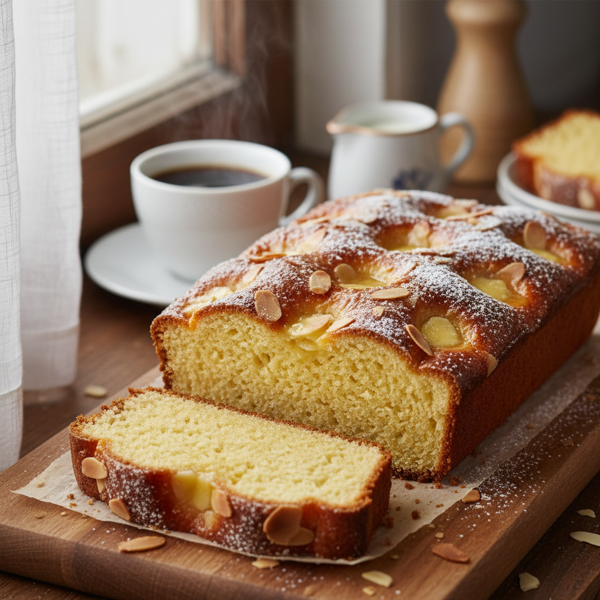
Experience the delightful texture and flavor of Classic Butterkuchen, a beloved German yeasted coffee cake that brings a sweet and buttery touch to your brunch table. This enticing pastry strikes a perfect balance between a soft cake and a rich pastry, making it an irresistible treat. With a simple method and a rising time of just 45 minutes, this recipe is perfect for weekend baking sessions. The cake is topped with a luscious buttery-cinnamon syrup that creates a delightful crust and a moist interior, making each slice a decadent indulgence. Whether enjoyed with a steaming cup of coffee or as a sweet snack, Butterkuchen is sure to satisfy both family and guests. Let this charming pastry become a staple in your baking repertoire!
N/A
Servings
219
Calories
9
Ingredients
Ingredients
dry yeast
2 packets (1/4 ounce each) (dissolved in lukewarm water with a pinch of sugar)
lukewarm water
1/2 cup (for dissolving yeast)
milk
3/4 cup (mixed with sugar, salt, and butter)
granulated sugar
1/2 cup for the dough + 1 cup for topping (combined in respective mixtures)
salt
1 teaspoon + pinch for yeast (combined in dough and topping)
butter
1 cup total (1/2 cup for dough, 1/2 cup for topping) (melted and mixed into respective mixtures)
all-purpose flour
4 cups (measured and combined to make the dough)
eggs
3 (slightly beaten for incorporation into dough)
ground cinnamon
1/2 teaspoon (for topping mixture)
Instructions
1
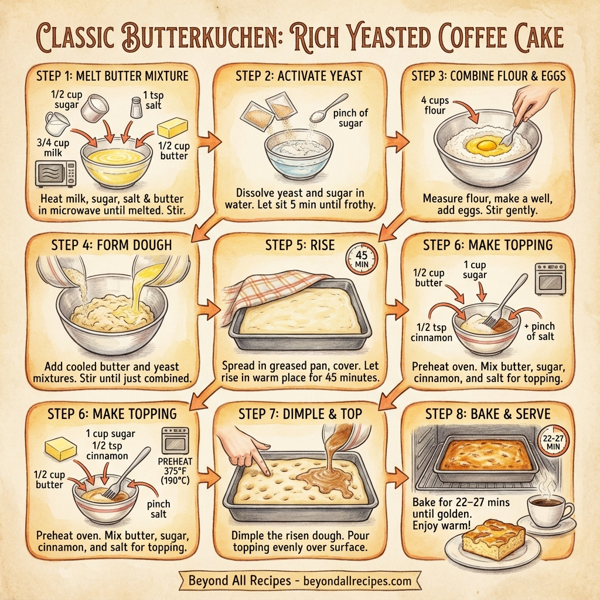
In a microwave-safe mixing bowl, combine 3/4 cup of milk, 1/2 cup of sugar, 1 teaspoon of salt, and 1/2 cup of butter. Heat in the microwave until the butter is fully melted; stir well to combine.
2
In a separate small bowl, dissolve both packets of dry yeast into the lukewarm water along with a pinch of sugar, letting it sit for about 5 minutes until frothy.
3
In a large mixing bowl, measure 4 cups of flour. Make a well in the center and add the slightly beaten eggs. Stir gently to combine.
4
Once the butter mixture has cooled slightly, add it to the flour mixture. Then pour in the activated yeast mixture, stirring until just combined and a rough dough forms.
5
Grease a 10x13-inch pan with butter or cooking spray, and spread the dough evenly in the pan. Cover with a clean kitchen towel and let it rise in a warm place for 45 minutes, or until doubled in size.
6
While the dough is rising, preheat your oven to 375°F (190°C). In a small bowl, mix together the topping ingredients: 1/2 cup of butter, 1 cup of sugar, 1/2 teaspoon of cinnamon, and a pinch of salt until well combined.
7
Once the dough has risen, gently use your fingers to create dimples all over the surface. Pour the topping mixture evenly over the dimpled dough, ensuring it seeps into the crevices.
8
Place the pan on a half-sheet tray to catch any drips. Bake in the preheated oven for 22-27 minutes, or until the top is beautifully golden brown and syrupy. Be cautious not to overbake; you want it soft and moist.
Nutrition Information
9.4g
Fat
31.3g
Carbs
2.6g
Protein
Frequently Asked Questions
Frequently Asked Questions
What is Classic Butterkuchen?
Classic Butterkuchen is a beloved German yeasted coffee cake known for its sweet, buttery flavor and soft, pastry-like texture.
What does Butterkuchen taste like?
It strikes a perfect balance between a soft cake and a rich pastry, topped with a luscious buttery-cinnamon syrup that creates a moist interior and a delightful crust.
How long does the dough need to rise?
The dough should be covered with a clean kitchen towel and allowed to rise in a warm place for approximately 45 minutes, or until it has doubled in size.
What temperature should the oven be set to?
The oven should be preheated to 375°F (190°C) before baking the cake.
How many calories are in a serving of Butterkuchen?
Each serving contains approximately 219 calories.
What are the nutritional facts for fat and protein?
One serving contains 9.4g of fat and 2.6g of protein.
How many packets of yeast are required for this recipe?
This recipe requires 2 packets of dry yeast, each weighing 1/4 ounce.
What size baking pan should I use?
A 10x13-inch pan is recommended for spreading the dough evenly.
How do I activate the dry yeast?
Dissolve the yeast packets into 1/2 cup of lukewarm water along with a pinch of sugar, and let it sit for about 5 minutes until it becomes frothy.
What is the total baking time?
The Butterkuchen should be baked for 22 to 27 minutes, or until the top is golden brown.
What ingredients are used in the buttery-cinnamon topping?
The topping consists of 1/2 cup of butter, 1 cup of sugar, 1/2 teaspoon of cinnamon, and a pinch of salt.
How do I prepare the dough surface before adding the topping?
Once the dough has risen, use your fingers to gently create dimples all over the surface so the topping can seep into the crevices.
How much flour is needed for the dough?
The recipe calls for 4 cups of all-purpose flour.
What should I serve with Classic Butterkuchen?
It is traditionally enjoyed with a steaming cup of coffee or served as a sweet snack for family and guests.
How many eggs are included in the recipe?
The recipe uses 3 eggs, which should be slightly beaten before being added to the flour.
How much butter is used in the entire recipe?
A total of 1 cup of butter is used: 1/2 cup for the dough mixture and 1/2 cup for the topping.
How do I ensure the topping doesn't make a mess in my oven?
Place the baking pan on a half-sheet tray to catch any syrupy drips that may occur during the baking process.
What should the texture of the finished cake be?
The goal is a soft and moist interior with a syrupy, golden-brown crust; avoid overbaking to maintain this texture.
Is the milk heated before being added to the dough?
Yes, 3/4 cup of milk is combined with sugar, salt, and butter and heated in the microwave until the butter is fully melted.
How many carbohydrates are in one serving?
There are 31.3g of carbohydrates per serving.
What is the total number of ingredients in this recipe?
This recipe utilizes a total of 9 ingredients.
What type of yeast is best for this cake?
The recipe specifically calls for dry yeast packets.
Can I use cooking spray to grease the pan?
Yes, you can grease the 10x13-inch pan with either butter or cooking spray.
Is this a good recipe for weekend baking?
Yes, with a simple method and a relatively short rising time of 45 minutes, it is perfect for weekend baking sessions.
What tags are associated with this recipe?
Common tags include butterkuchen, coffee cake, yeast bread, german pastry, brunch recipe, and sweet pastry.
Should the butter mixture be hot when adding it to the flour?
The butter mixture should be allowed to cool slightly before adding it to the flour and egg mixture.
How do you form the dough?
Make a well in the center of the flour, add the eggs, then add the cooled butter mixture and activated yeast, stirring until a rough dough forms.
Is there cinnamon in the dough?
No, the ground cinnamon is only used in the topping mixture.
What is the primary liquid used to activate the yeast?
Lukewarm water (1/2 cup) is used to dissolve and activate the yeast.
What does 'dimpling' the dough achieve?
Dimpling the dough creates small pockets that hold the butter and sugar topping, allowing it to soak in and create a moist, flavorful cake.