Classic British Cream Scones
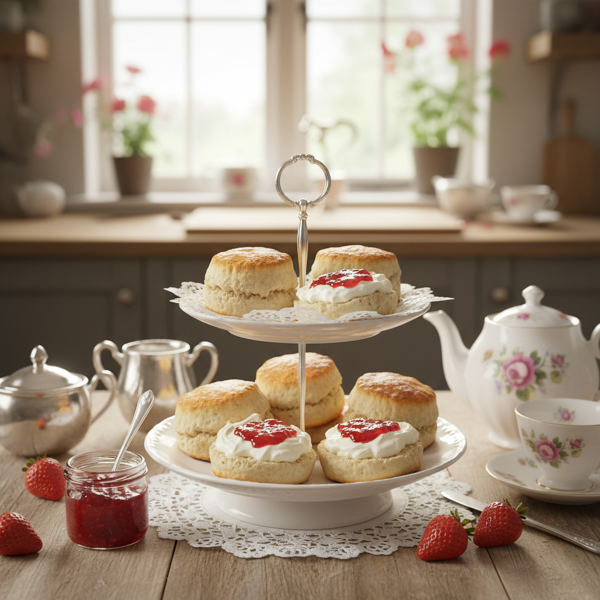
Indulge in the delightful taste of classic British cream scones, perfect for afternoon tea or a comforting treat any time of day. These scones are light, fluffy, and easy to make, with a buttery flavor that pairs beautifully with clotted cream and your favorite jam. Serve them warm fresh from the oven, and experience the rich tradition of British baking that has delighted generations. Whether you enjoy them plain or with added currants for a fruity twist, these scones are sure to impress and become a favorite treat in your home.
N/A
Servings
N/A
Calories
7
Ingredients
Ingredients
all-purpose flour
2 cups (sifted)
cream of tartar
1 teaspoon (sifted with flour)
baking soda
1/2 teaspoon (sifted with flour)
salt
a pinch (to taste)
sodium-free margarine
1/4 cup (softened)
white sugar
1/8 cup (granulated)
milk
1/2 cup (plus 2 tablespoons for glazing)
Instructions
1
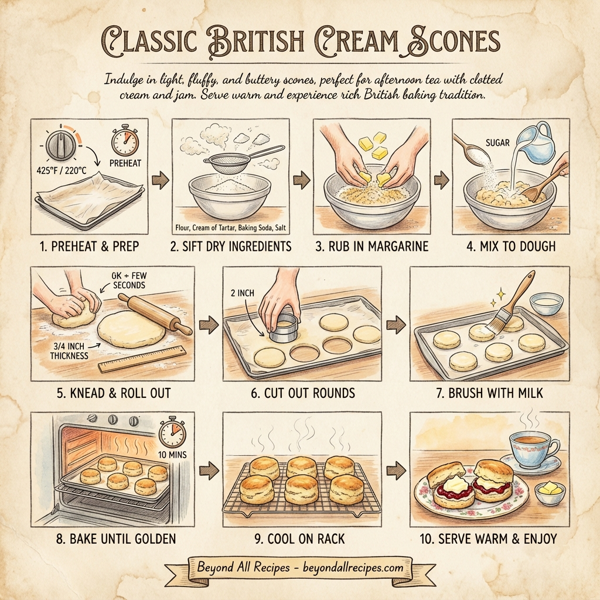
Preheat your oven to 425 degrees F (220 degrees C) and line a baking sheet with parchment paper.
2
In a large mixing bowl, sift together the flour, cream of tartar, baking soda, and salt to ensure even distribution of the leavening agents.
3
Add the softened margarine to the flour mixture and rub it in with your fingertips until the mixture resembles fine breadcrumbs.
4
Stir in the granulated sugar, then gradually add the milk while mixing until a soft dough forms.
5
Turn the dough out onto a floured surface and knead lightly for about 30 seconds. Roll or gently pat the dough out to a thickness of 3/4 inch.
6
Using a 2-inch round cutter, cut out rounds from the dough and place them on the prepared baking sheet.
7
Brush the tops of the scones with a little extra milk to give them a nice golden glaze.
8
Bake in the preheated oven for about 10 minutes, or until the scones are well risen and lightly golden.
9
Remove from the oven and let cool on a wire rack before serving.
10
Serve warm with generous dollops of butter, clotted cream, and your favorite jam.
Nutrition Information
Frequently Asked Questions
Frequently Asked Questions
What are Classic British Cream Scones?
Classic British Cream Scones are light, fluffy baked treats with a buttery flavor, traditionally served as part of afternoon tea with clotted cream and jam.
How long do these scones take to bake?
They bake very quickly, taking approximately 10 minutes in a preheated oven.
What oven temperature is required for this recipe?
The oven should be preheated to 425 degrees F (220 degrees C).
What is the secret to making scones light and fluffy?
Sifting the dry ingredients together ensures even distribution of leavening agents, and light kneading prevents the dough from becoming tough.
Can I use butter instead of margarine?
Yes, you can substitute the sodium-free margarine with softened butter for a richer flavor.
What is the purpose of cream of tartar in this recipe?
Cream of tartar acts as an acid that reacts with the baking soda to help the scones rise and achieve a light texture.
How thick should I roll the scone dough?
The dough should be rolled or patted out to a thickness of 3/4 inch.
What size cutter should I use for British scones?
A 2-inch round cutter is the standard size for these traditional scones.
How do I get a golden glaze on top of the scones?
Brush the tops of the scones with a small amount of extra milk just before putting them in the oven.
Should I serve these scones warm or cold?
They are best served warm, fresh from the oven, to experience their best texture and flavor.
What are the traditional toppings for British scones?
They are traditionally served with generous dollops of butter, clotted cream, and your favorite fruit jam.
Can I add fruit to this scone recipe?
Yes, you can add currants or raisins to the dough for a fruity variation.
How long should I knead the dough?
Knead the dough very lightly for only about 30 seconds; over-kneading will result in heavy, dense scones.
What is the best way to mix the fat into the flour?
Use your fingertips to rub the margarine into the flour mixture until it looks like fine breadcrumbs.
Do I need to grease the baking sheet?
No, it is recommended to line the baking sheet with parchment paper to prevent sticking and ensure even browning.
What type of flour is best for scones?
This recipe calls for all-purpose flour, which provides the perfect structure for a tender crumb.
Can I store leftover scones?
Yes, store them in an airtight container at room temperature for 1-2 days, or freeze them for longer storage.
How do I reheat scones?
Reheat them in a low oven (300°F) for about 5 minutes or briefly in the microwave to restore their softness.
Can I make the dough in advance?
It is best to bake scone dough immediately after mixing because the leavening agents activate once they touch liquid.
What if I don't have clotted cream?
You can use high-quality butter, whipped heavy cream, or mascarpone as a substitute for clotted cream.
Why did my scones not rise?
This usually happens if the baking soda or cream of tartar is expired, or if the dough was rolled too thin.
Is granulated sugar necessary in the dough?
British scones are only lightly sweetened; the 1/8 cup of sugar provides a subtle sweetness that balances the savory cream.
Can I use a food processor for this recipe?
While you can use a processor to rub in the fat, be careful not to over-process the dough once the milk is added.
How many scones does this recipe make?
Using a 2-inch cutter, this recipe typically yields about 8 to 12 scones depending on how many times you re-roll the scraps.
Can I use whole milk or skim milk?
Whole milk is preferred for the richest flavor, but skim or 2% milk will also work.
Why is my dough too sticky to handle?
If the dough is too wet, lightly flour your hands and the work surface. Avoid adding too much extra flour to the dough itself.
Should the margarine be cold or softened?
The recipe specifies softened margarine, which allows it to be rubbed into the flour mixture easily by hand.
Can I freeze unbaked scone rounds?
Yes, you can freeze the cut rounds on a tray and then transfer to a bag. Bake them directly from frozen, adding 2-3 minutes to the baking time.
What kind of salt should I use?
A simple pinch of fine table salt or sea salt is sufficient to enhance the flavors of the other ingredients.
Are these scones suitable for a formal afternoon tea?
Absolutely! These classic cream scones are the centerpiece of a traditional British afternoon tea service.