Classic Bavarian Beef Sauerbraten Delight
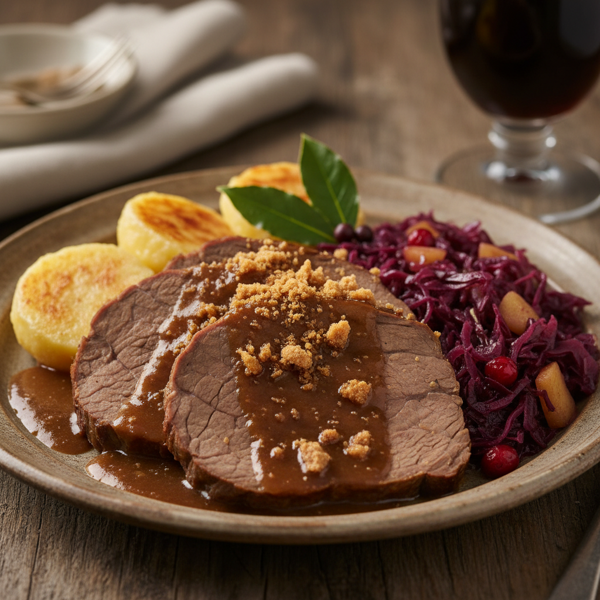
Immerse yourself in the rich culinary tradition of Germany with this Classic Bavarian Beef Sauerbraten Delight. This exquisite pot roast features a luscious top round beef that is marinated for several days in a flavorful concoction made from red wine vinegar, hearty onions, and fragrant spices. The slow braising process ensures that every slice is tender, moist, and bursting with a harmonious blend of sweet and sour flavors. Perfect for family gatherings or special occasions, this dish not only showcases the depth of Bavarian cooking but also pairs beautifully with sides such as sweet-sour red cabbage and fluffy spaetzle. Let the comforting aromas fill your kitchen and delight your guests with this unforgettable classic.
4
Servings
N/A
Calories
19
Ingredients
Ingredients
Red wine vinegar
1/2 cup (as is)
Red wine
1 3/4 cups (as is)
Yellow onions
2 cups (sliced)
Parsley stems
6 (as is)
Black peppercorns
6 (as is)
Bay leaves
3 (as is)
Whole cloves
6 (as is)
Beef top round roast
1 1/2-2 lbs (as is)
Flour
1/2 cup (for dredging)
Salt
2 teaspoons (as is)
Fresh ground black pepper
1 teaspoon (as is)
Vegetable oil
2 tablespoons (for searing)
Chopped seeded tomatoes
3/4 cup (as is)
Water
3/4 cup (approximately) (as is)
Cream sherry
2 tablespoons (as is)
Light brown sugar
1 tablespoon (plus additional to taste)
Fresh lemon juice
1 tablespoon (to taste)
Parsley sprig
for garnish (as is)
Sour cream
optional (for serving)
Instructions
1
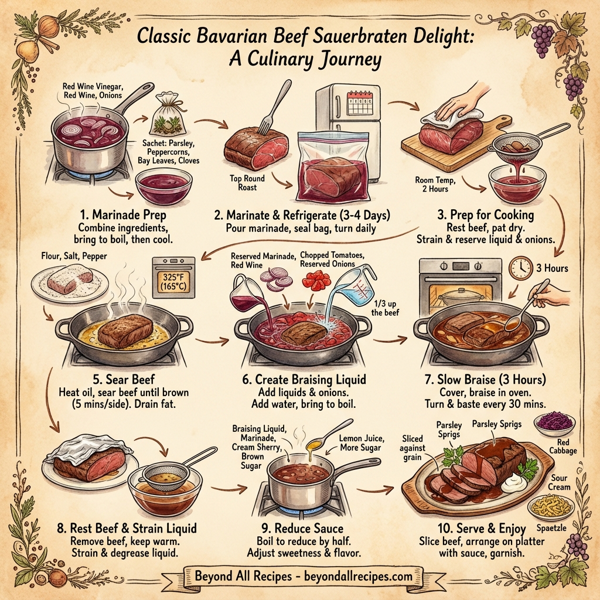
In a medium saucepan, combine the red wine vinegar, 1.5 cups of red wine, and sliced onions. Using a double layer of cheesecloth, create a sachet by enclosing the parsley stems, black peppercorns, bay leaves, and whole cloves, then tie it shut. Add this sachet to the saucepan and bring the mixture to a gentle boil. Once it reaches a boil, remove from heat and allow to cool to room temperature.
2
Use a fork to prick the top round roast on all sides. Place the roast into a large resealable plastic bag and pour the cooled marinade over it, ensuring it is well-covered. Seal the bag and turn it upside down several times. Marinate in the refrigerator for 3 to 4 days, turning the bag a couple of times a day for even flavor distribution.
3
When ready to cook, remove the marinated beef from the refrigerator and let it rest at room temperature for about 2 hours. Take the beef out of the marinade, pat it dry, and strain the marinade, reserving the liquid and onions while discarding the cheesecloth sachet.
4
Preheat your oven to 325°F (165°C). On a large plate, mix together the flour, salt, and black pepper to create a dredging mixture.
5
In a heavy ovenproof pan with a lid, heat the vegetable oil over moderate-high heat until hot (but not smoking). Dredge the beef in the flour mixture, ensuring it's evenly coated. Sear the beef in the hot oil, browning it nicely for about 5 minutes on each side. Once the meat is browned, carefully pour out any excess fat from the pan.
6
Add 1 cup of the reserved marinade liquid, the remaining 1/4 cup of red wine, and the chopped tomatoes to the pan along with the reserved onions. Pour enough water to the mixture so it comes one-third of the way up the sides of the beef. Bring this liquid to a boil and let it simmer for about 5 minutes.
7
Cover the pan with the lid and transfer to the preheated oven. Braise the beef, turning it every 30 minutes and spooning the liquid over it, for approximately 3 hours or until the meat is fork-tender.
8
Once the beef is done, remove it from the pan and cover it with foil to keep warm. Strain and degrease the braising liquid, discarding solids while retaining the liquid.
9
In a small saucepan, combine the braising liquid with the remaining marinade, cream sherry, and the tablespoon of light brown sugar. Boil this mixture over medium heat until it reduces by half, about 10 minutes. Taste and adjust sweetness with additional brown sugar and add lemon juice to enhance the flavor.
10
Slice the roast against the grain into 3/8-inch thick slices. Arrange the slices on a serving platter, drizzling the rich sauce over them. Garnish with parsley sprigs and serve accompanied by a dollop of sour cream if desired.
Nutrition Information
Frequently Asked Questions
Frequently Asked Questions
What is Classic Bavarian Beef Sauerbraten Delight?
It is a traditional German pot roast featuring a top round beef marinated for several days in a sweet and sour concoction of vinegar, wine, and spices.
How long does the beef need to marinate?
The beef should be marinated in the refrigerator for 3 to 4 days for optimal flavor distribution.
What cut of beef is recommended for this recipe?
The recipe calls for a 1.5 to 2 lb beef top round roast.
What is in the marinade sachet?
The sachet is made of cheesecloth enclosing parsley stems, black peppercorns, bay leaves, and whole cloves.
Why do you prick the beef with a fork before marinating?
Pricking the roast on all sides allows the marinade to penetrate the meat more effectively.
What is the oven temperature for braising?
The beef should be braised in a preheated oven at 325 degrees Fahrenheit (165 degrees Celsius).
How do you prepare the beef for searing?
The beef is patted dry and then dredged in a mixture of flour, salt, and black pepper.
How long should the beef be seared?
The beef should be seared in hot vegetable oil for about 5 minutes on each side until nicely browned.
What liquids are used for the braising process?
The braising liquid consists of reserved marinade, red wine, chopped tomatoes, and enough water to reach one-third up the sides of the meat.
How long does the beef cook in the oven?
The beef is braised for approximately 3 hours or until it becomes fork-tender.
How often should the meat be turned while braising?
The meat should be turned and spooned with liquid every 30 minutes during the cooking process.
What happens to the onions from the marinade?
The sliced yellow onions are reserved from the strained marinade and added to the pan for the braising step.
How is the final sauce prepared?
The braising liquid is combined with marinade, cream sherry, and brown sugar, then boiled until reduced by half.
What can be added to adjust the sauce flavor?
You can add additional light brown sugar for sweetness or fresh lemon juice to enhance the flavor.
How should the Sauerbraten be sliced?
The roast should be sliced against the grain into 3/8-inch thick slices.
What are the best side dishes for this recipe?
Traditional side dishes include sweet-sour red cabbage and fluffy spaetzle.
How many servings does this recipe provide?
This recipe is designed to serve 4 people.
Does the marinade need to be cooked?
Yes, the vinegar, wine, and onions are brought to a gentle boil with the spice sachet and then cooled before adding the meat.
How long should the meat rest at room temperature before cooking?
The marinated beef should rest at room temperature for about 2 hours before you begin searing it.
What type of oil is used for searing?
The recipe specifies using 2 tablespoons of vegetable oil.
Is there alcohol in this Sauerbraten recipe?
Yes, the recipe uses red wine in the marinade and braising liquid, as well as cream sherry in the sauce.
What is the purpose of the cream sherry?
Cream sherry is added to the braising liquid during the reduction phase to add depth and flavor to the sauce.
Should the braising liquid be strained?
Yes, the braising liquid should be strained and degreased to remove solids before making the sauce.
What garnish is used for the platter?
Fresh parsley sprigs are used to garnish the serving platter.
Is sour cream required for this dish?
Sour cream is optional and can be served as a dollop alongside the meat.
How do you ensure the beef is tender?
The combination of long marination and slow braising for 3 hours ensures the meat is fork-tender.
What should be done with the excess fat after searing?
Any excess fat should be carefully poured out of the pan after the meat is browned.
Can I use any kind of onion?
The recipe specifically recommends using 2 cups of sliced yellow onions.
What type of pan is best for this recipe?
A heavy ovenproof pan with a tight-fitting lid is recommended for the braising process.
How much water is typically added for braising?
Approximately 3/4 cup of water is usually needed, or enough to reach the one-third mark on the side of the roast.