Classic Bath Sally Lunn Loaf
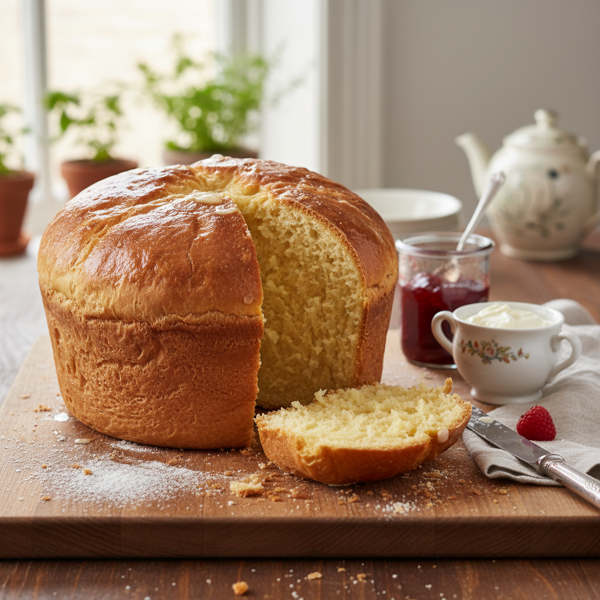
Delight in the classic allure of the Bath Sally Lunn Loaf—a richly textured, slightly sweet bread similar to brioche. Tracing its roots back to the late 18th century, this yeasty delight is believed to have been inspired by the culinary creations of Sally Lunn in Bath, England. This tender, golden loaf is perfect fresh from the oven or adorned with your favorite spreads, fruits, or creams. It makes for an elegant addition to any meal or a delightful treat at any time of the day. For an eye-catching presentation, consider baking it in a Bundt pan for its charming circular shape, reminiscent of its historic origins.
1
Servings
N/A
Calories
8
Ingredients
Ingredients
dry yeast
1 package (1/4 ounce) (none)
warm water
1/4 cup (heated to 105-115°F)
milk
3/4 cup (none)
sugar
1/4 cup (none)
shortening
1/4 cup (melted)
salt
1/2 teaspoon (none)
large egg
1 (lightly beaten)
all-purpose flour
2 1/2 cups (none)
Instructions
1
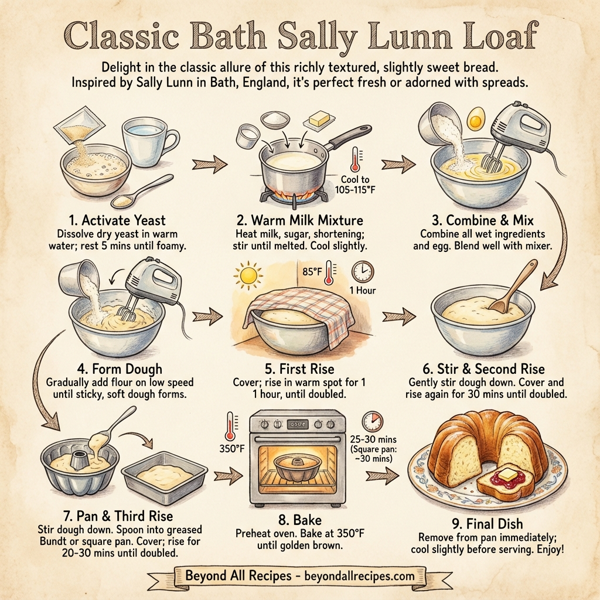
In a small bowl, dissolve the dry yeast in warm water and let it rest for 5 minutes until foamy.
2
In a small saucepan over low heat, combine the milk, sugar, and shortening, stirring until the shortening has melted. Let it cool until the temperature falls between 105°F and 115°F.
3
In a large mixing bowl, combine the yeast mixture, milk mixture, and the lightly beaten egg. Using an electric mixer at medium speed, blend until well combined.
4
Gradually add the flour to the wet ingredients, mixing on the lowest speed until a sticky, soft dough forms.
5
Cover the mixing bowl with a clean cloth and place it in a warm, draft-free environment (around 85°F) for about 1 hour, or until the dough has doubled in size.
6
Gently stir the risen dough to release some of the air, then cover it again and allow it to rise for another 30 minutes or until doubled.
7
After the second rise, stir the dough down. Grease a 6-cup Bundt pan or a 9-inch square pan generously. Spoon the dough into the prepared pan, cover, and let it rise for a third time in a warm environment for 20 to 30 minutes, or until the dough has doubled once more.
8
Preheat your oven to 350°F. Bake the bread in the Bundt or square pan for 25 to 30 minutes, or until the top is golden brown. If using a square pan, baking may take slightly longer (approximately 30 minutes).
9
Once baked, remove the loaf from the pan immediately and let it cool slightly before serving.
Nutrition Information
Frequently Asked Questions
Frequently Asked Questions
What is a Classic Bath Sally Lunn Loaf?
It is a richly textured, slightly sweet bread similar to brioche that dates back to the late 18th century.
Where did the Sally Lunn Loaf originate?
This bread originated in Bath, England, and is believed to be inspired by the creations of Sally Lunn.
What type of yeast should be used for this recipe?
The recipe calls for one package (1/4 ounce) of dry yeast.
How do I activate the yeast?
Dissolve the dry yeast in 1/4 cup of warm water and let it rest for 5 minutes until it becomes foamy.
What is the ideal water temperature for the yeast?
The water should be heated to between 105°F and 115°F.
How do I prepare the milk and shortening mixture?
Combine milk, sugar, and shortening in a small saucepan over low heat, stirring until the shortening melts, then cool to between 105°F and 115°F.
What ingredients are used for the dough base?
The dough is made from yeast mixture, milk mixture, a lightly beaten egg, and all-purpose flour.
Should I use a mixer for this bread dough?
Yes, an electric mixer at medium speed is recommended for blending the wet ingredients, followed by the lowest speed for adding flour.
What is the expected consistency of the dough?
The dough should be sticky and soft once the flour is fully incorporated.
Where is the best place for the dough to rise?
Place the dough in a warm, draft-free environment, ideally around 85°F.
How long is the first rise period?
The first rise takes about 1 hour, or until the dough has doubled in size.
What should I do after the first rise is complete?
Gently stir the dough to release air, then cover it again for a second rise.
How long is the second rise period?
The second rise lasts for approximately 30 minutes, or until the dough doubles again.
What types of pans can I use to bake the Sally Lunn Loaf?
You can use a 6-cup Bundt pan for a circular shape or a 9-inch square pan.
Is there a third rise required?
Yes, after spooning the dough into the pan, it needs a third rise for 20 to 30 minutes until doubled.
What is the baking temperature for this recipe?
The oven should be preheated and the bread baked at 350°F.
How long does the bread take to bake?
It typically takes 25 to 30 minutes, though a square pan may require the full 30 minutes.
How do I know when the Sally Lunn Loaf is finished baking?
The loaf is done when the top has turned a golden brown color.
When should I remove the loaf from the baking pan?
The loaf should be removed from the pan immediately after baking and allowed to cool slightly.
How many servings does this recipe yield?
The recipe yields 1 loaf, which is considered 1 serving for recipe categorization purposes.
What are the primary ingredients in a Sally Lunn Loaf?
The main ingredients include dry yeast, milk, sugar, shortening, salt, egg, and all-purpose flour.
Can I serve this bread with anything specific?
It is delicious fresh from the oven or served with spreads, fruits, or creams.
Why is a Bundt pan recommended for this bread?
A Bundt pan provides a charming circular shape that is reminiscent of the bread's historic origins.
How much all-purpose flour is required?
The recipe uses 2 1/2 cups of all-purpose flour.
What is the purpose of the shortening in the recipe?
Melted shortening contributes to the rich, tender, brioche-like texture of the loaf.
Is this considered a sweet or savory bread?
It is a slightly sweet bread, making it suitable for tea time or as an elegant meal addition.
How much sugar is used in the dough?
The recipe calls for 1/4 cup of sugar.
What should I do to the egg before adding it?
The large egg should be lightly beaten before being combined with the yeast and milk mixtures.
Should the baking pan be greased?
Yes, the Bundt or square pan should be generously greased before spooning in the dough.
How much salt is needed for the recipe?
The recipe requires 1/2 teaspoon of salt.