Classic Bath Sally Lunn Bread
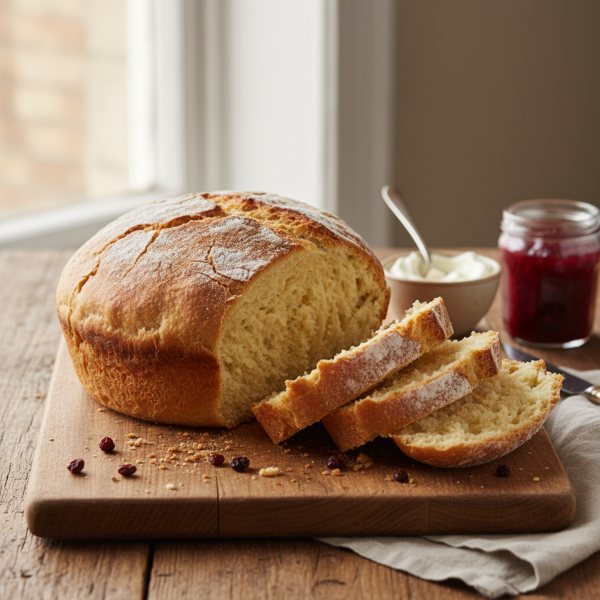
This delightful bread originates from the historic Bath region in England and is deeply rooted in the city's rich culinary tradition. Enjoyed as a classic teatime delicacy, Sally Lunn Bread is renowned for its soft, buttery texture and lightly spiced flavor. It was popularized by Sally Lunn, who began selling these wonderful buns in Bath during the late 1700s. Even today, visitors to Bath can find this classic treat in the traditional teahouses. Perfect toasted with butter or split into smaller buns, this recipe captures the essence of a bygone era.
4
Servings
N/A
Calories
9
Ingredients
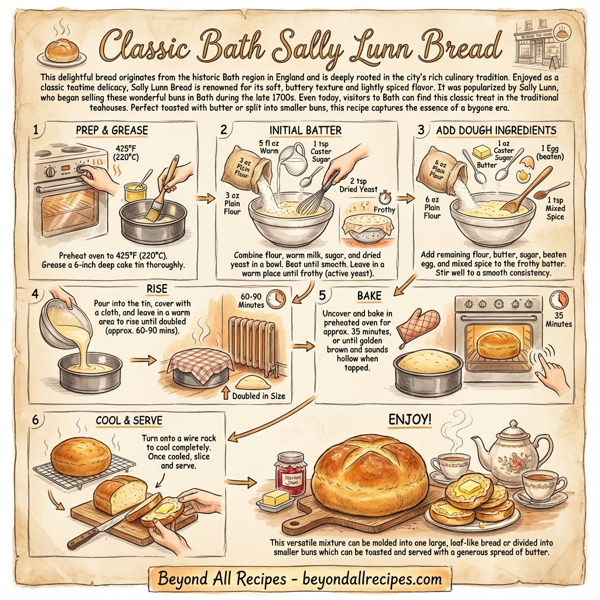
Ingredients
Plain flour
3 ounces (for batter)
Warm milk
5 fluid ounces (for batter)
Caster sugar
1 teaspoon (for batter)
Dried yeast
2 teaspoons (for batter)
Plain flour
6 ounces (for dough)
Butter
1 ounce (softened, for dough)
Caster sugar
1 ounce (for dough)
Egg
1 (beaten, for dough)
Mixed spice
1 teaspoon (for dough)
Instructions
1
Preheat your oven to 425°F (220°C) and grease a 6-inch deep cake tin thoroughly.
2
Combine the initial batter ingredients: 3 ounces of plain flour, 5 fluid ounces of warm milk, 1 teaspoon of caster sugar, and 2 teaspoons of dried yeast in a large mixing bowl. Beat the mixture until smooth and leave it in a warm place until it becomes frothy, indicating that the yeast is active.
3
Next, add the dough ingredients to the frothy batter: 6 ounces of plain flour, 1 ounce of butter, 1 ounce of caster sugar, 1 egg (beaten), and 1 teaspoon of mixed spice. Stir well until you achieve a smooth, even consistency.
4
Pour the prepared batter into the greased cake tin, cover it with a clean cloth, and leave it in a warm area to rise until it has doubled in size. This may take about 60 to 90 minutes depending on room temperature.
5
Once risen, uncover the tin and place it in the preheated oven. Bake for approximately 35 minutes or until the bread is golden brown and sounds hollow when tapped.
6
Remove the bread from the oven and turn it out onto a wire rack to cool completely. Once cooled, it can be sliced and served.
7
This versatile mixture can be molded into one large, loaf-like bread or divided into smaller buns which can be toasted and served with a generous spread of butter.
Nutrition Information
Frequently Asked Questions
Frequently Asked Questions
What is Classic Bath Sally Lunn Bread?
It is a classic English teatime delicacy originating from the historic Bath region, known for its soft, buttery texture and lightly spiced flavor.
Who is credited with popularizing this bread?
Sally Lunn popularized these buns in Bath during the late 1700s.
What is the history behind Sally Lunn Bread?
The bread is deeply rooted in the culinary tradition of Bath, England, and has been sold in traditional teahouses since the late 18th century.
What temperature should the oven be set to?
The oven should be preheated to 425 degrees Fahrenheit or 220 degrees Celsius.
What type of baking tin is required?
A 6-inch deep cake tin that has been thoroughly greased is required.
What are the initial ingredients for the batter?
The batter consists of 3 ounces of plain flour, 5 fluid ounces of warm milk, 1 teaspoon of caster sugar, and 2 teaspoons of dried yeast.
How do I know if the yeast is active?
The mixture will become frothy after being left in a warm place, indicating the yeast is active.
What ingredients are added to make the final dough?
You add 6 ounces of plain flour, 1 ounce of butter, 1 ounce of caster sugar, 1 beaten egg, and 1 teaspoon of mixed spice.
How long should the dough be left to rise?
The dough should rise for approximately 60 to 90 minutes, depending on the room temperature.
By how much should the dough expand during the rise?
The dough should be left to rise until it has doubled in size.
How long does the Sally Lunn Bread bake for?
It should be baked for approximately 35 minutes.
How can I tell when the bread is fully baked?
The bread is done when it is golden brown and sounds hollow when tapped.
How should the bread be cooled after baking?
The bread should be turned out onto a wire rack to cool completely.
Can I make smaller buns instead of a single loaf?
Yes, the mixture can be divided into smaller buns which can then be toasted.
How is Sally Lunn Bread typically served?
It is perfect when toasted and served with a generous spread of butter.
How many servings does this recipe make?
This recipe is intended to provide 4 servings.
What type of flour is best for this recipe?
Plain flour is used for both the batter and the dough stages.
What kind of sugar is recommended?
Caster sugar is used in both the yeast activation and the dough stages.
How much warm milk is needed?
The recipe calls for 5 fluid ounces of warm milk.
What type of spice is used in the dough?
One teaspoon of mixed spice is added to the dough for a lightly spiced flavor.
Should the egg be prepared in a specific way?
Yes, the egg should be beaten before being added to the dough ingredients.
What is the total amount of flour used in the recipe?
The recipe uses a total of 9 ounces of plain flour (3 for batter and 6 for dough).
Is the butter melted or softened for the dough?
The recipe specifies 1 ounce of softened butter for the dough.
What is the first step in the instructions?
Preheat the oven to 425 degrees Fahrenheit and grease the cake tin.
Where can visitors still find this treat today?
Visitors to the city of Bath can still find this classic treat in traditional teahouses.
Does the dough need to be covered while rising?
Yes, it should be covered with a clean cloth while it sits in a warm area.
What is the purpose of beating the initial batter?
The batter is beaten until smooth to ensure a consistent texture for the yeast to activate.
Can this bread be sliced like a regular loaf?
Yes, once cooled, the bread can be sliced and served.
What tags are associated with this recipe?
Tags include English bread, yeast bread, Sally Lunn, traditional recipe, and tea bread.
Is this a savory or sweet bread?
It is a lightly sweetened and spiced tea bread, making it a sweet-leaning delicacy.