Classic Basil Pesto
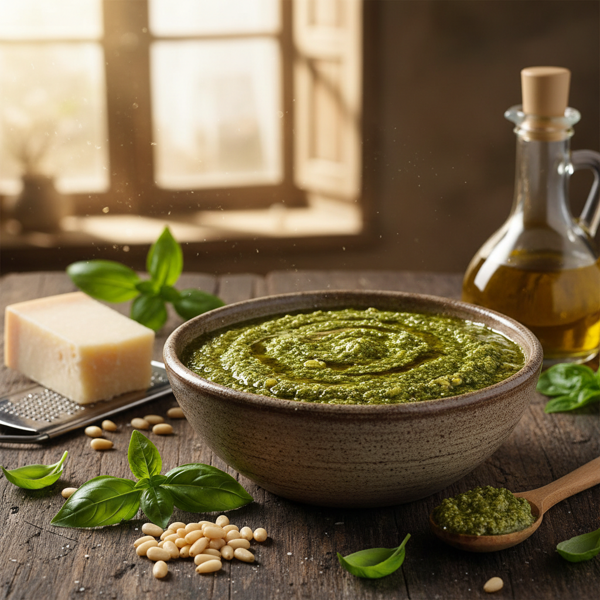
This homemade Classic Basil Pesto is a vibrant and aromatic sauce that elevates any dish it accompanies. Made with fresh basil, toasted pine nuts, and aged cheese, this pesto is a delightful addition to pasta, spreads on toasted bread, drizzled over grilled fish or chicken, and even as a pizza topping. The beauty of this recipe is its versatility; you can adjust the consistency by varying the amount of olive oil to suit your preference, whether you enjoy a thick and chunky texture or a smooth and creamy finish. Store it in a jar and have a flavorful sauce on hand whenever you need to add a burst of freshness to your meals. Enjoy crafting this staple of Italian cuisine!
N/A
Servings
100
Calories
5
Ingredients
Ingredients
basil
2 cups (packed, preferably home-grown or fresh)
pine nuts
1/2 cup (toasted and cooled)
Parmesan cheese or Romano cheese
1 cup (grated, use either or a mix of both)
garlic
3 cloves (crushed)
olive oil
1/4-1/2 cup (to taste, for desired consistency)
Instructions
1
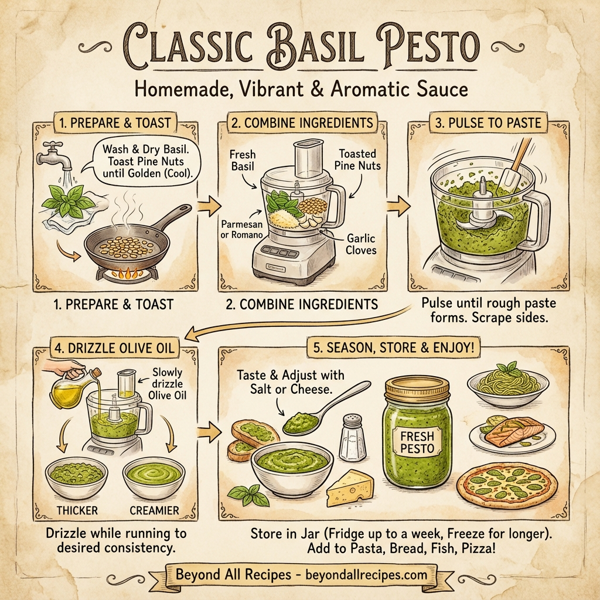
Start by preparing your ingredients. Make sure the basil leaves are washed and thoroughly dried. Toast the pine nuts in a dry skillet over medium heat until golden brown, then allow them to cool.
2
In a food processor, combine the packed basil leaves, cooled toasted pine nuts, grated Parmesan or Romano cheese, and crushed garlic cloves.
3
Pulse the mixture until it forms a rough paste, scraping down the sides of the bowl as necessary.
4
With the processor running, slowly drizzle in the olive oil through the feed tube until you achieve your desired consistency. If you prefer a thicker pesto, use less oil; for a creamier texture, add more.
5
Once blended, taste and adjust seasoning with salt or additional cheese if necessary. Transfer the pesto to a clean jar and store it in the refrigerator for up to a week or freeze for longer storage.
Nutrition Information
9.2
Fat
0.8
Carbs
2.5
Protein
Frequently Asked Questions
Frequently Asked Questions
What is Classic Basil Pesto?
Classic Basil Pesto is a vibrant and aromatic sauce made with fresh basil, toasted pine nuts, and aged cheese, commonly used in Italian cuisine.
What are the main ingredients needed for this pesto?
The five main ingredients are fresh basil, pine nuts, Parmesan or Romano cheese, garlic, and olive oil.
How much basil is required for this recipe?
The recipe calls for 2 cups of packed fresh basil leaves.
How should the pine nuts be prepared?
The pine nuts should be toasted in a dry skillet over medium heat until golden brown and then allowed to cool before blending.
What type of cheese is recommended?
You can use 1 cup of grated Parmesan cheese, Romano cheese, or a mixture of both.
How many garlic cloves are used in the recipe?
The recipe requires 3 crushed garlic cloves.
How much olive oil should I add?
Use between 1/4 to 1/2 cup of olive oil, depending on your preferred consistency.
How do I achieve a creamier pesto texture?
To achieve a creamier finish, use the higher end of the olive oil range (1/2 cup) and drizzle it in slowly while the processor is running.
Can I make a thicker, chunky pesto?
Yes, for a thicker and chunky texture, use less olive oil and pulse the mixture until it reaches your desired consistency.
What equipment is needed to make this pesto?
A food processor is used to blend the ingredients into a paste.
What is the first step in the instructions?
The first step is to wash and thoroughly dry the basil leaves and toast the pine nuts.
How long can I store the pesto in the refrigerator?
The pesto can be stored in a clean jar in the refrigerator for up to one week.
Can this basil pesto be frozen?
Yes, this pesto can be frozen for longer storage beyond one week.
How many calories are in a serving of this pesto?
There are 100 calories per serving.
What is the fat content per serving?
Each serving contains approximately 9.2g of fat.
How many carbohydrates are in this recipe?
There are 0.8g of carbohydrates per serving.
What is the protein content of the pesto?
Each serving provides 2.5g of protein.
Is it necessary to dry the basil leaves?
Yes, the instructions specify that basil leaves must be thoroughly dried after washing.
What should I do after pulsing the basil, nuts, cheese, and garlic?
Once they form a rough paste, slowly drizzle in the olive oil through the feed tube while the processor is running.
Can I add salt to the pesto?
Yes, the instructions suggest tasting and adjusting the seasoning with salt or extra cheese once blended.
What are some ways to serve Classic Basil Pesto?
It can be served with pasta, as a spread on toasted bread, drizzled over grilled fish or chicken, or used as a pizza topping.
Is this recipe considered versatile?
Yes, it is described as a versatile sauce because you can adjust the consistency and use it in various types of dishes.
What is the total ingredient count?
The recipe contains 5 core ingredients.
How do I ensure the pesto doesn't have large chunks of garlic?
The garlic should be crushed before being added to the food processor with the other ingredients.
Can I use Romano cheese instead of Parmesan?
Yes, the recipe allows for grated Romano cheese as a substitute or addition.
What is the recommended heat for toasting pine nuts?
The pine nuts should be toasted over medium heat in a dry skillet.
Should I scrape the sides of the food processor?
Yes, the instructions recommend scraping down the sides of the bowl as necessary while pulsing.
Is this a traditional Italian-style sauce?
Yes, the description identifies this pesto as a staple of Italian cuisine.
What is the serving size for this recipe?
The specific serving size is not defined, but the nutritional data is provided per serving unit.
How should the pesto be kept for the best freshness?
It should be transferred to a clean jar and refrigerated or frozen.