Citrus Zest Preservation Technique
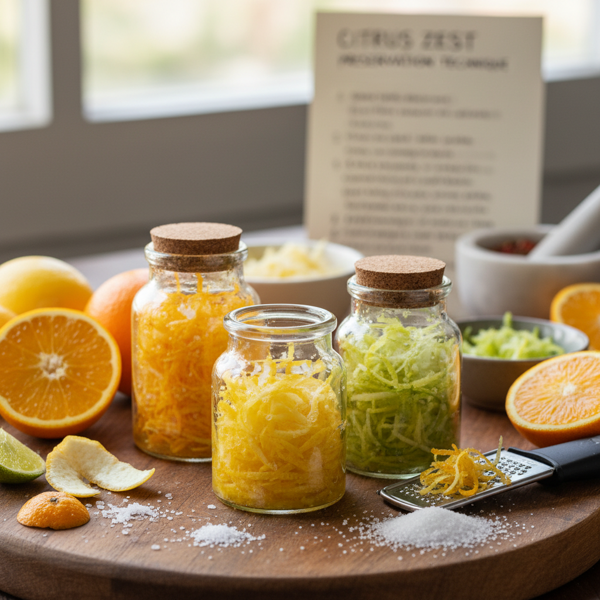
Unlock the vibrant flavors of citrus with this preservation technique for lemon, orange, lime, and grapefruit zest. Dried citrus zest is a versatile ingredient that adds a bright, zesty kick to a variety of dishes and beverages, from tea and mulled cider to cakes, cookies, and savory marinades. By drying the zest at home, you can save money and ensure that you have a constant supply of this aromatic ingredient on hand. Perfect for flavoring frostings, jellies, and butters, or as a thoughtful gift for fellow cooking enthusiasts, this technique empowers you to make the most of your citrus fruits while minimizing waste. The drying process may take a couple of days, but the delicious results are well worth the wait!
N/A
Servings
N/A
Calories
4
Ingredients
Ingredients
Orange
1 (Zested)
Lime
1 (Zested)
Lemon
1 (Zested)
Grapefruit
1 (Zested)
Instructions
1
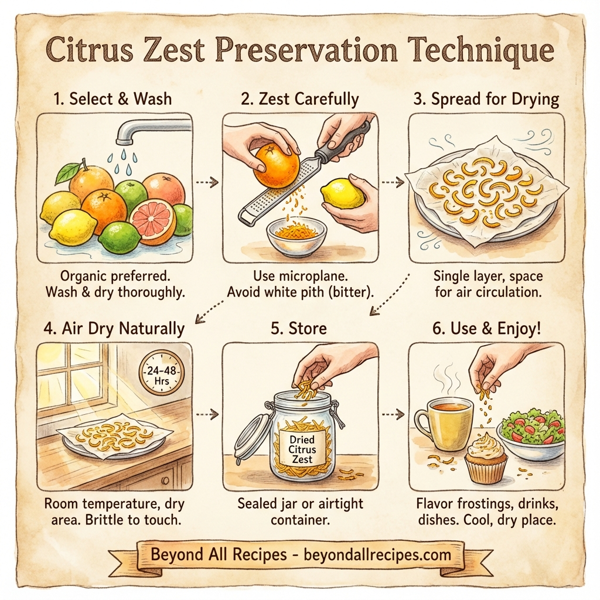
Begin by selecting organic citrus fruits whenever possible. If using non-organic fruits, make sure to wash and dry them thoroughly to remove any pesticides or wax.
2
Using a microplane or citrus zester, carefully remove the colored outer layer of zest from the citrus fruits, avoiding any discolored or blemished areas. Take care to not zest the white pith, as it has a bitter taste.
3
Spread the freshly zested peel in a single layer on a plate or on a sheet of waxed paper, ensuring there is space between the pieces to allow for air circulation.
4
Let the zest sit at room temperature in a dry area, and allow it to dehydrate naturally. This can take anywhere from 24 to 48 hours, depending on the humidity levels in your environment.
5
To check for doneness, the zest should feel brittle to the touch. Once dried, transfer the zest into a sealed jar or airtight container.
6
Store the dried citrus zest in a cool, dry place away from direct sunlight. It can last for several months if stored properly.
7
For best results, zest the fruit before cutting or juicing it, as this method makes handling easier and minimizes mess. Consider zesting extra fruits whenever they are in season and priced well.
Nutrition Information
Frequently Asked Questions
Frequently Asked Questions
What is the Citrus Zest Preservation Technique?
It is a method for drying the outer peel of citrus fruits like lemons, oranges, limes, and grapefruits to preserve their flavor for long-term use.
Which citrus fruits can I use for this technique?
You can use oranges, limes, lemons, and grapefruits, or any other citrus fruit with a fragrant peel.
Why should I dry citrus zest at home?
Drying it at home saves money, ensures a constant supply of aromatic ingredients, and helps minimize food waste.
What tools are best for zesting citrus?
A microplane or a specialized citrus zester is recommended for the best results.
Should I use organic citrus fruits?
Organic citrus is preferred to avoid pesticides, but if using non-organic, ensure they are washed and dried thoroughly to remove wax and chemicals.
How do I avoid a bitter taste in my dried zest?
Avoid zesting the white pith beneath the colored peel, as the pith is the source of bitterness.
What is the first step in the preservation process?
The first step is to wash and dry the fruit thoroughly, then use a zester to remove the colored outer layer.
How should I lay out the zest for drying?
Spread the freshly zested peel in a single layer on a plate or a sheet of waxed paper, leaving space between pieces for air circulation.
Where should the zest be placed to dry?
Let it sit at room temperature in a dry area away from direct moisture.
How long does it take for citrus zest to dehydrate naturally?
It typically takes between 24 to 48 hours depending on the humidity levels in your environment.
How can I tell when the citrus zest is fully dried?
The zest should feel brittle to the touch when it is completely dehydrated.
How should I store the finished dried zest?
Transfer the dried zest into a sealed jar or an airtight container to keep it fresh.
Where is the best place to store the container of zest?
Store it in a cool, dry place away from direct sunlight to preserve its color and potency.
How long does dried citrus zest last?
If stored properly in an airtight container, it can last for several months.
Should I zest the fruit before or after juicing?
It is much easier to zest the fruit while it is whole, before cutting or juicing it.
What are some common uses for dried citrus zest?
It can be used in teas, mulled cider, cakes, cookies, savory marinades, frostings, and jellies.
Can I use dried zest in beverages?
Yes, it adds a bright, zesty kick to tea, cider, and other hot or cold beverages.
Is dried zest suitable for baking?
Absolutely, it is perfect for flavoring cakes, cookies, and other baked goods.
Can I use dried zest in savory cooking?
Yes, it works exceptionally well in savory marinades and spice rubs.
Is dried citrus zest a good gift idea?
Yes, packaged in a nice jar, it makes a thoughtful and useful gift for cooking enthusiasts.
Does this technique help reduce kitchen waste?
Yes, it allows you to utilize the peel of the fruit before you consume or juice the interior, ensuring no part goes to waste.
What if my environment is very humid?
In humid environments, the drying process may take closer to 48 hours or slightly longer; ensure there is good air circulation.
Can I use wax paper for the drying process?
Yes, spreading the zest on waxed paper is an effective way to let it air dry.
Do I need a dehydrator for this recipe?
No, this specific technique is designed for natural room-temperature dehydration.
What happens if I zest the white pith by accident?
The resulting dried product will have a bitter flavor which might negatively impact your recipes.
Can I mix different types of zest together?
Yes, you can create custom citrus blends by mixing dried lemon, lime, and orange zest.
Is it necessary to spread the zest in a single layer?
Yes, spreading it thinly ensures even drying and prevents mold or clumping.
Can I use grapefruit zest in the same way as lemon zest?
Yes, grapefruit zest provides a unique, slightly more complex citrus flavor that is excellent in many dishes.
What should I do if the zest is still soft after 48 hours?
Allow it to sit longer until it reaches a brittle consistency; the timing depends heavily on local air moisture.
How does home-dried zest compare to store-bought?
Home-dried zest is often more aromatic and vibrant because it is processed in smaller, fresher batches.