Citrus-Spiced Winter Squash Casserole
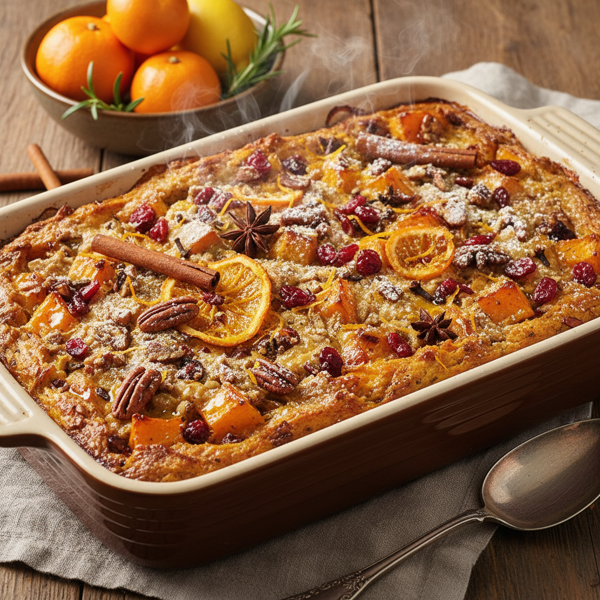
Warm up this winter with a delightful Citrus-Spiced Winter Squash Casserole. This comforting dish blends the smooth, velvety texture of cooked winter squash with the zesty and refreshing flavors of oranges. Perfect for holiday gatherings or cozy family dinners, this casserole is not only delicious but also filled with wholesome ingredients. Topped with a sweet orange glaze, this casserole will be a showstopper on your table. Gather around and share the warmth of this seasonal dish that celebrates the bounty of winter produce.
4-6
Servings
N/A
Calories
9
Ingredients
Ingredients
Cooked mashed winter squash
4 cups (cooked and mashed (butternut or acorn))
Butter
2 tablespoons (melted)
Cream
2 tablespoons (heavy cream)
Salt
to taste
Pepper
to taste
Oranges
2 large (zest and juice)
Cornstarch
1 tablespoon
Light brown sugar
1/3 cup
Butter
1/4 cup (cut into pieces)
Instructions
1
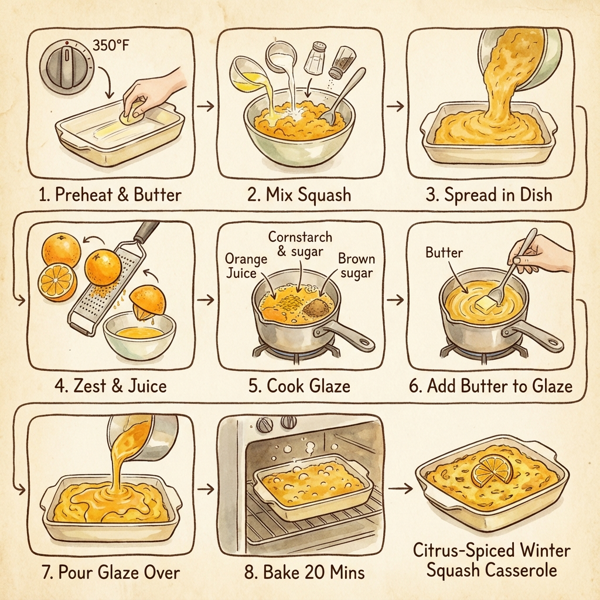
Preheat your oven to 350°F (175°C) and butter a 2-quart casserole dish.
2
In a large bowl, combine the cooked mashed winter squash with 2 tablespoons of melted butter, cream, salt, and pepper. Mix until smooth and well combined.
3
Pour the squash mixture into the prepared casserole dish, spreading it evenly.
4
Zest the oranges and then squeeze their juice into a separate bowl, ensuring you remove any seeds.
5
In a small saucepan, combine the orange zest, orange juice, cornstarch, and light brown sugar. Cook over low heat, stirring constantly, until the mixture thickens and bubbles gently.
6
Remove the saucepan from heat and stir in the 1/4 cup of butter until melted and smooth.
7
Pour the orange glaze evenly over the squash mixture in the casserole dish.
8
Bake in the preheated oven for about 20 minutes or until heated through and bubbling.
Nutrition Information
Frequently Asked Questions
Frequently Asked Questions
What is Citrus-Spiced Winter Squash Casserole?
It is a comforting winter side dish that combines the smooth texture of cooked winter squash with a zesty, sweet orange glaze.
What types of squash are best for this recipe?
Butternut or acorn squash are the recommended varieties for achieving the best flavor and texture.
How should the squash be prepared before starting the casserole?
The squash should be cooked and mashed until smooth before being mixed with the other ingredients.
Can I use frozen winter squash?
Yes, you can use frozen mashed squash, but ensure it is completely thawed and any excess moisture is drained before use.
What temperature should the oven be set to?
The oven should be preheated to 350 degrees Fahrenheit (175 degrees Celsius).
How long does the casserole need to bake?
The casserole needs to bake for approximately 20 minutes, or until it is heated through and bubbling.
Is this recipe vegetarian-friendly?
Yes, this Citrus-Spiced Winter Squash Casserole is a vegetarian dish.
What size casserole dish is required?
A 2-quart casserole dish is the ideal size for this recipe.
What are the ingredients for the orange glaze?
The glaze is made from orange zest, orange juice, cornstarch, light brown sugar, and butter.
How do I thicken the orange glaze?
Cook the glaze mixture over low heat while stirring constantly until it thickens and begins to bubble.
Can I use bottled orange juice instead of fresh oranges?
While bottled juice can be used, fresh oranges are preferred because the recipe specifically calls for fresh orange zest for flavor.
How many people does this recipe serve?
This recipe is designed to serve between 4 and 6 people.
Can I make this dish ahead of time?
Yes, you can prepare the squash base and the glaze ahead of time, then assemble and bake when ready to serve.
How should leftovers be stored?
Store any leftovers in an airtight container in the refrigerator for up to 3-4 days.
Can I freeze the Citrus-Spiced Winter Squash Casserole?
Yes, this casserole freezes well for up to 3 months. Thaw in the refrigerator before reheating.
What can I use instead of heavy cream?
You can substitute heavy cream with half-and-half or whole milk, though the result will be slightly less rich.
Can I use dark brown sugar instead of light brown sugar?
Yes, dark brown sugar can be used; it will provide a deeper molasses flavor to the glaze.
What are some suggested main dishes to serve with this?
It pairs beautifully with holiday favorites like roast turkey, baked ham, or roast chicken.
Can I add a crunchy topping like nuts?
Absolutely! Chopped pecans or walnuts would make an excellent addition to the top of the casserole for added texture.
How do I prevent lumps in the glaze?
Ensure the cornstarch is well mixed with the cold orange juice before heating, and stir constantly while cooking.
Is this dish gluten-free?
Yes, as long as your cornstarch is certified gluten-free, the ingredients in this recipe are naturally gluten-free.
Can I use margarine instead of butter?
Yes, margarine can be used as a substitute for butter, although butter provides a richer flavor.
What is the purpose of the cornstarch in the recipe?
Cornstarch acts as a thickening agent for the orange juice mixture to create a syrupy glaze.
How do I zest an orange correctly?
Use a microplane or fine grater to remove only the bright orange outer layer of the skin, avoiding the bitter white pith.
Can I use canned pumpkin instead of squash?
Yes, plain canned pumpkin puree can be used as a convenient substitute for mashed winter squash.
Is this dish suitable for Thanksgiving?
Yes, its warm spices and seasonal ingredients make it a perfect side dish for Thanksgiving or Christmas.
How much total butter is needed for the whole recipe?
The recipe uses a total of 6 tablespoons of butter: 2 tablespoons for the squash and 1/4 cup (4 tablespoons) for the glaze.
Can I reduce the amount of sugar?
Yes, you can reduce the brown sugar if you prefer a less sweet dish, though it will change the consistency of the glaze.
Do I need to peel the oranges?
No peeling is required; you only need the zest from the skin and the juice from the inside.
What is the final texture of the dish?
The casserole has a velvety, mashed consistency topped with a smooth, syrupy citrus glaze.